
Black and white house icon with roof, chimney, and round window.

The 5 Roof Repairs Royse City TX Homeowners Deal With Year After Year

June 23, 2026

Royse City sits in Rockwall County, squarely inside the North Texas severe weather corridor. Spring hailstorms, summer heat that pushes roof surface temperatures past 160 degrees Fahrenheit, strong wind events, and the occasional winter ice storm combine to stress every roofing system in the area across all four seasons. The roofs that hold up longest are not necessarily the newest ones. They are the ones where problems get identified and addressed before a repair becomes a replacement.


The five roof repairs covered in this guide are not random. They are the specific issues that Swift Roofing & Designs encounters consistently across Royse City, Rockwall, Heath, and Fate year after year. Each one has a specific cause, a specific progression if left unaddressed, and a specific window during which repair is the right answer before that window closes and replacement becomes the only option.


If your home is in Royse City TX, at least one of these applies to your roof right now. Knowing which one is the difference between a service call and a full replacement conversation.

1. Hail Damage to Shingles: The Most Common Roof Repair in Royse City

North Texas leads the country in hail frequency. According to the National Oceanic and Atmospheric Administration (NOAA), Texas consistently ranks among the top states for hail events annually, and Rockwall County falls directly within the hail corridor that extends from the DFW metroplex northeast through Hunt County. Royse City homeowners average multiple significant hail events per year during spring storm season.


The problem with hail damage is that it is frequently invisible from the ground and not immediately obvious even at close range without training. A single severe hailstorm can:


  • Strip granules from asphalt shingles across large sections of the roof: Granules are the protective layer that blocks UV radiation and sheds water. Their loss accelerates shingle deterioration at a rate that shortens the remaining life of the roof by years. Granule loss shows up as dark, exposed asphalt patches on the shingle surface and as heavy granule accumulation in gutters and at downspout discharge points after rain.
  • Bruise the fiberglass mat beneath the shingle surface: Hail impacts compress and fracture the fiberglass reinforcement layer inside the shingle without always creating a visible surface rupture. According to verified roofing industry sources, bruised shingles lose their structural integrity and become significantly more vulnerable to wind lift and water infiltration even when they appear intact from the street.
  • Crack seal strips that hold shingles flat: The adhesive strip along the bottom edge of each shingle bonds it to the shingle below, creating wind resistance. Hail impacts along this strip break the bond, allowing wind to lift the shingle edge. A shingle that lifts even partially during the next wind event can be torn free entirely or crack along the stress point.
  • Dent and damage soft metal components: Gutters, downspouts, roof vents, chimney caps, and flashing are reliable indicators of the storm impact the roof experienced. If these components show fresh denting after a storm, the shingles above them were subjected to the same impact.


What to do: Schedule a professional inspection within 30 to 60 days of any storm event that produced hail of one inch or greater, or that left visible denting on gutters or metal components.


Texas homeowners insurance policies have claim filing windows that vary by policy, and documenting hail damage promptly supports any claim that follows. Swift Roofing & Designs provides free inspections with written findings and photo documentation for Royse City homeowners after storm events.

2. Failed or Separated Flashing: The Roof Repair That Hides the Longest

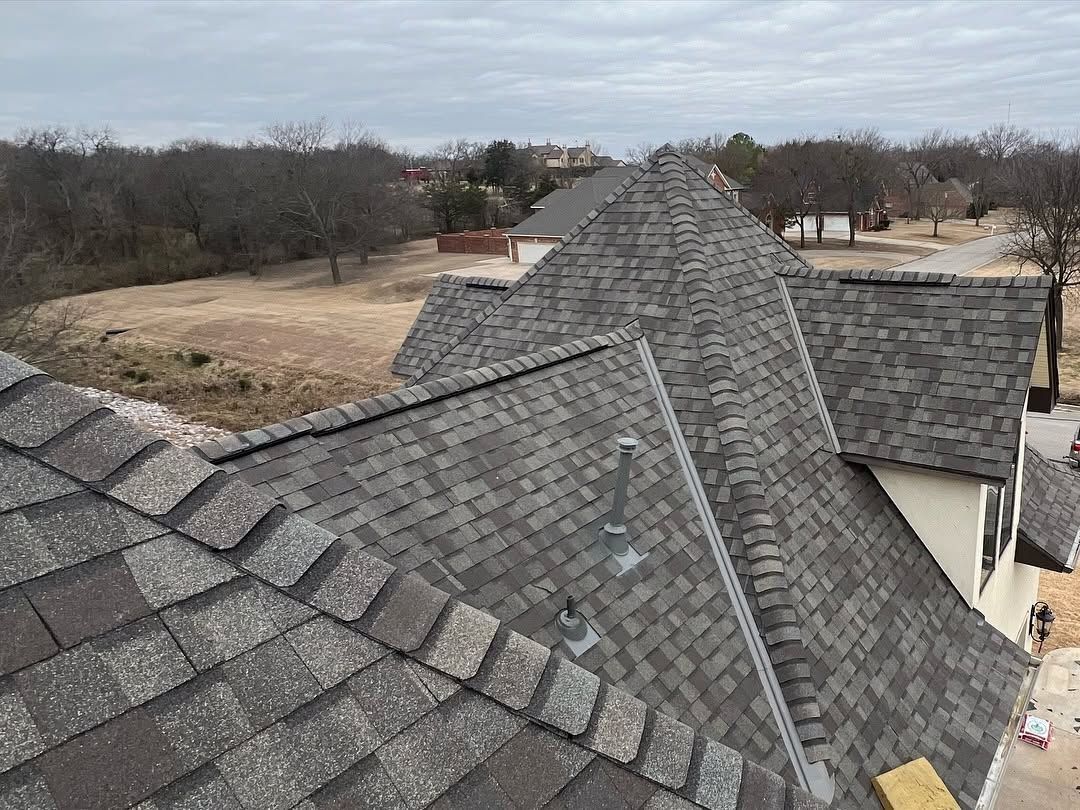
Flashing is the metal material installed at every point where the roof surface meets a vertical surface: chimney bases, skylights, roof-to-wall transitions, valleys, and pipe penetrations. Its job is to create a waterproof seal at the most vulnerable points on the roof, where two different materials or planes meet and where water would otherwise find a direct path into the structure.


Flashing failures are responsible for a disproportionate share of the roof leak repair calls Swift Roofing & Designs receives in Royse City. The reason is specific: flashing fails silently. A missing shingle is visible. A flashing gap is not. Water entering through a failed flashing seal travels along the roof deck, the rafters, and sometimes the interior wall framing before it appears as a stain on the ceiling below. By that point, it has typically been entering for weeks or months.


The most common flashing failures in Royse City TX homes:


  • Chimney flashing separation: The caulk or mortar that seals the step flashing and counter-flashing at the chimney base dries, cracks, and separates over time, particularly in North Texas's thermal cycling between summer heat and winter freeze events. A gap as small as a quarter inch at the chimney base can allow significant water entry during a heavy rain event.
  • Pipe boot cracking: The rubber boot that seals around plumbing vent pipes through the roof surface degrades under UV exposure and becomes brittle. In North Texas's sun intensity, standard rubber boots often need replacement every 10 to 15 years. A cracked boot creates a direct water entry point at every pipe penetration.
  • Valley flashing wear: The valley where two roof slopes meet is a high-water-volume area during heavy rainfall. Valley flashing that has been worn by granule abrasion, cracked by thermal movement, or lifted by wind damage allows water to work under the adjacent shingles.
  • Wall-to-roof transition failures: Where a roof abuts a vertical wall, step flashing and counter-flashing must work together to create a sealed transition. These joints separate over time from thermal movement and from settling in the structure, particularly in the Rockwall County clay soil that shifts seasonally.


What to do: If a ceiling stain appears after rain but the visible shingle surface looks intact, flashing failure is the most likely cause. Swift Roofing & Designs includes a full flashing inspection as part of every roof inspection and repair assessment in Royse City.

3. Wind Damage and Lifted Shingles: What North Texas Winds Do Between Hail Events

North Texas produces damaging wind events outside of storm season as well as within it. Straight-line winds from thunderstorm outflows, seasonal wind events from cold front passages, and periodic high-wind advisories from the National Weather Service Fort Worth office affect Rockwall County throughout the year.


Wind damage to roofing systems in Royse City is most commonly expressed as:


  • Lifted shingle tabs: Wind gets underneath the shingle tab and flexes it upward, breaking the seal strip bond. Once the seal strip is broken, the shingle does not re-adhere reliably. It remains vulnerable to being lifted further or torn free in the next wind event.
  • Missing shingles: Shingles that were already compromised by hail damage, granule loss, or age are the most likely to be torn free in a wind event. A missing shingle exposes the underlayment and roof deck beneath it directly to the next rain event. Even a brief rain exposure on unprotected decking begins the moisture absorption process.
  • Creased or folded shingles: High winds sometimes fold a shingle back against itself without fully tearing it free. The crease point becomes a stress fracture that allows water infiltration even after the shingle returns to its flat position.


The Texas Department of Insurance recommends that homeowners check their roofs after any wind event that exceeds 60 mph, as this threshold is associated with functional wind damage to standard asphalt shingles. Standard three-tab shingles are typically rated for winds up to 60 mph. Architectural shingles used in current Royse City residential construction are typically rated for higher wind speeds, but only when the seal strips are intact and fully bonded.


What to do: After any high-wind event, check gutters for fresh shingle granule accumulation and look from ground level for any irregular lines or gaps in the shingle surface. Any visible shingle displacement warrants a professional inspection before the next rain event

4. Roof Leak Repair: The Repair That Most Homeowners Wait Too Long to Make

A roof leak in Royse City TX is not a plumbing problem. It is a roofing problem that will become a structural problem if it is not addressed quickly. The progression from a minor active leak to significant interior damage follows a timeline that North Texas's weather accelerates.


According to IICRC standards, mold can begin developing on wet building materials within 24 to 48 hours under the right temperature conditions. An attic space in Royse City in summer, where temperatures regularly exceed 140 degrees Fahrenheit, is not a mold-friendly environment while it is dry. Once moisture enters and contacts the wood framing, insulation, and drywall above the living space below, the conditions change.


What a roof leak does to a Royse City home if left unaddressed:


  • Attic insulation saturation: Wet insulation loses its R-value, increasing energy costs immediately. It also remains wet long after the visible leak source is identified and repaired, continuing to support moisture conditions in the attic space.
  • Roof deck deterioration: The oriented strand board or plywood decking beneath the shingles absorbs moisture and begins to soften and delaminate. Decking that has absorbed significant moisture requires replacement rather than drying, adding material cost to what was a repair-level project when the leak was first identified.
  • Ceiling and wall damage: Water that travels from the roof deck to the ceiling below stains, warps, and eventually saturates drywall. The damage that is visible on the ceiling surface is typically a fraction of the total moisture exposure that has occurred in the assembly above it.
  • Mold establishment: In the right temperature and moisture conditions, mold remediation in an attic space runs $1,000 to $5,000 or more depending on the extent of coverage, according to industry pricing sources. The leak that caused it may have been a $400 to $800 repair when it was first identified.


What to do: Any active leak warrants same-day contact with a qualified roofing contractor. Swift Roofing & Designs provides emergency roof repair services throughout Royse City and Rockwall County for situations where an active leak cannot wait for a scheduled appointment.

5. Granule Loss and Shingle Age: The Repair That Becomes a Replacement Decision

Granule loss is the slow-motion roof repair situation that is easy to delay because the roof does not appear to be failing. The shingles are in place. There is no active leak. The roof looks functional from the street. What is not visible is the ongoing UV exposure to the bare asphalt beneath the areas where granules have been lost, the brittleness that is developing in aging shingles through repeated thermal cycling, and the reduced water-shedding capacity of a surface that has lost its protective layer.


In Royse City TX, asphalt shingles face a specific aging challenge from the combination of:


  • UV intensity: North Texas receives significantly higher UV radiation than most of the country due to its southern latitude and lower average cloud cover, breaking down asphalt binders and accelerating granule release
  • Thermal cycling: Daily temperature swings in North Texas between summer afternoon highs and nighttime lows create repeated expansion and contraction stress in shingle material
  • Hail accumulation: Each hail event accelerates granule loss in the impacted areas, compressing the effective lifespan of the roof


A roof that is losing granules at an accelerated rate and showing signs of brittleness, curling, or cupping across multiple shingle sections is approaching the end of its serviceable life. The repair decision at this stage is whether targeted repairs to the most compromised sections can extend the roof's life long enough to justify the cost, or whether a full replacement delivers better value.

a

Swift Roofing & Designs provides honest assessments at this decision point. The goal is accurate information, not a replacement sale on a roof that has viable repair life remaining.


Signs that granule loss has moved from normal wear to actionable concern:


  • Heavy granule accumulation in gutters after every rain event, not just after storm events
  • Visible dark, smooth patches on shingle surfaces visible from ground level with binoculars
  • Shingle edges that have begun to curl upward or cup at the corners
  • A roof that is within five years of or past its manufacturer's rated lifespan that has also experienced multiple significant hail eventsn

The Swift Roofing & Designs Approach to Roof Repair in Royse City TX

Every roof repair assessment Swift Roofing & Designs performs in Royse City begins with a comprehensive inspection that covers all five of the repair categories above. The findings are documented in writing with photos, and the recommendation addresses what the roof actually needs, not what produces the largest job.


For Royse City homeowners whose repairs involve hail or wind damage, Swift Roofing & Designs provides insurance documentation support, including written damage assessments and photo documentation formatted for insurance adjuster review.


Services available throughout Royse City, Rockwall, Heath, Fate, and Lavon include:


  • Roof repair: Targeted repair of hail damage, flashing failures, wind damage, and active leaks
  • Emergency roof repair: Same-day or next-day response for active leak situations
  • Roof inspection: Comprehensive inspection with written findings and photo documentation
  • Roof replacement: Full replacement when repair is no longer the right answer
  • Hail damage documentation: Written assessments for insurance claim support


Free inspections are available for all Royse City TX homeowners. The inspection costs nothing. The information it provides costs considerably less than discovering the problem in your ceiling.


Request a Roofing Quote

Blog Form


More Posts Like This:

Aerial view of a house with a dark roof surrounded by trees and a green yard
June 16, 2026
Spring debris left in your gutters becomes a liability when Royse City summer storms arrive. Swift Roofing & Designs explains what is at stake and what to do about it before the rain season peaks.
Aerial view of a dark-roofed house with a driveway, patio furniture, and a parked car beside a road
June 9, 2026
Learn the warning signs of heat damage on Royse City roofs, from curling shingles to granule loss. Protect your home with expert roofing insights.
Workers installing blue roofing panels on a house roof during construction or repair.
June 4, 2026
June is the most important roof inspection window in North Texas. Swift Roofing's summer checklist helps Royse City homeowners catch hail damage before peak heat compounds it.
Show More
Black outline of a house with a slanted roof and chimney.

Choose Swift Roofing & Designs for Top Quality Roofing

Need a reliable roofer? We've helped countless clients protect their homes while saving time and money, and we’re ready to help you next.

Aerial view of a house with a dark roof surrounded by trees and a green yard
June 16, 2026
Spring debris left in your gutters becomes a liability when Royse City summer storms arrive. Swift Roofing & Designs explains what is at stake and what to do about it before the rain season peaks.
Aerial view of a dark-roofed house with a driveway, patio furniture, and a parked car beside a road
June 9, 2026
Learn the warning signs of heat damage on Royse City roofs, from curling shingles to granule loss. Protect your home with expert roofing insights.
Workers installing blue roofing panels on a house roof during construction or repair.
June 4, 2026
June is the most important roof inspection window in North Texas. Swift Roofing's summer checklist helps Royse City homeowners catch hail damage before peak heat compounds it.
Aerial view of a modern building with a blue roof, curved solar panels, and a swimming pool
May 27, 2026
Class 4 impact resistant shingles cost more upfront — but in North Texas hail country, the insurance savings and extended lifespan often make them the smarter long-term investment.
Aerial view of a gray-shingled roof on a house in a rural area under a clear sky.
May 20, 2026
Delaying roof repairs in North Texas doesn't save money — it multiplies the damage. Swift Roofing explains what happens when you wait and what it actually costs over time.
Worker in orange safety vest and red helmet rappels down a gray roof beside trees and a driveway.
May 13, 2026
Choosing the wrong roofing contractor in North Texas after hail season is a costly mistake. Swift Roofing explains exactly what to look for and what to avoid before you sign anything.
Small rural storefront and canopy under a bright cloudy sky, with gravel in the foreground.
May 5, 2026
North Texas summers push roofs to their limit. Swift Roofing explains how to protect your roof from heat damage, improve ventilation, and extend shingle lifespan in Rockwall TX.
Worker in a hard hat inspecting a house roof and siding from a ladder.
April 29, 2026
North Texas roofs take more seasonal punishment than almost anywhere else. Swift Roofing's complete maintenance checklist helps Rockwall homeowners stay ahead of expensive repairs.
Aerial view of suburban houses with a construction site and a pond in the background.
April 21, 2026
Just had hail in North Texas? Swift Roofing walks Rockwall and Royse City homeowners through exactly what to do after a hail storm — from documentation to insurance claims.
Dirty backyard and many leaves on the ground
April 16, 2026
North Texas summer heat is one of the biggest threats to your roof's longevity. Swift Roofing explains what heat does to your roof and how Rockwall homeowners can protect it.
Show More