Black and white house icon with roof, chimney, and round window.

4 Roof Repair Mistakes That Cost Texas Homeowners More in the Long Run

August 4, 2026

Early August is one of the hardest stretches of the year on a North Texas roof. Weeks of 100-degree-plus days have baked the shingles, attic temperatures are running at their peak, and the spring and early-summer storm season has already left its marks on roofs across Royse City, Rockwall, McKinney, and Sachse. It is the time of year when small roof problems from the storm season start showing up as leaks and stains inside the house.


It is also the time of year when homeowners make roof repair decisions they end up paying for twice. A rushed patch, a DIY fix in the heat, the wrong contractor after a storm, or waiting too long to act, each of these turns a manageable repair into a bigger, more expensive problem down the line.


Swift Roofing works on residential and commercial roofs across North Texas, and the team sees the same avoidable mistakes over and over. This guide covers the four that cost homeowners the most, and how to sidestep each one.

1. Fixing the Leak Instead of the Cause

The most expensive roof repair mistake is also the most common: sealing the spot where water shows up instead of finding where it actually gets in.


A leak rarely starts where the ceiling stain appears. Water enters at a failure point, often flashing around a chimney, wall, skylight, or vent, then travels along the decking or framing before it drops through the ceiling somewhere else entirely. When a repair only addresses the visible wet spot, the actual entry point is still open, and the leak comes back with the next storm. Homeowners can pay to have the same area patched two or three times before anyone identifies that flashing was the source all along.


Why chasing the leak fails:

  • Water enters at one point and shows up at another
  • Flashing at penetrations is the most common real source
  • Sealing the stain leaves the entry point open
  • The leak returns, and the hidden damage keeps spreading


A proper repair traces the leak to its origin rather than treating the symptom. That is the difference between fixing it once and paying for it repeatedly while water damage accumulates in the decking and attic in between.

2. DIY Patching, Especially in the Summer Heat

A roof repair that looks simple on a video is rarely simple on a 105-degree North Texas roof, and the DIY attempt often causes more damage than the original problem.


Two things go wrong most often. First, sealant gets misused. Roof cement and caulk are meant for flashing joints, not smeared over shingle surfaces, and excess sealant traps water underneath shingles where it accelerates rot in the decking below. Second, walking on hot shingles does its own damage. Asphalt shingles soften in extreme heat, and walking on them, especially shuffling or dragging feet, knocks loose the protective granules and shortens the life of every shingle stepped on. In early August, when North Texas roof surfaces are at their hottest, this granule loss is at its worst.


Where DIY repairs go wrong:

  • Sealant smeared on shingles traps water and rots the deck
  • Walking hot shingles strips protective granules
  • Wrong nail placement leaves shingles prone to blow-off
  • Mismatched materials age unevenly and invite new leaks


There is also the safety factor. The Texas Department of Insurance advises homeowners to make only temporary repairs after storm damage, such as covering a damaged area, and to leave permanent repairs to professionals. A fall from a roof is a far higher price than any repair.

3. Hiring the Storm-Chaser Who Knocked on Your Door

After every North Texas storm season, out-of-town crews go door to door offering fast, cheap roof repairs. Some are legitimate. Many are not, and the cost of choosing wrong shows up long after they have left the area.


The Texas Department of Insurance warns directly about this, noting that it sends investigators to storm-hit areas to deter fraud that ranges from shoddy repairs to price gouging, and that in the worst cases, contractors may simply take the money and run. A repair done poorly by a crew that has left the state is a repair the homeowner pays to have done again, this time along with the damage the bad work allowed.


How to protect yourself:

  • Be wary of unsolicited, high-pressure door knocks
  • Choose an established local company that will be here later
  • Verify licensing and insurance before any work
  • Do not pay in full upfront or sign under pressure
  • Get the scope and price in writing first


A legitimate roofer does not need an on-the-spot signature. The pressure to decide immediately is itself the warning sign. Swift Roofing is local to North Texas, and the same team that assesses the roof stands behind the work afterward.

4. Waiting Too Long to Address a Known Problem

The fourth mistake is the quiet one: seeing a sign of roof trouble and deciding to deal with it later. In the North Texas climate, later almost always costs more.


A small leak does not stay small. Water that enters through a compromised shingle or a failed flashing detail keeps working every time it rains, spreading into the decking, soaking the insulation, and creating the conditions for mold. What begins as a targeted shingle or flashing repair becomes a decking replacement and interior repair job. The summer timing matters here too: a roof already weakened by storm-season damage and months of extreme heat is more vulnerable heading into the fall, when the next round of North Texas storms arrives.


What waiting turns a small repair into:

  • A shingle repair becomes decking replacement
  • Trapped moisture leads to mold and interior damage
  • Insulation soaks and loses its effectiveness
  • A summer-weakened roof faces fall storms compromised


There is also an insurance dimension. The Texas Department of Insurance notes that a policy might not pay to repair a roof that is already in bad shape, and that homeowners should keep their roof in good condition to maintain coverage. Deferred maintenance can become deferred coverage, which leaves the homeowner paying the full cost.

What Each Mistake Actually Costs You

The through-line in all four mistakes is the same: the cheaper choice now creates a more expensive problem later. Seeing the progression side by side makes the pattern clear.

The mistake What it leads to
Patching the stain, not the source Repeat repairs plus hidden decking damage
DIY repair in the heat Granule loss, trapped water, deck rot
Storm-chaser contractor Redo the work, plus damage from bad work
Waiting to act Small repair grows into major restoration

None of these are about spending the most money on a roof. They are about spending it once, on the right fix, instead of repeatedly on the consequences of the wrong one.

How to Handle a Roof Repair the Right Way

Avoiding the four mistakes comes down to a straightforward approach, especially valuable right now with fall storm season approaching.

Step Why it matters
Get a professional inspection Finds the real source, not just the symptom
Document any storm damage Finds the real source, not just the symptom
Address problems before fall storms A sound roof handles the next season
Choose an established local roofer They stand behind the work afterward
Get the scope and price in writing No surprises, no pressure

For storm-related damage, the Texas Department of Insurance recommends photographing the damage before repairs and making only temporary fixes until the insurer has seen it. Swift Roofing documents conditions during the inspection and provides that record for the claim.


The early-August window is a good moment to get ahead of this. A roof assessed and repaired now, after the summer heat and before the fall storm season, is a roof that heads into the next round of North Texas weather sound rather than compromised. Swift Roofing offers inspections across Royse City, Rockwall, McKinney, and Sachse through the roof inspection service, and handles the repairs directly through the roof repair service. For the deeper question of whether damage calls for a repair or a full replacement, the related article on shingles vs metal roofing for Texas weather covers how that decision gets made.

Frequently Asked Questions

  • Why does my roof leak in a different spot than where the water comes in?

    Water enters at a failure point, often flashing around a chimney, vent, skylight, or wall, then travels along the decking or framing before dropping through the ceiling somewhere else. This is why sealing the ceiling stain does not stop the leak. A proper repair traces the water back to its actual entry point, which is frequently a flashing detail rather than the shingles near the visible stain.

  • Can I repair my own roof to save money in Texas?

    For a genuine emergency, a temporary cover to keep water out until a professional arrives is reasonable, and the Texas Department of Insurance actually recommends temporary repairs after storm damage. Permanent repairs are a different matter. DIY work in extreme heat commonly causes granule loss from walking on hot shingles, trapped water from misused sealant, and improper nailing, each of which shortens roof life. The safety risk of a roof fall is significant as well.

  • How do I avoid roofing scams after a North Texas storm?

    Be cautious of crews that knock on your door with high-pressure, limited-time offers. The Texas Department of Insurance warns that post-storm fraud ranges from shoddy repairs to contractors who take payment and disappear. Choose an established local company, verify licensing and insurance, never pay in full upfront, and get the full scope and price in writing before any work begins. A legitimate roofer does not require an immediate signature.

  • How long can I wait to repair minor roof damage?

    Not long, in the North Texas climate. A small leak spreads with every rain into the decking, insulation, and eventually the interior, turning a minor repair into a major one. There is also an insurance consideration: a roof left in poor condition may not be covered, because insurers can decline claims tied to deferred maintenance. Addressing known problems promptly, especially before the fall storm season, is far less expensive than waiting.

  • Will my Texas homeowners insurance cover roof repairs?

    It depends on the cause and your policy. The Texas Department of Insurance notes that policies cover sudden storm damage but may pay less or nothing based on a roof's age and condition, and that many policies reduce coverage as a roof ages. Document any storm damage with photos before repairs, report it promptly, and keep the roof in good condition to maintain coverage. Swift Roofing provides documentation to support claims.

  • Does Swift Roofing serve Rockwall, McKinney, and Sachse as well as Royse City?

    Yes. Swift Roofing provides residential and commercial roof repair and inspections across Royse City, Rockwall, McKinney, Sachse, and the surrounding North Texas communities. The team assesses the roof, traces problems to their actual source, and provides a written scope and price before any work begins.

If your roof is showing signs of trouble after this storm season and the summer heat, in Royse City, Rockwall, McKinney, Sachse, or anywhere in North Texas, Swift Roofing can inspect it, find the real source of the problem, and recommend the most practical repair before the fall storms arrive. The team assesses honestly and puts the scope and price in writing before starting.


Roof Repair | Roof Inspections | Storm Damage and Hail Repair | Commercial Roofing | Contact Swift Roofing


Request a Roofing Quote

Blog Form


More Posts Like This:

Aerial view of a suburban house with a dark roof, brick garage, and wide concrete driveway surrounded by green lawn
July 29, 2026
TPO and PVC look nearly identical on a flat roof but perform differently in North Texas heat and hail. Swift Roofing breaks down which fits your building.
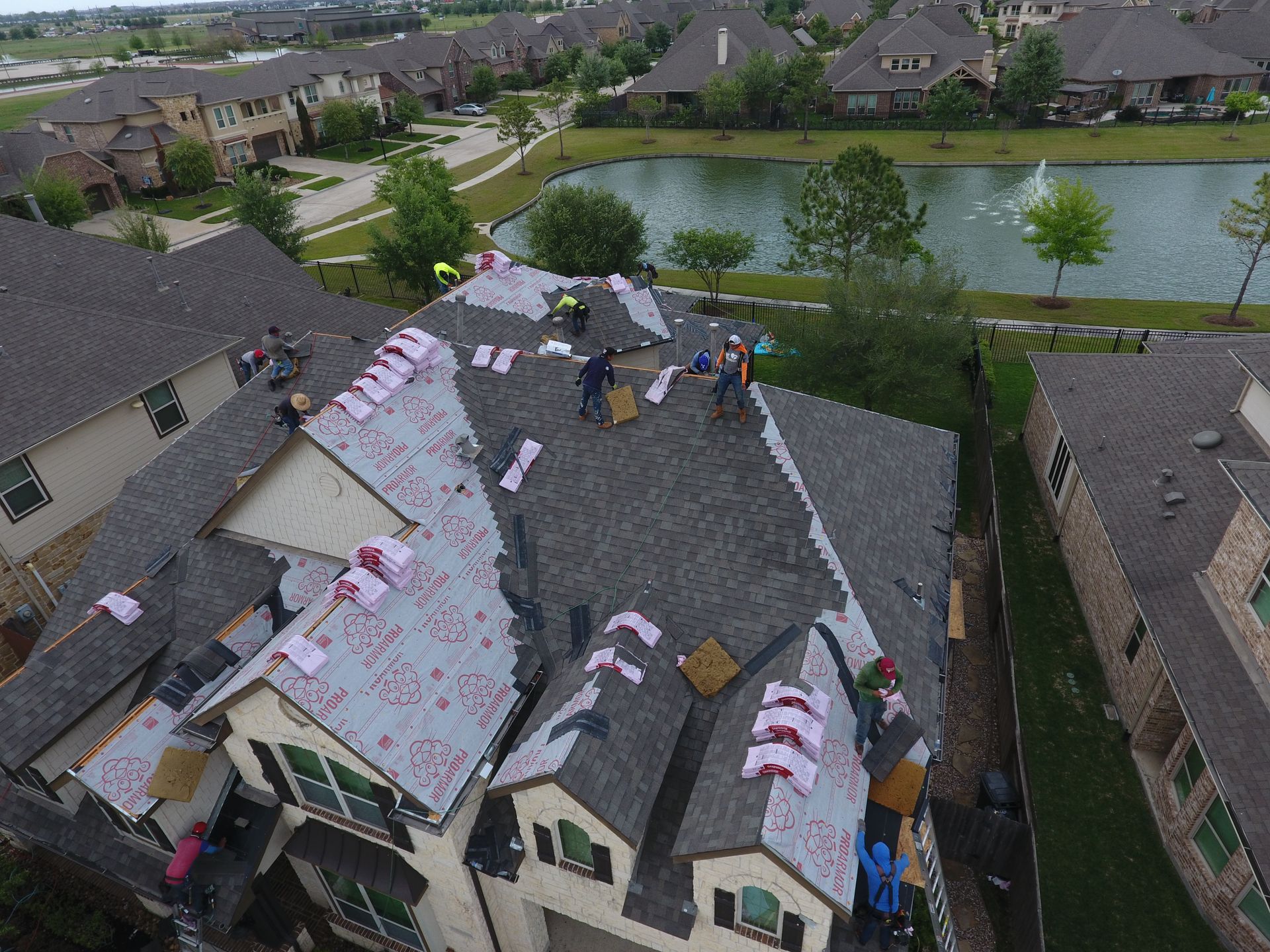
Aerial view of roof damage with workers repairing shingles in a suburban neighborhood near a pond
July 21, 2026
Most homeowners in Royse City, Rockwall, and the surrounding North Texas communities start thinking about roofing materials after a storm. A hail event rolls through, an adjuster shows up, and suddenly there is a decision to make that nobody fully prepared for. Repair with the same shingles that were already there? Or is this the moment to switch to metal?  It is a reasonable question. And it deserves a straight answer, not a sales pitch toward whichever option costs more. Swift Roofing works with homeowners across Rockwall County, Hunt County, and the wider North Texas area every week. We see both materials up close after storms, during inspections, and after they have been on a roof for twenty years in Texas heat. This is the honest comparison he gives homeowners before they decide.
Aerial view of a large gray-roofed mansion surrounded by green lawns and landscaped gardens.
July 14, 2026
A visual inspection sees what is on the surface. An infrared inspection sees what is hiding underneath. Swift Roofing explains the difference, when each method applies, and what North Texas homeowners need to know before scheduling an inspection.
Show More
Black outline of a house with a slanted roof and chimney.

Choose Swift Roofing & Designs for Top Quality Roofing

Need a reliable roofer? We've helped countless clients protect their homes while saving time and money, and we’re ready to help you next.

Aerial view of a suburban house with a dark roof, brick garage, and wide concrete driveway surrounded by green lawn
July 29, 2026
TPO and PVC look nearly identical on a flat roof but perform differently in North Texas heat and hail. Swift Roofing breaks down which fits your building.
Aerial view of roof damage with workers repairing shingles in a suburban neighborhood near a pond
July 21, 2026
Most homeowners in Royse City, Rockwall, and the surrounding North Texas communities start thinking about roofing materials after a storm. A hail event rolls through, an adjuster shows up, and suddenly there is a decision to make that nobody fully prepared for. Repair with the same shingles that were already there? Or is this the moment to switch to metal?  It is a reasonable question. And it deserves a straight answer, not a sales pitch toward whichever option costs more. Swift Roofing works with homeowners across Rockwall County, Hunt County, and the wider North Texas area every week. We see both materials up close after storms, during inspections, and after they have been on a roof for twenty years in Texas heat. This is the honest comparison he gives homeowners before they decide.
Aerial view of a large gray-roofed mansion surrounded by green lawns and landscaped gardens.
July 14, 2026
A visual inspection sees what is on the surface. An infrared inspection sees what is hiding underneath. Swift Roofing explains the difference, when each method applies, and what North Texas homeowners need to know before scheduling an inspection.
Aerial view of a gray-roofed suburban house with a driveway and surrounding lawn.
July 9, 2026
Choosing the wrong commercial roofing material in North Texas costs property owners thousands in premature repairs. Swift Roofing breaks down the 6 most durable options, what each one costs, and which one is right for your building.
Aerial view of a brick house with a gray shingle roof and surrounding greenery.
June 30, 2026
Not every aging roof in Royse City TX needs full replacement. Swift Roofing & Designs breaks down when restoration extends your roof's life and when replacement is the only answer.
Aerial view of a large gray-shingled house with multiple gables and a beige exterior.
June 23, 2026
From hail damage to failed flashing, Royse City TX homeowners face the same five roof repairs year after year. Swift Roofing & Designs breaks down each one, what causes it, and how to catch it before it becomes a replacement.
Aerial view of a house with a dark roof surrounded by trees and a green yard
June 16, 2026
Spring debris left in your gutters becomes a liability when Royse City summer storms arrive. Swift Roofing & Designs explains what is at stake and what to do about it before the rain season peaks.
Aerial view of a dark-roofed house with a driveway, patio furniture, and a parked car beside a road
June 9, 2026
Learn the warning signs of heat damage on Royse City roofs, from curling shingles to granule loss. Protect your home with expert roofing insights.
Workers installing blue roofing panels on a house roof during construction or repair.
June 4, 2026
June is the most important roof inspection window in North Texas. Swift Roofing's summer checklist helps Royse City homeowners catch hail damage before peak heat compounds it.
Aerial view of a modern building with a blue roof, curved solar panels, and a swimming pool
May 27, 2026
Class 4 impact resistant shingles cost more upfront — but in North Texas hail country, the insurance savings and extended lifespan often make them the smarter long-term investment.
Show More