Black and white house icon with roof, chimney, and round window.

7 Holiday Decorating Mistakes That Could Damage Your Roof

November 2, 2026

Walk around the exterior and look for:

  • Missing or visibly lifted shingles
  • Uneven rooflines
  • Granules collecting heavily near downspouts
  • Damaged flashing you can see safely from the ground
  • Debris still sitting in valleys
  • Gutters pulling away or holding water


Then check the attic or upper interior if safely accessible:

  • Water stains on decking or rafters
  • Darkened wood
  • Damp insulation
  • Daylight where it should not be visible
  • Musty odor after rain
  • Previous repair patches and where they were made


Our free roof inspection service includes shingles, flashing, decking, attic ventilation, drainage, and interior warning signs, with photo documentation so you can compare what you noticed with what the inspector finds.

Inspection Result Targeted Repair May Make Sense When Larger Scope May Be Needed When
Hail damage Limited, repairable damage is isolated Impact damage is widespread across multiple slopes
Lifted shingles Small number of compatible shingles can be repaired Wind failure is widespread or shingles are brittle
Flashing failure Detail can be rebuilt without disturbing large roof areas Water has damaged surrounding decking or multiple transitions
Moisture intrusion Entry point is isolated and decking remains sound Decking, insulation, or multiple roof areas are affected

The better approach is to combine age with condition, repair frequency, storm history, and moisture findings. Our article on four roof inspection findings that lead to bigger repairs explains why lifted shingles, failed flashing, hail damage, and hidden moisture should be judged by how they are progressing, not only by how old the roof is.


Ask these questions before accepting either recommendation:

  1. What exact condition makes restoration possible or impossible?
  2. Is the decking sound?
  3. How many slopes are affected?
  4. Is there hidden moisture?
  5. Are the existing shingles flexible enough to work around safely?
  6. What repairs must happen before restoration?
  7. How much useful life are we realistically trying to gain?
  8. If we restore now, what would still trigger replacement later?


Those questions turn a sales estimate into a roof-condition discussion.

What Does Restoration vs. Replacement Cost in North Texas?

For estimated market context, asphalt shingle replacement in North Texas is commonly planned around $300 to $600 per roofing square installed, with one roofing square equal to 100 square feet of roof surface. For broader planning context, a typical Texas roof replacement can fall in the $8,000 to $20,000 range, depending on roof size, material, pitch, design complexity, access, and the amount of work required once the existing system is opened up.


Those numbers are useful for early budgeting, but they should be treated as planning ranges rather than a price for a specific home. Roof surface area is different from living square footage because pitch, overhangs, garages, porches, valleys, and roof geometry all change the actual amount of roofing material and labor involved.

Homeowners can collect useful information without climbing onto the roof. Use binoculars or a phone camera from the ground, and inspect the attic or interior only where access is safe. Wet roofs, steep slopes, and hidden weak decking make rooftop inspection a job for trained professionals.


What to Check From the Ground

  • Shingle tabs that appear missing, raised, shifted, or visibly damaged
  • Flashing that looks bent or separated from adjacent materials
  • Debris concentrated in roof valleys or behind penetrations
  • Sagging gutter sections, disconnected downspouts, or water marks on fascia
  • Tree branches touching the roof or broken limbs resting on it
  • Uneven roof planes or a localized dip that was not present before


What to Check Inside the Home or Attic

  • New stains on ceilings, walls, rafters, or roof decking
  • Damp insulation or a musty odor after rain
  • Daylight showing through an unexpected opening
  • Rust around fasteners, vents, or metal components
  • Peeling paint near the ceiling line or around penetrations


When to Request Professional Help

Write down when each sign appears, and take photos from the same position for future comparisons. If you see an active leak, significant displacement, or storm debris, move belongings away and request professional help rather than attempting a rooftop patch.


After a storm, the same checklist can help you describe what happened, but visible damage may represent only part of the condition. Swift Roofing & Designs offers storm-damage inspections when wind or hail is the likely cause. For an active opening or urgent water entry, emergency roof repair may be the safer route.
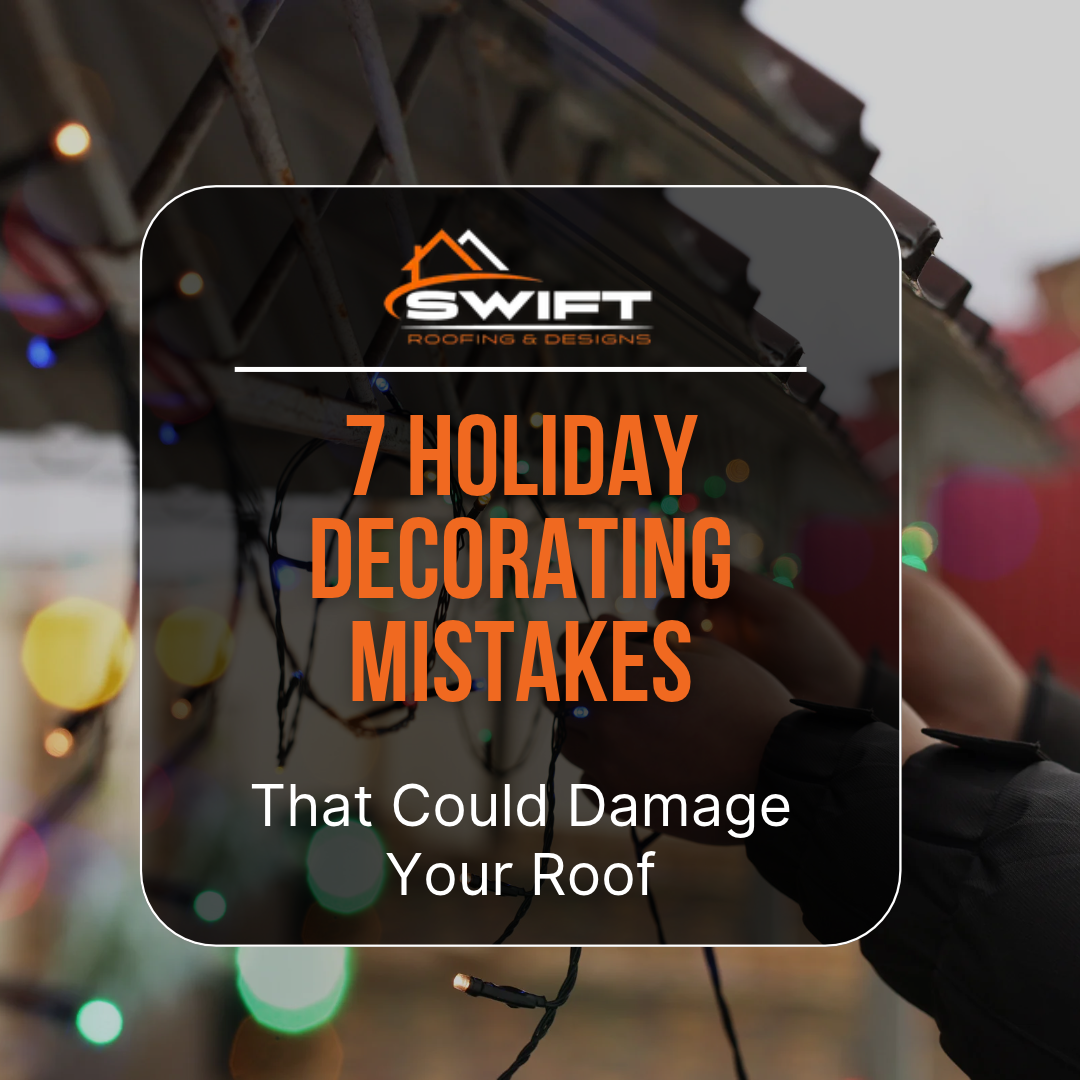
Holiday lights should leave you with photographs and good memories, not a new ceiling stain. The lights themselves are often less of a concern than the fasteners, attachment points, and access methods used to install them. A small puncture or disturbed flashing connection may remain unnoticed until rain tests the roof. Planning the display before installation is easier than diagnosing damage after the holidays.


For Royse City homeowners concerned about Christmas lights roof damage, the practical goal is to protect the roofing materials already in place. That means avoiding roof penetrations, keeping heavy props on independent supports, and addressing visible defects before decorations conceal them. These seven mistakes explain what can go wrong and offer a safer alternative for each. You can create an effective display without climbing onto the roof or turning shingles and flashing into anchors.

Using Nails, Screws, or Staples Through Roofing Materials

A nail or staple creates a hole in a surface intended to shed water. The exact risk depends on its location and the affected layers, but a decorating puncture introduces an avoidable defect. Removing the fastener does not automatically restore the shingle or the material beneath it. A hole can remain difficult to see from the ground while still deserving repair.


GAF's guidance on holiday lights and seasonal decorations recommends avoiding damaging attachments and planning the display carefully. Use a suitable nonpenetrating product only where its instructions permit the actual surface and setup. Do not force clips beneath shingles or pry up an edge to make room for wiring. A temporary decoration should not require a permanent roof opening.


A better attachment decision

  • Choose the display location before purchasing clips or hardware.
  • Match the product to the lighting strand and the intended attachment surface.
  • Reject any setup that requires puncturing roofing or disturbing flashing.
  • Move the lights to an accessible, suitable surface when compatibility is uncertain.


If someone previously fastened decorations through the roof, tell us where the attachment was made. A photograph from installation can help identify the area without another trip onto the roof. Our roof repair services address damaged shingles and other affected components after inspection. A known puncture can be evaluated before you wait for an interior leak to appear.

Hanging Heavy Decorations From Gutters or Fragile Roofline Parts

A gutter's job is to carry runoff, and its appearance does not establish a safe decorating load. Heavy garlands, hanging figures, and bundled light strands can concentrate force at a small part of the edge. Fabric may also collect water or catch wind, changing the load after installation. The weight you feel while holding a decoration is not the only force its attachment will experience.


Keep substantial decorations on supports designed for them and follow the manufacturer's anchoring instructions. Do not use a downspout, pipe boot, fascia trim, or loose gutter as a convenient tie-down. There is no universal number of pounds that every gutter or roof edge can safely carry. If a prop needs a structural anchor, use an independent rated support rather than the drainage system.

Decoration More suitable support Concern at the roofline
Lightweight string lights Compatible removable lighting clips Wrong fit can distort an edge or pinch wiring
Heavy garland or hanging figure Independent support appropriate to the load Concentrated pulling on gutters or trim
Large fabric scene Ground-supported frame Wind movement and retained water
Inflatable display Manufacturer-approved ground anchoring Tethers transferring force to roof components

For a Heath or Rockwall home with an exposed elevation, consider how a decoration will move in gusts. A display that stays still while you install it may behave differently later. Do not solve movement by adding tighter ties around vulnerable roofline components. Change the position or support instead.

Walking on the Roof to Install the Lights

Foot traffic can scuff shingles, disturb edges, or affect roofing that is already damaged. The roof's condition and the weather change that risk, but a holiday display is not a reason to test the surface yourself. A roof that looks sound from the yard can contain defects that are not obvious. Slopes and dampness create a separate fall hazard regardless of whether the materials are damaged.


CertainTeed's holiday roof-safety guidance advises observing from the ground and leaving roof travel to professionals. Use an accessible ground-level display or a qualified decorating installer when the proposed work exceeds safe access. Keep yourself and equipment away from overhead power lines. If a prop lands on the roof, arrange safe retrieval instead of climbing up after it.

Placing Bulky Inflatables or Unsecured Displays on Shingles

A roof surface is not automatically an appropriate base for an inflatable, statue, or decorative platform. Contact points can concentrate weight or rub against the covering. Wind can lift or move a broad prop and transfer force to its restraints. An attachment that prevents the prop from falling may still damage the roof while doing so.


Choose a stable ground location and follow the decoration's wind limits and anchoring requirements. Keep the display outside walking routes and away from drainage features that it could obstruct. Do not tie it to vents, skylights, chimney flashing, or other roof penetrations. The safer alternative is to keep the roof out of the support system altogether.


For homeowners in Fate or Terrell, the space beside a driveway may offer a better location than the roof, but it still needs suitable anchoring and clearance. Account for normal door use, vehicle movement, and visitor access. A small scene in a suitable place is preferable to a large display that requires improvised restraints. Plan for the full period the decoration will remain outdoors rather than only the installation day.


Relocate the display when

  • The instructions do not permit the surface or support you intend to use.
  • Tethers would pull on roofing, gutters, or flashing.
  • The prop could repeatedly strike the house as it moves.
  • Safe removal would require unplanned roof access.

Decorating Over Loose Shingles, Damaged Flashing, or Weak Fascia

A damaged attachment surface does not become suitable because the decoration is lightweight. A loose shingle can be disturbed further, while a compromised edge or softened fascia may not hold an attachment as expected. Holiday strands can also conceal a defect that was visible before setup. Installing around the problem can make later inspection and repair more complicated.


Look from the ground for visible displacement, loose metal, sagging gutters, or a changed roof edge. Do not pull on the component to test whether it holds. Our guide to six roof areas to check before cooler weather explains the relevant components in more detail. For decorating, the immediate decision is simpler: leave a questionable area unloaded and arrange evaluation before covering it.

Visible concern What it may involve Sensible next step
Displaced shingle Covering, attachment, or surrounding damage Request roof inspection
Lifted metal near a penetration Flashing or a connected detail Keep wires and clips away
Soft or deteriorated fascia Wood condition and roof-edge support Evaluate the material and moisture source
Gutter pulling away Hangers, support wood, or other attachment issues Avoid loading it and arrange appropriate repair

A small visible defect does not automatically mean the entire roof needs replacement. The surrounding condition and extent of damage matter. Our roof maintenance versus repair guide helps distinguish routine upkeep from work on a failed component. The recommendation should follow the defect, not the decorating deadline.

Routing Cords Where They Rub, Snag, or Block Drainage

A light cord pulled tightly across flashing can rub or snag a vulnerable edge. Extra wiring hidden in a gutter places electrical equipment in a water channel and can catch debris. Wires tucked under shingles can also disturb the way the roof sheds water. A neat-looking installation is not enough if its routing damages the materials or interferes with drainage.


The Electrical Safety Foundation's outdoor decorating guidance calls for outdoor-rated equipment, GFCI protection, and cords kept clear of standing water. Follow the product instructions for load and connected strands rather than relying on a generic strand count. Keep connections away from roof drainage routes and do not pinch wiring in doors or windows. Ask an electrician about an unsuitable supply instead of improvising a cord route through the roofline.


Plan the entire route before hanging a strand

  • Keep cords from stretching across sharp or moving edges.
  • Leave gutters, valleys, and discharge openings free of wiring and decorative material.
  • Avoid routing behind flashing or beneath roofing layers.
  • Maintain a clear visitor path without loose cords or unstable coverings.
  • Recheck for shifting after wind or rain.


Where a wire needs to cross an unsuitable detail, shorten or relocate the display. Adding tape or sealant to hold it against the roof does not correct the routing problem. Electrical and roofing requirements both need to be satisfied. A qualified installer should be able to explain how the setup preserves the existing materials.

Pulling Down Lights or Leaving Attachments Behind

Tugging a strand from one end can transfer force to every clip that resists. The result can be a bent gutter lip, lifted shingle, damaged wire, or dislodged edge component. Old plastic clips may break rather than release cleanly. Small pieces left in place can catch leaves or interfere with the next installation.


Plan removal while the packaging and instructions are still available. Disconnect the lights and release attachments individually using the specified method and suitable access. Never pull stuck material out of roofing layers or climb onto the roof to finish a hurried takedown. If removal requires unsafe access, arrange qualified help rather than treating the final few clips as a small exception.

Choosing Between a Different Display, Inspection, and Roof Repair

The first question is whether the decorating plan can work without disturbing the roof. If it cannot, change the display before creating a defect. When damage is suspected, the next step is a documented inspection rather than adding sealant to every possible attachment point. A ceiling stain may be related to the display, but its timing alone does not prove the entry location.


Use this decision framework

  • Compatible lightweight setup on a sound surface: Follow the instructions and monitor it throughout use.
  • Heavy props or roof-dependent anchors: Move the display onto suitable independent supports.
  • Known puncture, lifted material, or damaged flashing: Request professional inspection and a defined repair scope.
  • Loose item on the roof: Keep the area below clear and arrange safe retrieval.
  • New staining or dampness: Record the location and weather history for diagnosis.
  • Active water near electricity or a sagging ceiling: Keep people away and seek appropriate urgent assistance.


We offer free roof inspections with photographs and a written explanation of the findings. If the roof does not need work, we will tell you. If repairs are needed, we explain the affected components and the proposed scope before you decide. That approach keeps holiday roof damage prevention tied to your home's actual condition. Our roof warranty guide explains why coverage also depends on the written terms and cause of damage.


Budget for the repair that is identified

For independent budgeting, HomeGuide's roof-repair guide lists minor repairs around $150 to $1,000 and moderate repairs around $1,000 to $3,000 nationally. Those categories describe repair scopes rather than a fixed price for a decorating puncture or our inspection. We prepare the estimate around the location, materials, access, and damage found. Flashing work, concealed decking damage, or a larger affected area can change the total.

Work category Planning context What the scope should explain
Our roof inspection Free Findings, photos, and recommended next step
Minor roof repair National range: $150 to $1,000 Specific localized defect and repair method
Moderate roof repair National range: $1,000 to $3,000 Larger affected area or related damage
Interior drying or restoration Separate scope where needed Who addresses wet indoor materials

Ask whether the proposed repair restores the relevant roofing detail or only adds a surface patch. A punctured shingle, a damaged pipe boot, and a flashing failure are different problems. Roof repair after holiday decorations should address what actually failed. Repairing the roof-side source may also leave separate indoor drying or finish work to complete.


For Greenville and Royse City homeowners, installation photos help. Show the attachments and any wind-related movement. You do not need to reach the roof yourself to provide that history. That history helps us identify the actual cause.

Frequently Asked Questions

  • How can I hang Christmas lights without damaging the roof?

    Choose suitable accessible surfaces and compatible nonpenetrating attachments. Keep fasteners out of roofing materials and avoid disturbing shingles or flashing. Use ground-level alternatives when the arrangement would require roof access. A qualified decorating installer can help with work outside your safe access limits.

  • Are all roof-safe Christmas light clips suitable for every home?

    No, clips differ by surface, profile, light type, and installation method. Gutter guards or unusual edge details can change compatibility. Do not force a clip into place or lift roofing to make it fit. Choose another location when the instructions do not cover your setup.

  • Can a small nail hole really cause a leak?

    It can create a water-entry defect, depending on where it penetrates. Removing the nail does not automatically repair the affected roofing. Tell us where the fastener was installed. Arrange inspection rather than climbing up to apply a quick patch.

  • Is a lightweight inflatable safe on the roof?

    Low weight alone does not establish a suitable setup. Wind movement, contact points, and anchoring also matter. A tether can damage a component even when the prop stays in place. Keep inflatables on suitable ground supports according to their instructions.

  • Do decorations automatically void a roof warranty?

    No, the written terms and cause of the damage determine coverage. Damage caused by an unsuitable attachment may be treated differently from an unrelated material defect. Keep records and review the applicable warranty. Avoid blanket assumptions about either full coverage or total cancellation.

  • When should I request an inspection after decorating?

    Request one when you know roofing was punctured or disturbed, or when visible changes or new dampness appear. A leak does not have to reach the ceiling before a known defect deserves attention. Share installation photos and describe any movement during wind. Keep away from unsafe roof access and affected electrical areas.

Protect Your Roof Before the Holiday Lights Go Up

A good holiday display should leave the roof in the same condition when the lights come down. We help Royse City homeowners evaluate suspected damage and choose appropriate repairs before decorations hide the affected areas. We also serve Rockwall, Fate, Heath, Greenville, and Terrell. Our role is to give you clear roofing findings and recommendations that fit the home.


Call (469) 964-7431 to schedule a free roof inspection. Tell us about known punctures, displaced shingles, loose flashing, or water appearing after a display was installed. We will document what we find and explain the next step without pressure. Plan the decorations around a sound roof so the season ends with lights packed away rather than repairs left unresolved.


Roof Repair Services

Free Roof Inspections

Related Blog: Roof Maintenance vs Roof Repair

Related Blog: What Can Affect Roof Warranty Coverage

Contact Swift Roofing & Designs


Request a Roofing Quote

Blog Form


More Posts Like This:

Person on a lift installing panels beneath a metal roof against a blue sky
October 26, 2026
Learn what can affect roof warranty coverage, from poor repairs to roof modifications, and how North Texas homeowners can protect their warranty records.
Aerial view of a house with a dark gray roof and surrounding yard trees.
October 19, 2026
Compare TPO and modified bitumen for North Texas flat roofs, including heat, durability, repairs, installation, maintenance, and overall project cost.
Large white building in a grassy field with a ladder against it and a few people nearby.
October 12, 2026
Learn how long a TPO roof lasts in Texas, which factors shorten its service life, and when commercial property owners should repair or replace it in 2026.
Show More
Black outline of a house with a slanted roof and chimney.

Choose Swift Roofing & Designs for Top Quality Roofing

Need a reliable roofer? We've helped countless clients protect their homes while saving time and money, and we’re ready to help you next.

Person on a lift installing panels beneath a metal roof against a blue sky
October 26, 2026
Learn what can affect roof warranty coverage, from poor repairs to roof modifications, and how North Texas homeowners can protect their warranty records.
Aerial view of a house with a dark gray roof and surrounding yard trees.
October 19, 2026
Compare TPO and modified bitumen for North Texas flat roofs, including heat, durability, repairs, installation, maintenance, and overall project cost.
Large white building in a grassy field with a ladder against it and a few people nearby.
October 12, 2026
Learn how long a TPO roof lasts in Texas, which factors shorten its service life, and when commercial property owners should repair or replace it in 2026.
Green two-story house with white garage, concrete driveway, and lawn chairs under a blue sky
October 5, 2026
Use this North Texas fall roof inspection checklist to check shingles, flashing, valleys, vents, drainage, and attic clues before cooler weather arrives.
Roof work area with yellow caution tape, traffic cone, tools, and a ladder by the edge of a building
September 28, 2026
Learn why vent pipe boots fail after North Texas heat, how to spot a roof vent leak, what repairs involve, and when Royse City homeowners should act now.
Aerial view of a house with a dark gray roof surrounded by green trees and lawn.
September 21, 2026
Compare roof maintenance vs roof repair for Royse City homes, spot warning signs, understand costs, and prepare your roof before North Texas fall rain.
Aerial view of a suburban brick house with a dark gray roof and American flag by the front yard
September 14, 2026
Learn 5 reasons black streaks or roof discoloration appear after a North Texas summer, when stains are cosmetic, and when damaged shingles need repair.
Aerial view of a large house with a dome roof beside a lake, surrounded by trees and greenery.
September 7, 2026
Learn why a roof leaks only during heavy rain in North Texas, what wind-driven rain reveals, what to check, and when expert roof leak repair is needed.
Aerial view of a suburban house with a dark roof and white garage under a blue sky
August 31, 2026
Compare roof restoration vs replacement before winter in North Texas with real inspection checks, cost factors, and September 2026 planning tips.
Worker in neon safety vest stands on a roof beside a curved waterfront walkway.
August 24, 2026
See 4 roof inspection findings Royse City homeowners should address before hail, wind, heat, and rain turn small defects into larger repairs.
Show More