What Can Void Your Roof Warranty? What North Texas Homeowners Should Know
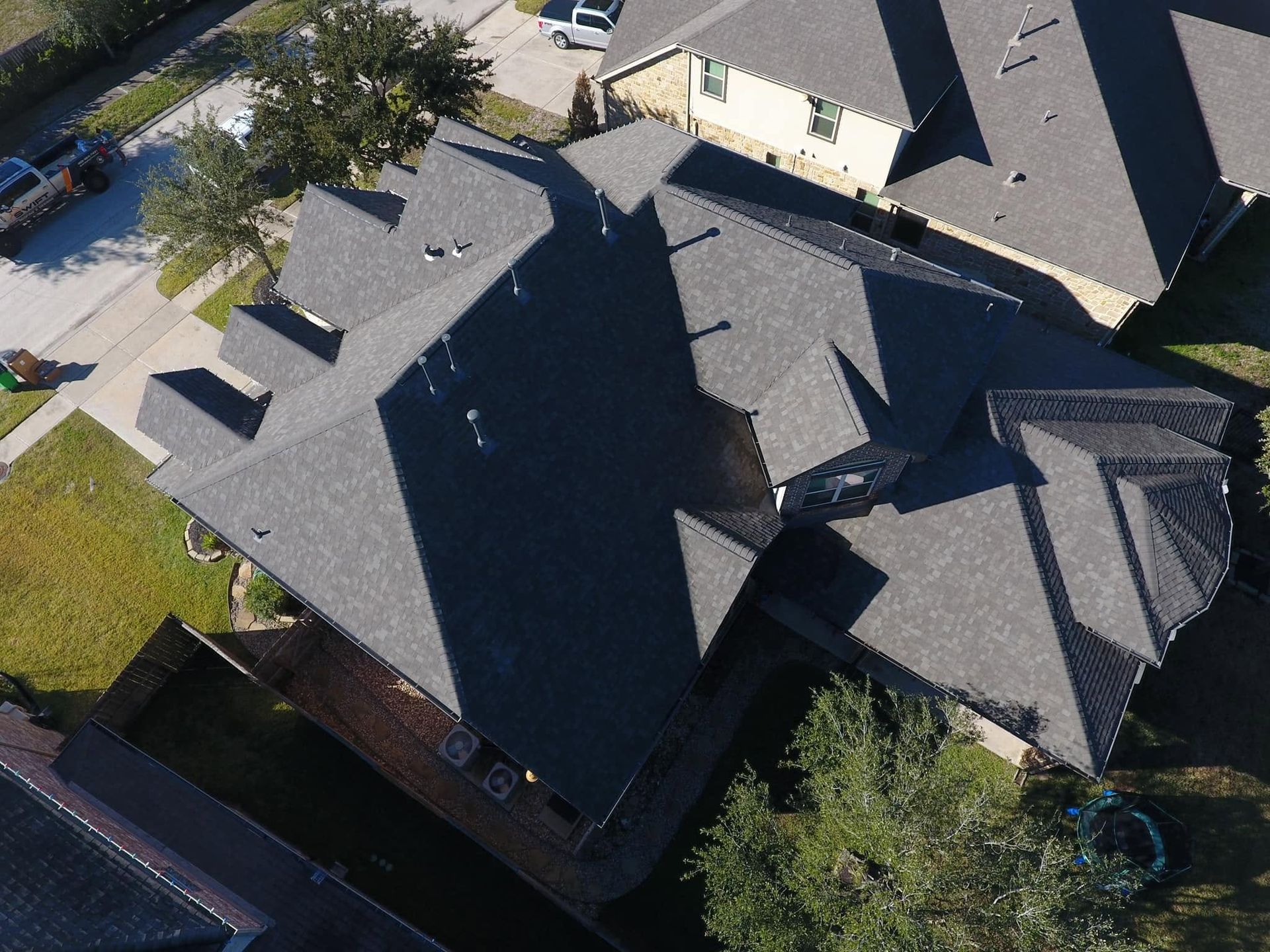
Walk around the exterior and look for:
- Missing or visibly lifted shingles
- Uneven rooflines
- Granules collecting heavily near downspouts
- Damaged flashing you can see safely from the ground
- Debris still sitting in valleys
- Gutters pulling away or holding water
Then check the attic or upper interior if safely accessible:
- Water stains on decking or rafters
- Darkened wood
- Damp insulation
- Daylight where it should not be visible
- Musty odor after rain
- Previous repair patches and where they were made
Our free roof inspection service includes shingles, flashing, decking, attic ventilation, drainage, and interior warning signs, with photo documentation so you can compare what you noticed with what the inspector finds.
| Inspection Result | Targeted Repair May Make Sense When | Larger Scope May Be Needed When |
|---|---|---|
| Hail damage | Limited, repairable damage is isolated | Impact damage is widespread across multiple slopes |
| Lifted shingles | Small number of compatible shingles can be repaired | Wind failure is widespread or shingles are brittle |
| Flashing failure | Detail can be rebuilt without disturbing large roof areas | Water has damaged surrounding decking or multiple transitions |
| Moisture intrusion | Entry point is isolated and decking remains sound | Decking, insulation, or multiple roof areas are affected |
The better approach is to combine age with condition, repair frequency, storm history, and moisture findings. Our article on four roof inspection findings that lead to bigger repairs explains why lifted shingles, failed flashing, hail damage, and hidden moisture should be judged by how they are progressing, not only by how old the roof is.
Ask these questions before accepting either recommendation:
- What exact condition makes restoration possible or impossible?
- Is the decking sound?
- How many slopes are affected?
- Is there hidden moisture?
- Are the existing shingles flexible enough to work around safely?
- What repairs must happen before restoration?
- How much useful life are we realistically trying to gain?
- If we restore now, what would still trigger replacement later?
Those questions turn a sales estimate into a roof-condition discussion.
What Does Restoration vs. Replacement Cost in North Texas?
For estimated market context, asphalt shingle replacement in North Texas is commonly planned around $300 to $600 per roofing square installed, with one roofing square equal to 100 square feet of roof surface. For broader planning context, a typical Texas roof replacement can fall in the $8,000 to $20,000 range, depending on roof size, material, pitch, design complexity, access, and the amount of work required once the existing system is opened up.
Those numbers are useful for early budgeting, but they should be treated as planning ranges rather than a price for a specific home. Roof surface area is different from living square footage because pitch, overhangs, garages, porches, valleys, and roof geometry all change the actual amount of roofing material and labor involved.
Homeowners can collect useful information without climbing onto the roof. Use binoculars or a phone camera from the ground, and inspect the attic or interior only where access is safe. Wet roofs, steep slopes, and hidden weak decking make rooftop inspection a job for trained professionals.
What to Check From the Ground
- Shingle tabs that appear missing, raised, shifted, or visibly damaged
- Flashing that looks bent or separated from adjacent materials
- Debris concentrated in roof valleys or behind penetrations
- Sagging gutter sections, disconnected downspouts, or water marks on fascia
- Tree branches touching the roof or broken limbs resting on it
- Uneven roof planes or a localized dip that was not present before
What to Check Inside the Home or Attic
- New stains on ceilings, walls, rafters, or roof decking
- Damp insulation or a musty odor after rain
- Daylight showing through an unexpected opening
- Rust around fasteners, vents, or metal components
- Peeling paint near the ceiling line or around penetrations
When to Request Professional Help
Write down when each sign appears, and take photos from the same position for future comparisons. If you see an active leak, significant displacement, or storm debris, move belongings away and request professional help rather than attempting a rooftop patch.
After a storm, the same checklist can help you describe what happened, but visible damage may represent only part of the condition. Swift Roofing & Designs offers storm-damage inspections when wind or hail is the likely cause. For an active opening or urgent water entry, emergency roof repair may be the safer route.

The short answer to what voids a roof warranty is that it depends on the warranty, the cause of the damage, and the conditions attached to the claim. Improper repairs, damaging alterations, installation defects, and missed requirements can affect coverage. However, a problem that falls outside a warranty does not necessarily cancel every other protection on the roof. That distinction matters when someone tells you an entire warranty is worthless because one part of the roof was changed.
At Swift Roofing & Designs, we help homeowners understand the condition of their roofs and the paperwork associated with proposed work. The useful starting point is to identify the roof product, the written warranty, and the problem being evaluated. This guide explains common concerns for Royse City homeowners and the questions to ask before repairs, upgrades, or a claim.
What Does It Mean to Void a Roof Warranty?
People often use the word void when they mean that a particular repair is excluded. A warranty may remain in effect while offering no remedy for damage caused by something outside its scope. Other provisions may affect eligibility, transfer, notice, or the amount payable for an otherwise covered problem. You need the relevant wording and facts before deciding which situation applies.
For example, GAF's Shingle & Accessory Limited Warranty says the warranty remains in effect despite improper installation, while excluding damage caused by that installation. That is different from saying all manufacturing-defect protection disappears whenever an installer makes an error. The example illustrates why a broad warning should be checked against the document for your installed product and warranty tier.
Ask which provision applies, which damage it affects, and whether other coverage remains available.
Start With the Different Types of Protection
A roof can have several kinds of protection with different providers and purposes. Keeping them separate makes it easier to contact the right party and understand a proposed remedy. A long product term alone does not establish that labor, flashing, interior damage, or every leak is covered.
| Protection | General purpose | What to confirm in writing |
|---|---|---|
| Manufacturer roof warranty | Addresses specified product defects | Products, term, exclusions, labor, and claim procedure |
| Roofing workmanship warranty | Addresses specified installation problems | Issuer, scope, duration, exclusions, and response process |
| Enhanced manufacturer warranty | Adds protection under a particular program | Qualification, registration, covered components, and limits |
| Roof repair warranty | Applies to the defined repair work | Repaired area, materials, duration, and exclusions |
| Homeowners insurance | Addresses covered losses under a policy | Cause of loss, deductible, limits, and notice requirements |
Our roof replacement service includes applicable manufacturer warranty registration and our written workmanship warranty. The actual documents determine the protection for your selected system. We encourage homeowners to keep those documents with the contract and completion records rather than rely on a verbal summary.
Owens Corning's overview of roofing warranty types also distinguishes product, contractor workmanship, and enhanced manufacturer protection. A contractor's written warranty should be evaluated on its own terms. Do not assume a manufacturer has agreed to cover another company's labor simply because its shingles were installed.
Repairs and Modifications That Deserve a Warranty Check
Adding something to the roof can change drainage, flashing, access, and responsibility for future leaks. Before a contractor drills, cuts, removes, or coats roofing, identify what the proposed work touches. Written coordination is especially useful when the original installer and the new contractor are different companies.
- Solar installations: Clarify attachment details, flashing, roof access, and responsibility for penetrations.
- Satellite dishes and antennas: Confirm how mounts are supported and sealed.
- New vents or skylights: Review the opening, drainage detail, and surrounding roofing work.
- Repairs by another contractor: Check notice, authorization, and workmanship-warranty provisions before work begins.
- Coatings or treatments: Confirm compatibility with the roofing product and applicable written terms.
- Equipment removal: Plan how abandoned fasteners, holes, and disturbed materials will be repaired.
These activities do not all have identical consequences. A leaking attachment may be excluded from a particular warranty without eliminating protection for unrelated material defects elsewhere. Conversely, some agreements impose specific conditions on alterations, so a general assurance from the modification contractor is not enough.
Ask the relevant warranty provider to explain requirements before authorizing planned work. Keep the response, proposal, photographs, and final invoice together. When repairs involve our work, contact us so we can discuss the affected area and the applicable written terms before another trade changes it.
Before hiring someone to modify or repair the roof, review our guide to choosing a roofing contractor in North Texas for the questions to ask about written workmanship terms and accountability.
Why Maintenance and Cleaning Methods Matter
Maintenance helps identify small defects, keep drainage paths open, and document changes over time. It should follow the roof system's instructions and any owner duties in the applicable warranty. A missed cleaning date does not establish the outcome of every possible claim, but damage caused by neglected conditions may fall outside the protection you expect. Maintenance history can also help distinguish a recent event from a condition that has developed gradually. Our explanation of what happens when roof repairs are delayed shows why documenting a defect should be followed by an appropriate repair plan.
The method matters as much as the intention. GAF's technical bulletin on algae staining advises against power washing its shingles, an example of why cleaning practices should be checked for the specific material. A method suitable for one roof surface may damage another or conflict with its care instructions. Arrange appropriate professional maintenance instead of climbing onto the roof to experiment with cleaning tools or treatments.
Installation, Ventilation, and System Requirements
Material selection is only part of the installation. Fastening, flashing, underlayment, deck condition, ventilation, and required accessories can influence performance and eligibility for particular protections. The details should be resolved before installation rather than reconstructed when a leak appears.
- Confirm the exact product and warranty tier named in the proposal.
- Ask which accessories or installation details are required for that protection.
- Discuss existing ventilation and deck conditions before roofing covers them.
- Clarify whether reused components are included in or excluded from the warranty scope.
- Request written workmanship terms instead of assuming a product warranty covers installation.
- Keep evidence of registration when the selected program requires it.
GAF's residential warranty comparison shows that enhanced programs can have contractor and system qualifications. Those requirements should not be generalized into a rule that every standard product warranty requires the same accessories or installer designation. Verify the specific program being purchased.
If a problem develops, the inspection should identify its likely cause rather than assign blame from the appearance of one symptom. A leak near a wall, for instance, needs investigation of the surrounding assembly before anyone labels it a shingle defect. Our roof repair service focuses on finding the source and explaining the proposed correction.
What to Do When Damage or a Leak Appears
Start with safety, documentation, and prompt communication. Protect people and property from an active leak, while contacting the parties responsible for the warranty and any potentially applicable insurance. Do not postpone necessary emergency protection just because coverage has not yet been determined.
| Situation | Practical first step | Information to preserve |
|---|---|---|
| Interior dripping or a new stain | Arrange safe assessment and necessary protection | Photos, discovery date, affected rooms |
| Damage after a storm | Document visible conditions and contact the appropriate parties | Storm date, photographs, inspection findings |
| Suspected product problem | Follow the manufacturer's claim instructions promptly | Product details, installation date, proof of ownership |
| Leak near later modifications | Notify the relevant contractors and warranty provider | Modification contract and before-and-after photos |
| Problem after a prior repair | Contact the repair provider with the written scope | Invoice, repair location, warranty terms |
Some warranties require notification and an opportunity to evaluate the material before permanent replacement. GAF's sample document, for example, warns that repairing or replacing products before required notification or evaluation can affect a claim. Check your own instructions promptly and coordinate emergency work so photographs, records, and requested evidence are preserved where practical.
The Roofing Contractors Association of Texas's warranty guidance highlights the difference between limited warranty protection and broad assumptions about roof coverage. Storm damage is not automatically a manufacturing defect, and a workmanship warranty is not a homeowners policy. Ask your insurer or warranty provider for its own coverage determination rather than treating an inspection estimate as approval of a claim.
What Repairs May Cost When Coverage Does Not Apply
We provide estimates based on the roof's condition and the work needed to correct the problem. For independent budgeting context, HomeGuide's 2026 roof repair guide lists minor repairs at
$150 to $1,000, moderate repairs at
$1,000 to $3,000, and major repairs at
$3,000 to $6,000 or more. Those national figures are external planning ranges, while our written estimate reflects your roof and the actual scope.
| General repair category | Independent national planning range | Typical scope considerations |
|---|---|---|
| Minor repair | $150 to $1,000 | Limited shingle, small leak, or vent-related work |
| Moderate repair | $1,000 to $3,000 | Larger affected areas or some associated damage |
| Major repair | $3,000 to $6,000+ | Extensive roofing, decking, or related repairs |
| Warranty-related owner costs | Determined by the applicable agreement | Exclusions, labor limits, disposal, and other uncovered work |
A covered claim may still leave costs outside the remedy, depending on the agreement. Conversely, an excluded repair may be relatively limited and not justify replacing the roof. Ask for the covered and owner-paid portions to be explained separately when a provider has made a coverage decision.
Compare estimates by materials, affected area, access, removal, flashing details, cleanup, and the written roof repair warranty. A surface seal and a repair that reconstructs a failed connection are different scopes even when both address the same stain. Clear documentation helps you understand the price and provides a record if the problem returns.
A Decision Framework for Protecting Your Coverage
The next step depends on whether you are planning work, responding to damage, or reviewing existing records. Use the following framework to avoid making assumptions before the condition and warranty have been identified. It applies to homes in Royse City, Rockwall, Fate, and Greenville without assuming every property has the same product or contract.
- Before a roof project: Confirm the exact products, warranty names, registration duties, and written workmanship terms.
- Before an alteration: Ask the relevant provider about approvals, qualified installers, and responsibility for the modified area.
- When a leak appears: Arrange safe protection, document the condition, and follow notice instructions promptly.
- After storm damage: Separate the physical repair question from insurance and warranty decisions.
- When someone says coverage is void: Request the applicable provision and an explanation tied to the observed damage.
- Before selling or after buying: Review transfer conditions and preserve evidence of any required notice.
Build one digital folder containing the contract, installation date, product information, warranty documents, registration confirmations, and service history. Add modification records and dated photographs as work occurs. That folder is more useful than a brochure that lists only the longest available term.
For example, a leak around a newly installed attachment should lead to questions about that detail and the responsible scope. It should not automatically become a conclusion about every other roof component.
Cause, location, written terms, and documented work provide a better basis for the decision than the word warranty on its own.
Frequently Asked Questions
Does hiring another roofer automatically void my warranty?
Not as a universal rule, because manufacturer and contractor agreements differ. Some contain notice or alteration provisions, and damage caused by later work may be excluded. Contact the relevant provider before planned repairs. Ask which portion of coverage could be affected and obtain the explanation in writing.
Will adding solar panels cancel all roof warranty coverage?
Do not assume either cancellation or automatic protection. Mounts and roof penetrations introduce details that need coordination between the installer and roofing providers. Review the specific warranty and any approval requirements before installation. Keep records of the attachment method and responsibility for related leaks.
Does a long manufacturer warranty cover every roof leak?
No, because its protection depends on the covered products, causes, and remedies. Leaks can originate in flashing, later modifications, damage, or installation conditions outside a standard product warranty. Some enhanced programs add protection under specific terms. Read the actual agreement rather than relying on the duration alone.
Is hail damage a roof warranty claim?
Hail is not automatically a product defect. Review any applicable impact or weather provisions and contact your insurer about policy coverage. An inspection can document physical conditions without deciding the claim. Preserve storm dates, photographs, and repair records while the appropriate provider evaluates the matter.
Can I repair an active leak while a claim is being reviewed?
Necessary emergency protection should be coordinated promptly with the relevant parties. Warranty procedures may require notice and an opportunity to inspect before permanent work changes the evidence. Document what was found and what protection was performed. Ask the provider how to preserve any materials or records it needs.
Does a warranty automatically transfer when a home is sold?
Transfer depends on the specific agreement. Some warranties require notice, impose deadlines, or change protection for a later owner. Obtain the documents during the transaction and check the requirements directly. Keep confirmation of any transfer rather than assuming the sale paperwork completed it.
Get Clear Answers About Your Roof and Its Warranty
If you are unsure whether a leak relates to workmanship, materials, storm damage, or later modifications, we can inspect the roof and explain our findings. We provide written workmanship terms for our work and help homeowners understand the applicable product paperwork. Our goal is to connect the observed condition with a clear repair recommendation and estimate. Call Swift Roofing & Designs at (469) 964-7431 to arrange a roof inspection in Royse City.
We also serve homeowners in Rockwall, Fate, Greenville, and surrounding North Texas communities. Have your installation contract, warranty documents, and repair history available when we discuss the roof. Tell us about planned solar work, new penetrations, or earlier repairs that may affect the assessment. Together, those records and an inspection make the next decision easier to understand.
Request a Roofing Quote
Blog Form
We will get back to you as soon as possible.
Please try again later.
More Posts Like This:
Choose Swift Roofing & Designs for Top Quality Roofing
Need a reliable roofer? We've helped countless clients protect their homes while saving time and money, and we’re ready to help you next.