
Black and white house icon with roof, chimney, and round window.

Class 4 Impact Resistant Shingles in North Texas: Are They Worth the Investment?

May 27, 2026

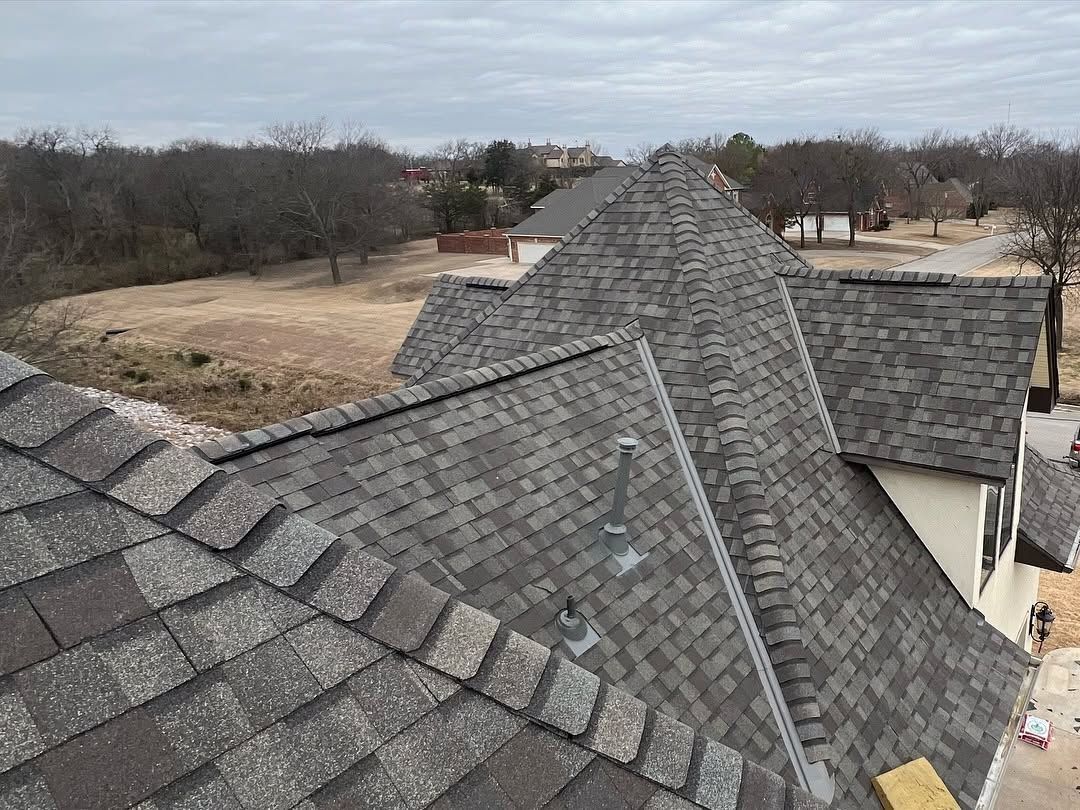
If you're replacing a roof in Rockwall or Royse City and someone hasn't mentioned Class 4 impact resistant shingles yet — they should have. North Texas is one of the few markets in the country where upgrading to Class 4 materials isn't a luxury decision. It's a financially rational one. The combination of living in Hail Alley, UV radiation that accelerates standard shingle degradation faster than most regions, and Texas insurance carriers that offer meaningful premium discounts for Class 4 certification creates a total cost of ownership calculation that consistently favors the upgrade. Swift Roofing installs Class 4 impact resistant shingles throughout Rockwall, Royse City, and surrounding North Texas. This guide covers what Class 4 actually means, what it costs, what the insurance math looks like, and how to know if your roof is a candidate.

What Are Class 4 Impact Resistant Shingles — And What Makes Them Different?

Class 4 is the highest rating in the UL 2218 impact resistance standard — the industry benchmark for testing roofing material durability against hail and impact damage.


How the UL 2218 test works: Independent testing laboratories drop steel balls of specific sizes from specific heights onto the same spot on a shingle twice. The shingle must show absolutely no evidence of rupture, tearing, or fracture on either the front or back surface to pass.


The four class ratings:

Class Steel Ball Diameter Drop Height Equivalent Hail Size
Class 1 1.25 inches 12 feet Small hail
Class 2 1.50 inches 15 feet Moderate hail
Class 3 1.75 inches 17 feet Large hail
Class 4 2.00 inches 20 feet Significant hail event

What Class 4 certification means in real-world terms: A shingle that passes the Class 4 test has survived maximum impact force in standardized testing — twice, in the same location. In practice, this means the shingle is engineered to absorb impact energy rather than crack or fracture under it.


What makes Class 4 shingles physically different: Most Class 4 products use SBS-modified asphalt — a rubberized polymer blend that makes the shingle flexible rather than rigid. Standard architectural shingles use standard asphalt that becomes brittle as it ages and as UV exposure depletes the oils that maintain flexibility. The polymer modification in Class 4 products maintains flexibility longer, which is why they resist impact instead of cracking under it — and why they perform better in North Texas's thermal cycling environment.


Granule adhesion: Standard shingles lose granules when impacted — those granules are the protective coating that prevents UV from reaching the asphalt. Once granules are lost, the exposed asphalt degrades rapidly. Class 4 polymer flexibility means the mat doesn't snap on impact, which means the granule bond remains intact where a standard shingle would shed granules across a hail event.

Why Class 4 Shingles Make More Sense in North Texas Than Almost Anywhere Else

This is a market-specific conversation — and the North Texas case for Class 4 is stronger than almost anywhere in the country:


Hail Alley — the meteorological reality North Texas sits in the southern corridor of America's Hail Alley — the geographic zone where warm, moist Gulf air collides with cold, dry air from the Rockies, producing supercell storms that generate large, high-velocity hail consistently. Texas leads the nation in hail damage claims annually, and the East DFW corridor that includes Rockwall and Royse City is in the direct path of storm tracks that frequently cross Lake Ray Hubbard — a moisture source that intensifies storms already tracking across the region.


For Rockwall and Royse City homeowners, hail larger than a quarter is an almost annual spring event. Hail exceeding 1.5 inches — large enough to damage standard architectural shingles — occurs multiple times per decade. A standard shingle roof in this market faces the kind of hail stress that drives repeated insurance claims on a relatively short cycle.


UV degradation acceleration North Texas receives approximately 30% more UV radiation annually than the national average. Standard asphalt shingles rely on oils and flexible binders that UV radiation depletes progressively — making them brittle before they reach their rated lifespan. The combination of thermal cycling (160°F+ roof surface temperatures in summer, rapid cooling at night) and UV exposure creates the brittle shingles that fail under hail impact that a newer or better-engineered shingle would survive.


The compounding problem: A standard shingle that's 8 years old in North Texas has experienced 8 years of accelerated UV degradation and thermal cycling — making it significantly more vulnerable to a hail event than the same age shingle in a moderate climate. Class 4 shingles' polymer modification maintains flexibility through this degradation cycle, extending the window during which the shingle can absorb impact rather than crack under it.


The insurance environment in Texas: Texas is the hail-damage capital of the country — and insurance carriers price that reality into their policies. Wind and hail deductibles in Texas are frequently set at 1 to 2% of a home's insured value rather than a flat dollar amount. For a $400,000 home, a 2% deductible means $8,000 out of pocket on every claim. Carriers that price risk this aggressively are also willing to offer meaningful premium discounts when the roof significantly reduces their exposure — which is exactly what Class 4 certification does.

Class 4 vs. Standard Architectural Shingles — The Performance Comparison

Here's the side-by-side performance comparison for North Texas conditions specifically:

Performance Factor Class 4 Impact Resistant Standard Architectural
Impact resistance UL 2218 Class 4 — survives 2-inch steel ball from 20 feet without fracture Typically Class 1 to 3 — susceptible to cracking and bruising from hail over 1.5 inches
Heat tolerance SBS polymer-modified asphalt resists softening and distortion at 100°F+ Standard asphalt softens under extreme heat, increasing blister and distortion risk
UV performance Rubberized polymers maintain flexibility longer under UV — slows oil depletion Adequate but degrades faster without polymer modification in high-UV environments
Wind rating Typically rated 110 to 130 mph with advanced sealant strips Standard architectural typically 110 mph — tab adhesion more vulnerable to sealant failure
Granule adhesion Polymer flexibility prevents mat fracture that causes granule shedding Granule loss accelerates after hail impacts and large temperature swings
Lifespan in North Texas 20 to 30 years 15 to 20 years — often shortened by climate-accelerated aging

The practical summary: The performance gap between Class 4 and standard architectural widens specifically in North Texas's conditions. In a mild climate with infrequent hail, Class 4's advantages are real but less pronounced. In Rockwall and Royse City's specific weather environment — the performance gap is the difference between a roof that survives a hail season and one that generates an insurance claim every few years.

The Insurance Premium Discount — What Texas Homeowners Need to Know

This is the part of the Class 4 conversation that surprises most homeowners — and it changes the financial calculation significantly:


What the discount is: Many Texas homeowner's insurance carriers offer premium reductions for homes with Class 4 certified roofs — typically in the range of 15 to 35% on the dwelling coverage portion of the policy. The discount reflects the carrier's reduced exposure from a roof that is significantly less likely to generate a hail damage claim.


What the discount applies to: The discount typically applies to the dwelling coverage portion of the premium — not the entire policy. Dwelling coverage is generally 50 to 60% of the total premium, so the actual dollar impact is calculated on that portion.


The math with a realistic North Texas scenario:

The Real Cost Comparison — Small Repair vs. Delayed Repair vs. Full Replacement

Here's the honest dollar progression that delayed repair produces in Rockwall and Royse City:

Amount
Total annual homeowner's premium $3,000
Dwelling coverage portion $1,600
Class 4 discount rate (25%) $400/year savings
10-year savings total $4,000
20-year savings total $8,000

How to claim the discount:


  1. Contact your insurance agent before installation to confirm their specific discount percentage and documentation requirements
  2. Collect from Swift Roofing: detailed invoice, manufacturer certification confirming UL 2218 Class 4 rating, and completion photos
  3. Many Texas carriers accept the Texas Department of Insurance Impact-Resistant Roofing Installation Form (PC-068) — ask your agent
  4. Confirm the updated premium is reflected on your next billing statement


What to verify with your carrier before installation:


  • Their specific discount percentage for Class 4 — it varies between carriers
  • Whether they require a specific brand or product line vs. any UL 2218 Class 4 certified product
  • Whether IBHS FORTIFIED Roof certification (which goes beyond just the shingle) qualifies for additional discount
  • That the discount will apply to your specific policy type

How Much More Do Class 4 Shingles Cost in North Texas?

Here's the honest cost picture — upfront premium, lifespan comparison, and 20-year total cost of ownership:


Upfront cost comparison:

Scope Standard Architectural Class 4 Impact Resistant Difference
Installed cost (average North Texas home) $11,000–$14,000 $13,000–$17,000 $2,000–$3,000 more
Cost as percentage premium Baseline 10–25% more
Standard Roof Class 4 Roof
Initial installation $12,500 $15,000
Replacement at year 15–17 $13,000+ (likely needed) Not needed — still serviceable
Insurance premium savings (20 years at $375/year) $0 -$7,500
Reduced hail claim deductibles (fewer claims) Multiple $8,000+ deductible events likely Significantly fewer claim events
20-year net cost estimate $25,000+ $7,500–$10,000 net after savings

The payback period on the upfront premium: At $375 per year in insurance savings on the $2,500 upfront premium difference — the Class 4 upgrade pays for itself in approximately 6 to 7 years through insurance savings alone. The extended lifespan and reduced claim deductible frequency are additional returns on top of that.

Class 4 Shingle Brands Swift Roofing Installs and Recommends

Not all Class 4 products perform equally in North Texas's specific conditions. Here are the product lines Swift Roofing installs and the North Texas-specific reasons for each:


Malarkey Roofing — Legacy® and Vista® Malarkey's proprietary NEX® polymer modified asphalt technology uses recycled rubber and plastics to create a shingle that maintains flexibility through North Texas's extreme thermal cycling. The wide nail zone reduces installation error that can void warranties. Strong track record in DFW markets for resisting the thermal shock cycling that North Texas's temperature swings produce.


Owens Corning — Duration® FLEX Engineered with a rubberized polymer blend that delivers Class 4 rating with outstanding tear resistance. The Duration FLEX has demonstrated consistent performance in the DFW hail corridor and is widely used throughout Rockwall and Royse City. Available in a wide range of colors that match existing trim and complement North Texas home styles.


GAF — Timberline® ArmorShield™ II GAF's Class 4 product combines the familiar Timberline architectural profile with UL 2218 impact resistance — providing the curb appeal of a premium architectural shingle with Class 4 storm performance. Widely recognized in the DFW market with a strong local installer network.


CertainTeed — NorthGate® ClimateFlex Features a ClimateFlex polymer-modified asphalt core with superior granule adhesion — particularly relevant for North Texas's thermal cycling that causes granule shedding in standard products. Deep color definition and heavy shingle weight provide both aesthetic quality and performance.


Swift Roofing's recommendation process: Every Swift Roofing Class 4 project begins with an assessment of the specific property — roof geometry, attic ventilation, existing deck condition, and the homeowner's aesthetic preferences — before a specific product is recommended. The right Class 4 product for a home depends on more than just the Class 4 rating.


Is Your Roof a Candidate for Class 4 Replacement? Not every roof needs to be replaced with Class 4 immediately — but several specific situations make the timing clearly favorable:


Strong candidates for Class 4 replacement now:


Age 10 to 15+ years on a North Texas roof At this age, UV degradation and thermal cycling have already significantly reduced standard shingle flexibility and granule adhesion. The roof is approaching the age range where the next significant hail event may produce a total loss insurance claim rather than a repair. Replacing with Class 4 at this point captures the insurance discount for the full remaining lifespan of the new roof.


Post-storm replacement funded by insurance If your carrier is already funding a replacement after a hail event — paying the $2,000 to $3,000 upfront premium difference to upgrade to Class 4 during an insurance-covered replacement is one of the highest-ROI home improvement decisions available. The insurance is paying the majority of the replacement cost regardless.


Roof showing active granule loss Granule accumulation in gutters from a roof under 15 years old indicates accelerated UV and impact degradation. A roof losing granules is losing its primary UV protection — replacement before the next hail season is more cost-effective than replacement after it.


Premium increase or policy renewal pressure Carriers increasingly move aging roofs to Actual Cash Value (ACV) policies rather than Replacement Cost Value (RCV) — meaning a storm claim on a depreciated roof pays you the depreciated value, not the replacement cost. Class 4 certification helps maintain RCV eligibility and reduces the premium increases that aging standard roofs generate.


When to hold off:


  • Roof under 5 years old and in excellent documented condition
  • Planning to sell the home within 12 to 18 months — the ROI timeline may not fully realize
  • Carrier doesn't offer Class 4 discounts — verify before installation

Get Your Class 4 Assessment From Swift Roofing

The homeowner who calls Swift Roofing in May doesn't spend the summer watching a small problem become a large one. The homeowner who waits until September is calling after the summer has already done its work on an unaddressed vulnerability.


Swift Roofing schedules and completes repairs within the season they're identified — because in North Texas, same-season is the only timeline that prevents the compounding effect this guide describes.


What every Swift Roofing repair service includes:

The Class 4 upgrade decision is straightforward once you have the specific numbers for your property and your insurance policy. What your carrier will discount, what the specific product premium is for your roof, and what your current roof's condition says about timing — those three variables determine the payback period and the financial case.


Swift Roofing provides free Class 4 assessments for Rockwall and Royse City homeowners — including a full inspection of your current roof's condition, a written estimate showing both standard and Class 4 pricing, and documentation support for your insurance carrier's discount application.


What every Swift Roofing Class 4 project includes:

Service Component What It Covers
Free full roof inspection Current condition assessment, granule loss evaluation, hail damage documentation
Standard vs. Class 4 written comparison Side-by-side pricing so you can see the exact premium difference
Product recommendation Specific brand and product line matched to your property and preferences
Insurance discount documentation package Invoice, manufacturer UL 2218 certification, completion photos, and PC-068 form
Correct installation technique Class 4 shingles require specific nailing patterns for warranty validity — Swift crews are trained to spec
Manufacturer warranty Full product warranty through the installed product line
Swift workmanship warranty Separate workmanship warranty backed by a Royse City company that will be here to honor it
Local accountability Physical office in Royse City — not a storm chaser crew that moves on after installation

Ready to find out if Class 4 is right for your North Texas roof? Contact Swift Roofing today for your free assessment.


Request a Roofing Quote

Blog Form


More Posts Like This:

Aerial view of a gray-shingled roof on a house in a rural area under a clear sky.
May 20, 2026
Delaying roof repairs in North Texas doesn't save money — it multiplies the damage. Swift Roofing explains what happens when you wait and what it actually costs over time.
Worker in orange safety vest and red helmet rappels down a gray roof beside trees and a driveway.
May 13, 2026
Choosing the wrong roofing contractor in North Texas after hail season is a costly mistake. Swift Roofing explains exactly what to look for and what to avoid before you sign anything.
Small rural storefront and canopy under a bright cloudy sky, with gravel in the foreground.
May 5, 2026
North Texas summers push roofs to their limit. Swift Roofing explains how to protect your roof from heat damage, improve ventilation, and extend shingle lifespan in Rockwall TX.
Show More
Black outline of a house with a slanted roof and chimney.

Choose Swift Roofing & Designs for Top Quality Roofing

Need a reliable roofer? We've helped countless clients protect their homes while saving time and money, and we’re ready to help you next.

Aerial view of a gray-shingled roof on a house in a rural area under a clear sky.
May 20, 2026
Delaying roof repairs in North Texas doesn't save money — it multiplies the damage. Swift Roofing explains what happens when you wait and what it actually costs over time.
Worker in orange safety vest and red helmet rappels down a gray roof beside trees and a driveway.
May 13, 2026
Choosing the wrong roofing contractor in North Texas after hail season is a costly mistake. Swift Roofing explains exactly what to look for and what to avoid before you sign anything.
Small rural storefront and canopy under a bright cloudy sky, with gravel in the foreground.
May 5, 2026
North Texas summers push roofs to their limit. Swift Roofing explains how to protect your roof from heat damage, improve ventilation, and extend shingle lifespan in Rockwall TX.
Worker in a hard hat inspecting a house roof and siding from a ladder.
April 29, 2026
North Texas roofs take more seasonal punishment than almost anywhere else. Swift Roofing's complete maintenance checklist helps Rockwall homeowners stay ahead of expensive repairs.
Aerial view of suburban houses with a construction site and a pond in the background.
April 21, 2026
Just had hail in North Texas? Swift Roofing walks Rockwall and Royse City homeowners through exactly what to do after a hail storm — from documentation to insurance claims.
Dirty backyard and many leaves on the ground
April 16, 2026
North Texas summer heat is one of the biggest threats to your roof's longevity. Swift Roofing explains what heat does to your roof and how Rockwall homeowners can protect it.
An aerial view of a house with a dark brown shingled roof, an attached white carport, a driveway, and surrounding trees.
April 8, 2026
How long does your roof actually last in North Texas? Swift Roofing breaks down lifespans for asphalt, metal, and tile — and what shortens them faster in Rockwall and Royse City.
A person wearing a high-visibility vest installs new shingles along the ridge of a brown asphalt shingled roof.
April 1, 2026
North Texas weather demands the right roofing materials. Swift Roofing breaks down asphalt, metal, and tile options for Rockwall and Royse City homeowners replacing their roof.
Workers in safety gear install dark asphalt shingles on the roof of a large brick house in a residential neighborhood.
March 25, 2026
North Texas hail season is coming — is your roof ready? Swift Roofing helps Rockwall and Royse City homeowners prep before the storms and recover fast after them.
An aerial view of a house roof partially covered with blue underlayment and partially finished with black metal roofing.
March 18, 2026
Spring is the perfect time to inspect your roof for winter damage before summer storms arrive. Swift Roofing serves Royse City & Rockwall TX — book your inspection today.
Show More