Roof Restoration vs Roof Replacement: What Makes More Sense for Texas Homes
When a Royse City TX homeowner calls Swift Roofing & Designs about a roof that is showing its age, the conversation almost always starts the same way. The homeowner assumes they need a full replacement. They have seen the granule loss, the minor lifting at the shingle edges, maybe a spot of discoloration on the ceiling after the last hailstorm. The conclusion they have drawn is that the roof is done.
Sometimes that conclusion is correct. Sometimes it is not, and the difference between those two outcomes is thousands of dollars.
Roof restoration and roof replacement are not interchangeable options on a spectrum of the same service. They are fundamentally different solutions for fundamentally different problems, and choosing the wrong one either leaves money on the table or leaves a compromised roof in place. For Royse City homeowners, Rockwall County property owners, and anyone in North Texas who is looking at a roof that is not performing the way it should, understanding what each option actually involves and which conditions call for which response is the decision that determines the next decade of roof performance.
What Roof Restoration Actually Is
Roof restoration is a comprehensive process that addresses the full surface condition of a structurally sound roof to extend its serviceable life without tearing off and replacing the existing system. According to roofing industry guidance from Total Foundation and Roofing, restoration revitalizes the entire roof system to extend its life and is the ideal solution when the roof is structurally sound but shows widespread surface wear.
The restoration process typically involves:
- Thorough cleaning: Removing algae, moss, lichen, dirt, and debris from the full roof surface, including the areas between shingles and around penetrations where organic growth accumulates and holds moisture against the shingle surface
- Targeted repair of compromised sections: Replacing or resealing individual shingles, flashing sections, pipe boots, and other localized failures before the protective coating is applied
- Application of a protective coating or treatment: Depending on the roof type and the restoration approach, this may involve a penetrating sealant that rejuvenates the asphalt binders in aging shingles, a reflective coating that reduces UV exposure and thermal stress, or a waterproofing membrane system applied over the existing surface
A quality roof restoration, properly executed on a roof that is a good candidate for the process, can extend the roof's serviceable life by 10 to 20 years according to roofing industry sources, making it a significantly more cost-effective outcome than replacement when the underlying structure supports it.
What restoration is not:
Restoration is not a repair. Targeted repairs address isolated, specific failures: a handful of missing shingles, a cracked pipe boot, a separated flashing joint. Restoration addresses the full surface condition of the roof as a system. It is more comprehensive than repair and less expensive than replacement.
What Roof Replacement Involves and When It Is the Only Answer
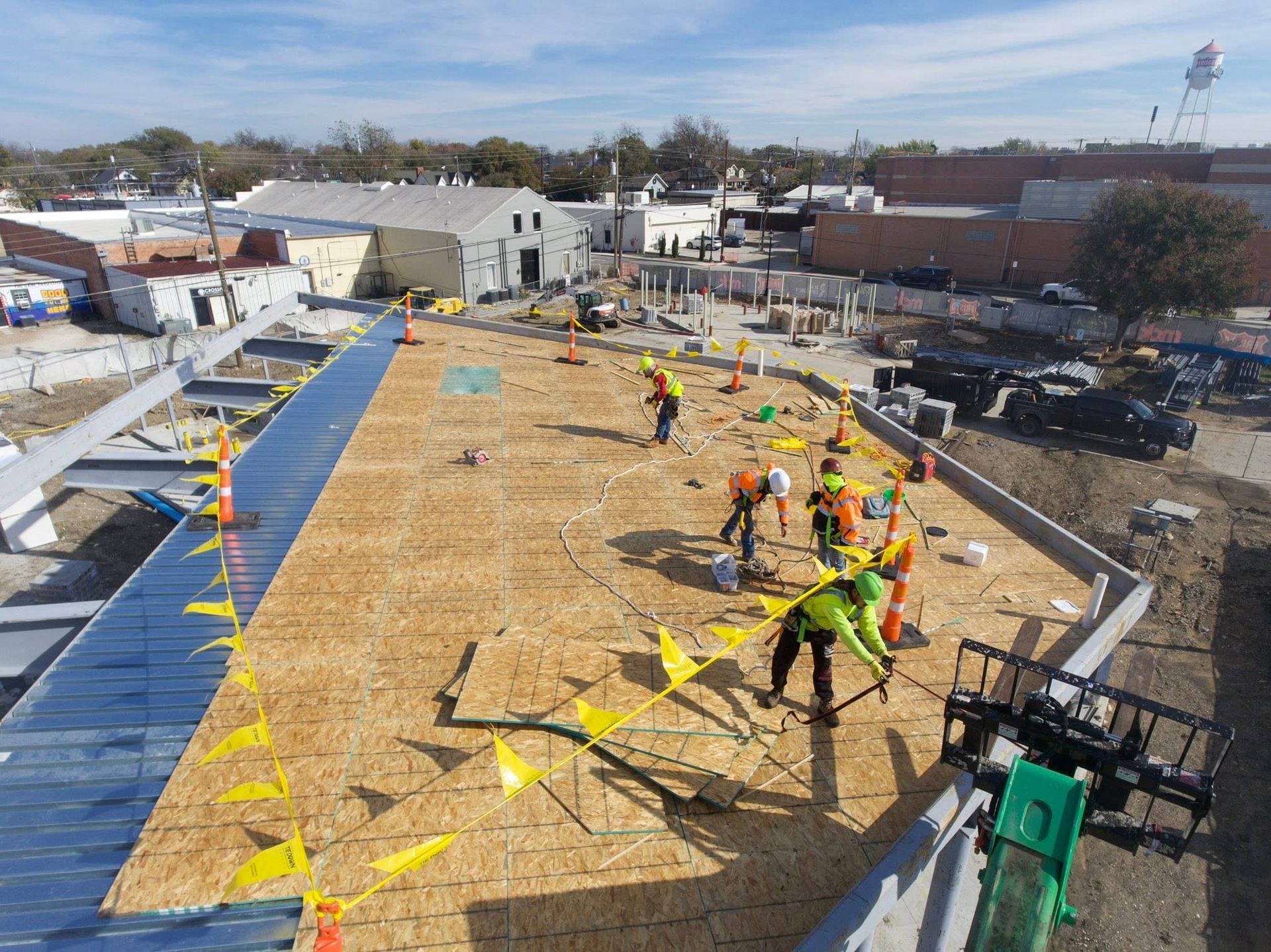
Full roof replacement involves removing the existing roofing system down to the roof deck, inspecting and repairing the deck as needed, installing new underlayment, and applying a complete new layer of shingles or roofing material. It is the most comprehensive and most expensive roofing intervention available, and it is the correct answer when the roof's condition has moved beyond what restoration can address.
The conditions that make replacement necessary rather than optional:
- Structural deck damage: If the roof decking, the oriented strand board or plywood beneath the shingles, has absorbed moisture to the point of delamination, softening, or rot, no surface restoration corrects this. The compromised decking must be replaced before any new surface material is installed. A restoration applied over damaged decking is a surface treatment over a structural failure.
- Multiple layers of existing shingles: Texas building codes, following the International Residential Code, generally permit a maximum of two layers of asphalt shingles on a residential roof. If a Royse City home already has two shingle layers in place, restoration or overlay is not permitted and full tear-off replacement is the only code-compliant option.
- More than 40 to 50 percent of the shingle surface compromised: When granule loss, blistering, cracking, and shingle failure are distributed across the majority of the roof surface rather than concentrated in specific sections, the cost of addressing each compromised area within a restoration scope approaches or exceeds the cost of replacement. The threshold at which repair costs within a restoration become inefficient compared to full replacement is when those repair costs approach 25 to 30 percent of what replacement would cost, according to roofing industry guidance from Texas roofing professionals.
- Active interior water intrusion from multiple locations: A single active leak indicates a specific localized failure. Multiple active leak points in different sections of the roof indicate either widespread shingle failure or systemic underlayment failure, both of which are replacement-level conditions.
- A roof at or past the end of its rated lifespan with significant hail history: Standard three-tab asphalt shingles carry a rated lifespan of 15 to 20 years. Architectural shingles typically carry 25 to 30 year ratings. A Royse City roof at year 22 of a 25-year-rated shingle system that has absorbed multiple North Texas hail events has accumulated damage and aging that is more economically addressed with replacement than with restoration, particularly if the homeowner plans to remain in the property for more than a few years.
The North Texas Hail Factor: Why It Changes the Restoration vs Replacement Calculation
Royse City sits in Rockwall County within the North Texas severe weather corridor. Hail is not an occasional event in this region. It is a seasonal expectation that affects roofing decisions in ways that homeowners in lower-hail regions do not have to account for.
Hail damage changes the restoration versus replacement calculation in a specific way. A roof showing surface wear and minor granule loss from age alone is often a good restoration candidate if the underlying structure is sound. The same roof that has absorbed one or more significant hail events, with the associated bruising of the fiberglass mat beneath the shingle surface, loss of granule protection over a wide area, and cracking of seal strips that allow wind lift, has a different damage profile that may not be addressable through restoration.
What hail damage does that affects the restoration decision:
- Accelerates granule loss beyond normal aging: Hail impacts strip granules from asphalt shingles across large sections of the surface. A roof that has lost significant granule coverage from hail impacts is experiencing accelerated UV exposure to the underlying asphalt that shortens its remaining life more rapidly than a roof aging normally. Restoration may extend the life of a granule-depleted roof, but by a shorter margin than it would extend a roof aging normally.
- Creates bruising invisible from the surface: Hail impacts compress and fracture the fiberglass reinforcement mat inside the shingle without always creating a visible surface rupture. Bruised shingles have reduced structural integrity that affects how they perform under subsequent storm loading. A restoration that addresses the surface condition does not address internal bruising.
- May create insurance claim eligibility: In Royse City and across Rockwall County, significant hail events frequently produce insurance-eligible roof damage. A homeowner who replaces a hail-damaged roof using insurance proceeds rather than out-of-pocket funding is in a fundamentally different financial position than one paying cash for either restoration or replacement. The insurance dimension is one of the reasons a professional inspection after any hail event is the first step rather than an assumption about which path makes sense.
Swift Roofing & Designs provides written hail damage assessments with photo documentation for Royse City and Rockwall County homeowners after storm events, formatted for insurance adjuster review when the inspection findings support a claim.
The Cost Comparison: What Each Option Typically Costs in North Texas
Understanding the cost difference between restoration and replacement is not about choosing the cheaper option. It is about understanding what each option delivers relative to its cost and how long that investment is expected to perform.
Roof restoration cost in North Texas:
Roof restoration costs vary based on roof size, the extent of repair work included, and the specific coating or treatment system applied. For a standard single-family home in Royse City or Rockwall County, restoration costs are significantly lower than full replacement, making it an attractive option when the roof is a genuine candidate for the process.
Roof replacement cost in North Texas:
According to roofing cost data from Texas roofing professionals, standard asphalt shingle roof replacement typically runs between $300 and $450 per square (100 square feet) for materials alone, with total installed costs for a standard Royse City residential roof running from approximately $8,000 to $18,000 or more depending on roof size, pitch, complexity, and material selection. Architectural shingles, which are the standard for current Royse City residential construction, carry higher material costs than three-tab shingles but provide significantly better wind and impact resistance.
The cost decision framework:
- Restoration makes financial sense when the roof is structurally sound, has meaningful remaining life potential, has not absorbed widespread hail damage that compromises that potential, and is not already at the two-layer limit that building code prohibits adding to
- Replacement makes financial sense when structural deck damage is present, when building code precludes adding another layer, when hail damage is extensive enough that insurance may cover a significant portion of the replacement cost, or when the roof is within a few years of the end of its rated lifespan and a restoration's extended life window would run past that remaining rated life anyway
- The 25 to 30 percent threshold: When the repair and preparation costs required within a restoration scope approach 25 to 30 percent of what full replacement would cost, replacement typically delivers better long-term value. This threshold, documented in Texas roofing industry guidance, is one of the key assessment factors that a professional inspection produces.
The Inspection That Makes the Decision Clear
Neither homeowners nor general contractors can determine whether a specific Royse City roof is a restoration candidate or a replacement candidate from a visual inspection from the ground. The assessment requires getting on the roof, probing the decking at penetrations and low points, inspecting the condition of the shingles in detail including checking for bruising and seal strip condition, examining all flashing, assessing the layer count, and evaluating whether the extent of surface damage falls within the range that restoration can cost-effectively address.
What a professional Swift Roofing & Designs inspection covers:
- Deck condition assessment: Identifying any soft spots, delamination, or moisture damage in the roof decking that would make restoration inappropriate regardless of shingle surface condition
- Shingle condition by zone: Mapping where granule loss, blistering, cracking, bruising, and seal strip failure are concentrated versus distributed across the full surface
- Layer count: Confirming whether the existing roof has one or two shingle layers already in place, which determines whether restoration or overlay is even a permitted option
- Hail damage identification: Distinguishing between normal aging wear and hail impact patterns, and assessing whether the damage profile is restoration-compatible or replacement-level
- Flashing and penetration condition: Evaluating all valleys, chimney flashings, pipe boots, and roof-to-wall transitions for failure conditions that affect the restoration versus replacement recommendation
- Insurance eligibility assessment: Documenting any hail or wind damage findings that may support an insurance claim, providing the homeowner with the information they need before deciding whether to pursue a claim
Swift Roofing & Designs serves Royse City, Rockwall, McKinney, Heath, Fate, and the surrounding North Texas communities with free roof inspections that produce written findings, photo documentation, and an honest recommendation on whether restoration or replacement is the right answer for each specific roof.
The goal of the inspection is not to sell a restoration or sell a replacement. It is to give the homeowner accurate information about what their roof actually needs so that the decision they make is the right one for their property and their budget.
Request a Roofing Quote
Blog Form
We will get back to you as soon as possible.
Please try again later.
More Posts Like This:
Choose Swift Roofing & Designs for Top Quality Roofing
Need a reliable roofer? We've helped countless clients protect their homes while saving time and money, and we’re ready to help you next.