
Black and white house icon with roof, chimney, and round window.

Infrared Roof Inspection vs Visual Inspection: Which Finds More Damage in Texas

July 14, 2026

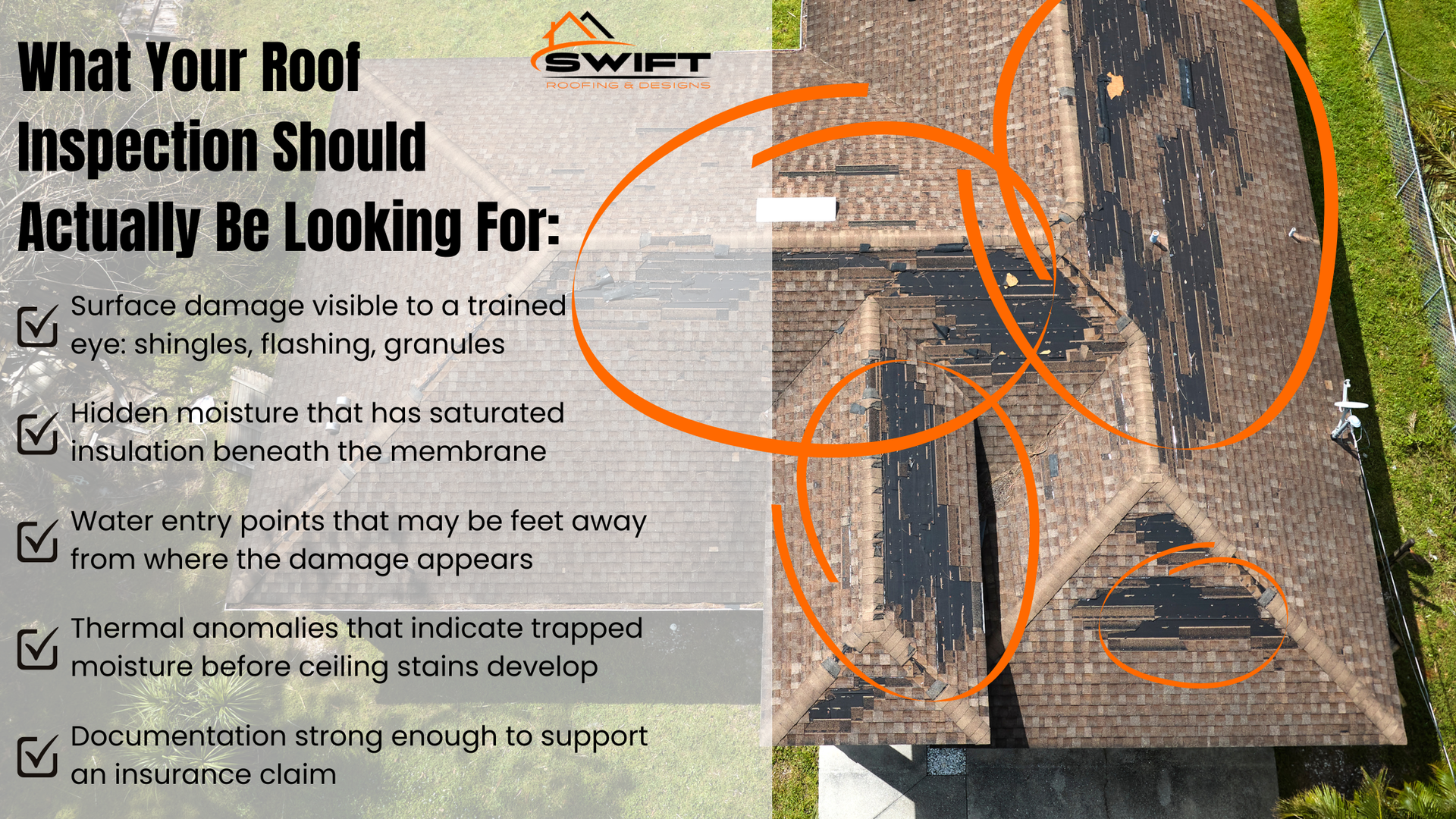
Every roof inspection starts with eyes. A trained inspector climbs up, walks the surface, looks for lifted shingles, missing granules, cracked flashing, soft spots, and signs of past water intrusion. In the right situation, a visual inspection finds exactly what it needs to find.


But there is a category of roof damage that visual inspection cannot find. Not because the inspector is not thorough, but because the damage is invisible from the surface. Moisture that has entered the roof assembly and saturated the insulation beneath the membrane. Water that traveled horizontally along the decking and settled three feet from the entry point. Wet insulation that is performing at a fraction of its rated R-value without producing a single visible stain on the ceiling below.


Swift Roofing performs both visual and infrared roof inspections for residential and commercial properties across Royse City, Rockwall, Sachse, McKinney, and the surrounding North Texas communities. The question the team is asked most often is which type of inspection is needed. The answer depends on the roof type, the symptom pattern, and what the inspection is being used for.

This guide explains exactly what each method finds, what it misses, and how North Texas homeowners and commercial property owners can make the right call.

How Each Inspection Method Works

Factor Visual Inspection Infrared Inspection
What it detects Surface damage: missing shingles, lifted edges, cracked flashing, granule loss Hidden moisture in insulation and decking beneath the roof surface
How it works Trained inspector walks the roof and examines all accessible surfaces Thermal imaging camera detects temperature differences between wet and dry roofing materials
When it is performed Anytime during daylight in reasonable weather conditions Evening or early morning after daytime solar heat has been absorbed, on clear dry days
Best for Hail damage, wind damage, storm assessment, routine maintenance Leak investigation, pre-purchase inspection, insurance documentation, commercial flat roofs
Limitations Cannot detect moisture hidden beneath the surface Less reliable on highly reflective surfaces and in adverse weather conditions
Cost Lower Higher due to specialized equipment and timing requirements

What Visual Inspection Finds

A thorough visual inspection by a trained inspector covers every accessible surface of the roof, looking for the damage patterns that North Texas weather produces most consistently.


What Swift Roofing's visual inspection covers:


  • Shingle condition: Missing shingles, lifted edges, cracked tabs, broken seal strips from wind events, and granule loss from hail impacts that accelerates UV degradation of the underlying asphalt
  • Flashing integrity: Chimney base flashing, pipe boot condition, roof-to-wall transitions, and valley flashing where separation produces the most common source of active leaks in North Texas homes
  • Soft spots in the decking: Areas where the decking has absorbed enough moisture to soften, detectable by feel during a roof walk
  • Gutter condition: Granule accumulation in gutters and downspouts that indicates shingle surface degradation, and gutter attachment condition relative to fascia integrity
  • Penetration condition: All pipe boots, vents, skylights, and any roof penetration where sealant degradation allows water entry


Visual inspection is the appropriate first response after any hail or wind event in Rockwall County. It is what produces the written damage documentation and photo record that insurance adjusters require, and it identifies the surface conditions that determine whether a repair, restoration, or replacement conversation is warranted. For more on what that decision involves, see Swift Roofing's guide to Roof Restoration vs Roof Replacement: What Makes More Sense for Texas Homes.


Where visual inspection has limits:


Visual inspection sees what is on the roof. It does not see what is beneath it. Water that entered through a failed pipe boot and traveled horizontally along the underlayment for two feet before saturating the insulation below the decking leaves no visible surface sign until the moisture accumulation is significant enough to stain the ceiling beneath it. By that point, the damage has been progressing for weeks or months.

What Infrared Inspection Finds

Infrared inspection, also called thermal imaging or thermography, uses a specialized camera to detect temperature differences across the roof surface. These differences reveal what visual inspection cannot: moisture that has penetrated the roofing system and is hiding in the insulation and decking below.


The physics that make infrared inspection work are specific. Water retains heat longer than dry roofing materials. During the day, solar radiation heats the entire roof surface. After the sun sets, dry sections of the roof release that heat rapidly. Sections where insulation has absorbed moisture retain the heat significantly longer, appearing as warmer areas, called hot spots, on the thermal image taken during the evening cooling period.


According to the ASTM Standard C1153, which governs the standard practice for locating wet insulation in roofing systems using infrared imaging, infrared inspection can cover 10,000 to 20,000 square feet of roof per hour when conditions are appropriate, allowing comprehensive assessment of large commercial roofs in a single session.


What infrared inspection reveals that visual inspection misses:


  • Moisture that has saturated insulation below the membrane without producing any surface stain or visible damage
  • The true boundary of a moisture intrusion zone, which is almost always larger than the visible wet area on the ceiling below
  • Water migration paths that travel horizontally from the entry point before accumulating
  • Thermal anomalies around penetrations, membrane seams, and flashing joints that indicate developing moisture intrusion before visible damage occurs
  • Wet insulation that is performing at a fraction of its rated R-value, increasing energy costs for commercial buildings


According to IR Analyzers' thermal imaging research, non-destructive thermal imagery proactively flags areas of moisture damage that would not be found during visual inspection, because water travels through building assemblies both horizontally and vertically, typically showing up far from the original entry point.


Where infrared inspection has limits:


Infrared inspection requires specific conditions to produce reliable results. According to Building Enclosure's roofing forensics research, infrared testing has accuracy limitations on highly reflective surfaces where false negatives are common. Rain, cloud cover, high winds, and warm nighttime temperatures all reduce the temperature differential that the camera needs to distinguish wet from dry areas. Swift Roofing schedules infrared inspections on clear evenings after days with adequate solar exposure, which in North Texas's climate means most of the year is workable but the timing of each inspection has to account for current weather conditions.

When North Texas Homeowners Need Each Type

Situation Recommended inspection
Recent hail or wind event Visual inspection first for damage documentation
Active ceiling stain with no obvious surface damage Infrared to locate hidden moisture entry point
Pre-purchase inspection on a home Both: visual for surface condition, infrared for hidden moisture
Commercial flat roof with a suspected slow leak Infrared to map the full moisture intrusion zone
Insurance claim documentation after a storm Visual inspection with written findings and photos
Water heater or HVAC condensate near the roof Infrared to distinguish roofing moisture from equipment moisture
Roof over 15 years old, no recent inspection Visual inspection as a baseline assessment
Post-repair verification that a leak has been resolved Infrared to confirm moisture has dried and entry point is sealed

Why Infrared Matters for North Texas Commercial Roofs

The infrared inspection conversation becomes more significant for commercial properties in Royse City, Sachse, and Rockwall with low-slope or flat roof systems. TPO, EPDM, and modified bitumen roofs can develop moisture intrusion over wide areas without producing any surface indication that a problem exists. A commercial building running a roof membrane that has saturated insulation across 20 percent of its surface may not see any ceiling stain or visible deck damage for months, while energy costs rise and the insulation R-value continues declining.


According to Advanced Infrared's commercial roofing scan data, some low-slope roofs can develop problems in as little as one to two years. Some manufacturers, including GAF, require an infrared scan for warranty compliance after a new installation. A commercial property owner who assumes visual inspection alone is sufficient for a flat roof system may be missing the moisture accumulation that is shortening the roof's effective service life and voiding the warranty conditions.


For a full breakdown of commercial roofing material options and their performance characteristics in North Texas conditions, see Swift Roofing's guide to 6 Durable Roofing Materials for Commercial Buildings in North Texas.

What Swift Roofing's Inspection Process Includes

Swift Roofing provides both visual and infrared inspection services for residential and commercial properties throughout Royse City, Rockwall, Sachse, McKinney, and the surrounding North Texas communities.


Every Swift Roofing inspection includes:


  • Written findings with photo documentation of all identified damage
  • Clear explanation of what was found before any repair recommendation is made
  • Assessment of whether the damage pattern warrants a repair, restoration, or replacement conversation
  • Insurance documentation formatted for adjuster review when storm damage is identified


For properties where symptoms suggest hidden moisture, the Swift Roofing team recommends pairing a visual inspection with infrared to provide a complete picture of both surface and subsurface conditions. The surface damage a visual inspection documents and the hidden moisture an infrared inspection maps together produce the most complete assessment available for any roof system.


For more on the specific damage patterns that North Texas hail and wind events produce on residential roofs, see Swift Roofing's guide to The 5 Roof Repairs Royse City TX Homeowners Deal With Year After Year.

Frequently Asked Questions

  • How much does a roof inspection cost in Royse City TX?

    Swift Roofing provides free visual roof inspections for residential properties throughout Royse City and the surrounding North Texas communities. Infrared inspections for commercial properties are quoted based on the roof square footage and accessibility. Contact the team for commercial pricing.

  • Can infrared inspection replace a visual inspection?

    No. Each method finds what the other misses. A complete roof assessment on a property with suspected moisture intrusion uses both: visual inspection for surface condition and insurance documentation, infrared for subsurface moisture mapping. Swift Roofing performs both on the same visit when both are warranted.

  • How long does an infrared roof inspection take?

    Coverage rates of 10,000 to 20,000 square feet per hour make infrared efficient for large commercial roofs. A standard residential roof can typically be scanned in 30 to 60 minutes. The timing requirement, evening hours after adequate daytime solar exposure, is the primary scheduling consideration.

  • Will my homeowner's insurance cover damage found during a roof inspection?

    Texas homeowner's insurance policies typically cover sudden storm damage including hail and wind. The written documentation and photos from a Swift Roofing visual inspection are formatted specifically for insurance adjuster review. Hidden moisture damage identified through infrared may support a claim when the moisture source is a covered storm event rather than a maintenance issue.

  • My roof looks fine from the ground. Do I still need an inspection after a storm?

    Yes. Hail damage to asphalt shingles, including granule loss, bruising of the fiberglass mat, and seal strip failure, is frequently not visible from the ground. According to IRC Roofing's infrared inspection research, moisture pockets often develop around roof penetrations and membrane seams that traditional visual inspections might miss at early stages. A professional inspection on the roof surface after any significant hail event is the only way to assess the actual condition.

  • Does Swift Roofing inspect commercial roofs in North Texas?

    Yes. Swift Roofing performs visual and infrared inspections on commercial properties throughout Royse City, Rockwall, Sachse, McKinney, and the surrounding North Texas communities. Commercial inspections include written findings formatted for property manager and insurance adjuster review.

If you're unsure whether your Royse City, Sachse, or Rockwall roof has damage from a recent storm or is harboring hidden moisture, Swift Roofing can inspect the problem, explain your options, and recommend the most practical solution for your home or business.


Schedule a Free Roof Inspection

Roof Restoration vs Replacement

5 Common Roof Repairs Royse City TX

Commercial Roofing Materials

Storm Damage Repair


Request a Roofing Quote

Blog Form


More Posts Like This:

Aerial view of a gray-roofed suburban house with a driveway and surrounding lawn.
July 9, 2026
Choosing the wrong commercial roofing material in North Texas costs property owners thousands in premature repairs. Swift Roofing breaks down the 6 most durable options, what each one costs, and which one is right for your building.
Aerial view of a brick house with a gray shingle roof and surrounding greenery.
June 30, 2026
Not every aging roof in Royse City TX needs full replacement. Swift Roofing & Designs breaks down when restoration extends your roof's life and when replacement is the only answer.
Aerial view of a large gray-shingled house with multiple gables and a beige exterior.
June 23, 2026
From hail damage to failed flashing, Royse City TX homeowners face the same five roof repairs year after year. Swift Roofing & Designs breaks down each one, what causes it, and how to catch it before it becomes a replacement.
Show More
Black outline of a house with a slanted roof and chimney.

Choose Swift Roofing & Designs for Top Quality Roofing

Need a reliable roofer? We've helped countless clients protect their homes while saving time and money, and we’re ready to help you next.

Aerial view of a gray-roofed suburban house with a driveway and surrounding lawn.
July 9, 2026
Choosing the wrong commercial roofing material in North Texas costs property owners thousands in premature repairs. Swift Roofing breaks down the 6 most durable options, what each one costs, and which one is right for your building.
Aerial view of a brick house with a gray shingle roof and surrounding greenery.
June 30, 2026
Not every aging roof in Royse City TX needs full replacement. Swift Roofing & Designs breaks down when restoration extends your roof's life and when replacement is the only answer.
Aerial view of a large gray-shingled house with multiple gables and a beige exterior.
June 23, 2026
From hail damage to failed flashing, Royse City TX homeowners face the same five roof repairs year after year. Swift Roofing & Designs breaks down each one, what causes it, and how to catch it before it becomes a replacement.
Aerial view of a house with a dark roof surrounded by trees and a green yard
June 16, 2026
Spring debris left in your gutters becomes a liability when Royse City summer storms arrive. Swift Roofing & Designs explains what is at stake and what to do about it before the rain season peaks.
Aerial view of a dark-roofed house with a driveway, patio furniture, and a parked car beside a road
June 9, 2026
Learn the warning signs of heat damage on Royse City roofs, from curling shingles to granule loss. Protect your home with expert roofing insights.
Workers installing blue roofing panels on a house roof during construction or repair.
June 4, 2026
June is the most important roof inspection window in North Texas. Swift Roofing's summer checklist helps Royse City homeowners catch hail damage before peak heat compounds it.
Aerial view of a modern building with a blue roof, curved solar panels, and a swimming pool
May 27, 2026
Class 4 impact resistant shingles cost more upfront — but in North Texas hail country, the insurance savings and extended lifespan often make them the smarter long-term investment.
Aerial view of a gray-shingled roof on a house in a rural area under a clear sky.
May 20, 2026
Delaying roof repairs in North Texas doesn't save money — it multiplies the damage. Swift Roofing explains what happens when you wait and what it actually costs over time.
Worker in orange safety vest and red helmet rappels down a gray roof beside trees and a driveway.
May 13, 2026
Choosing the wrong roofing contractor in North Texas after hail season is a costly mistake. Swift Roofing explains exactly what to look for and what to avoid before you sign anything.
Small rural storefront and canopy under a bright cloudy sky, with gravel in the foreground.
May 5, 2026
North Texas summers push roofs to their limit. Swift Roofing explains how to protect your roof from heat damage, improve ventilation, and extend shingle lifespan in Rockwall TX.
Show More