Black and white house icon with roof, chimney, and round window.

Roof Restoration vs Roof Replacement Before Winter: How North Texas Homeowners Decide

August 31, 2026
Inspection Result Targeted Repair May Make Sense When Larger Scope May Be Needed When
Hail damage Limited, repairable damage is isolated Impact damage is widespread across multiple slopes
Lifted shingles Small number of compatible shingles can be repaired Wind failure is widespread or shingles are brittle
Flashing failure Detail can be rebuilt without disturbing large roof areas Water has damaged surrounding decking or multiple transitions
Moisture intrusion Entry point is isolated and decking remains sound Decking, insulation, or multiple roof areas are affected

September is one of the most useful times for a North Texas homeowner to make a roof decision. The worst summer heat has already had months to expose weak shingles, dried sealants, flashing problems, and ventilation issues, but there is still time to correct those problems before cooler weather and the next stretch of rain arrive.


At Swift Roofing & Designs, we do not treat roof restoration in Royse City, TX as a cheaper version of replacement. Restoration and replacement solve different problems. A roof with sound decking and mostly surface-level wear may still have useful service life worth protecting. A roof with widespread storm damage, repeated leaks, soft decking, or an aging system that has already been repaired several times may be past the point where restoration is a good investment.

Why September 2026 Is a Useful Roof-Decision Window in North Texas

North Texas is not moving straight from August heat into winter weather. The National Weather Service Fort Worth/Dallas office said in late August that above-average temperatures and below-average rainfall were likely to continue into the first week of September. That gives homeowners a practical inspection window after months of summer stress but before fall weather becomes less predictable. NWS Fort Worth/Dallas


There is also a larger seasonal pattern worth watching. NOAA's Climate Prediction Center says El Niño is strengthening, with a greater than 90% chance of a very strong event during fall and winter 2026-27. Its seasonal outlooks increasingly favor wetter conditions across parts of the southern United States later in the fall and winter. That does not guarantee a wet winter in Royse City, Rockwall, McKinney, or Sachse, but it is another reason to enter the cooler season knowing whether your roof is actually watertight. NOAA Climate Prediction Center


September is a good time to answer four practical questions:

  • Did summer heat accelerate surface wear?
  • Did spring or summer storms create damage that was never repaired?
  • Is the roof still structurally sound underneath?
  • Will money spent now extend useful life, or only delay an unavoidable replacement?

What Roof Restoration Means at Swift Roofing & Designs

A restoration scope can include surface preparation, targeted shingle and flashing repairs, resealing vulnerable penetrations, protective treatments where appropriate for the roofing system, and a drainage check. Our roof restoration service in Royse City starts with an inspection because restoration only makes sense when the underlying roof is still worth preserving.

Restoration vs. Replacement at a Glance

Question Roof Restoration Roof Replacement
Existing roof stays in place? Yes, where the system remains serviceable No, existing covering is removed
Decking must be sound? Yes Damaged decking can be exposed and replaced
Best for Surface wear and correctable weak points Widespread damage or aging system
Tear-off required? Usually no full tear-off Yes
Main goal Extend useful roof life Start with a new roofing system
Upfront scope Smaller Larger
Best decision basis Condition and remaining service life Damage extent, age, structure, repair history

The Four Inspection Checks That Decide Restoration or Replacement

1. Is the decking structurally sound?

Soft spots, rot, sagging, or moisture-damaged decking make restoration much harder to justify because the foundation of the roof system is already compromised.

2. Is the damage localized or widespread?

A few worn areas, penetrations, or flashing details may be correctable. Hail or wind damage across several slopes changes the math.

3. How many times has the roof already been repaired?

A first repair is different from a roof that develops a new leak or failure every season.

4. Is there enough useful life left to justify restoration?

The answer depends on material condition, age, storm history, granule retention, sealing, and whether the current roof can realistically perform through the years you are trying to gain.

A Real Decision Framework

Inspection Finding Leans Toward Restoration Leans Toward Replacement
Decking Solid and dry Soft, rotted, sagging, or repeatedly wet
Shingle damage Surface wear or isolated damage Brittle, cracked, curled, or widespread storm damage
Flashing Limited details can be rebuilt Multiple failures with hidden water damage
Leak history First or isolated issue Repeated leaks in different areas
Storm damage Limited and repairable Multiple slopes affected
Roof age Meaningful service life remains Roof is already near end of useful life
Prior repairs Occasional Repairs becoming routine

If your inspection report cannot answer those questions clearly, ask for more documentation before deciding. Swift Roofing & Designs uses those findings to explain why a roof is still a restoration candidate or why replacement has become the better long-term choice.
Our related guide to
roof restoration vs. replacement in Texas explains how decking condition, hail damage, flashing, layer count, and repair history affect the same decision.

When Restoration Is the Better Real-World Choice

A good restoration candidate may have:

  • Sound decking
  • Minor granule loss or surface weathering
  • Aging sealant around penetrations
  • A limited number of damaged shingles
  • Flashing that can be repaired
  • No widespread active leaks
  • No major sagging or structural movement
  • Enough remaining roof life to justify the investment


A useful real-life test is this: ask the contractor to show you what restoration is preserving. If they cannot point to sound decking, serviceable shingles, intact slopes, and specific areas that will be corrected, the recommendation is too vague.


For homeowners searching for roof restoration near me in Royse City, TX, that documentation matters more than a low restoration quote.

When Replacement Is the Smarter Spend Before Winter

GAF's 2026 repair-versus-replacement guidance identifies age, damage extent, repair history, and comparative cost as major decision factors.


At Swift Roofing & Designs, we look for the same pattern across age, damage, repair history, and structural condition before recommending a full replacement.


Replacement should move higher on the list when:

  • Decking has rot, soft areas, or sagging
  • Storm damage covers multiple slopes
  • Shingles are brittle enough that repairs create more breakage
  • Leaks keep appearing in different areas
  • Large sections have lost protective granules
  • The roof has already received several rounds of repair
  • Moisture has spread beneath the visible surface
  • Restoration would only buy a very short amount of time

A 15-Minute Homeowner Check Before You Call a Roofer

Walk around the exterior and look for:

  • Missing or visibly lifted shingles
  • Uneven rooflines
  • Granules collecting heavily near downspouts
  • Damaged flashing you can see safely from the ground
  • Debris still sitting in valleys
  • Gutters pulling away or holding water


Then check the attic or upper interior if safely accessible:

  • Water stains on decking or rafters
  • Darkened wood
  • Damp insulation
  • Daylight where it should not be visible
  • Musty odor after rain
  • Previous repair patches and where they were made


Our free roof inspection service includes shingles, flashing, decking, attic ventilation, drainage, and interior warning signs, with photo documentation so you can compare what you noticed with what the inspector finds.

Do Not Make the Decision From Roof Age Alone

The better approach is to combine age with condition, repair frequency, storm history, and moisture findings. Our article on four roof inspection findings that lead to bigger repairs explains why lifted shingles, failed flashing, hail damage, and hidden moisture should be judged by how they are progressing, not only by how old the roof is.


Ask these questions before accepting either recommendation:

  1. What exact condition makes restoration possible or impossible?
  2. Is the decking sound?
  3. How many slopes are affected?
  4. Is there hidden moisture?
  5. Are the existing shingles flexible enough to work around safely?
  6. What repairs must happen before restoration?
  7. How much useful life are we realistically trying to gain?
  8. If we restore now, what would still trigger replacement later?


Those questions turn a sales estimate into a roof-condition discussion.

What Does Restoration vs. Replacement Cost in North Texas?

For estimated market context, asphalt shingle replacement in North Texas is commonly planned around $300 to $600 per roofing square installed, with one roofing square equal to 100 square feet of roof surface. For broader planning context, a typical Texas roof replacement can fall in the $8,000 to $20,000 range, depending on roof size, material, pitch, design complexity, access, and the amount of work required once the existing system is opened up.


Those numbers are useful for early budgeting, but they should be treated as planning ranges rather than a price for a specific home. Roof surface area is different from living square footage because pitch, overhangs, garages, porches, valleys, and roof geometry all change the actual amount of roofing material and labor involved.

Estimated Asphalt Replacement Examples

Approx. Roof Surface Roofing Squares Estimated Range at $300-$600/Square
2,000 sq. ft. 20 squares $6,000-$12,000
2,500 sq. ft. 25 squares $7,500-$15,000
3,000 sq. ft. 30 squares $9,000-$18,000
3,500 sq. ft. 35 squares $10,500-$21,000

These examples are simple planning calculations based on the general per-square range. They do not account for steep slopes, multiple valleys, damaged decking, premium or Class 4 shingles, ventilation work, flashing, tear-off complexity, difficult access, or other conditions that can change the final scope.


Restoration has to be priced differently because the amount of preparation can vary dramatically from one roof to another. One roof may need limited sealing and localized shingle or flashing work. Another may require enough repair before restoration that the economics begin to favor replacement.

Use the 25% to 30% Threshold as a Decision Tool, Not a Price Rule

A useful roofing-industry rule of thumb is: when the repair and preparation required for restoration approach roughly 25% to 30% of the cost of full replacement, replacement deserves a much closer comparison. This is a decision benchmark, not an automatic cutoff.


For example, if an actual replacement estimate comes in at $12,000, 25% to 30% is about $3,000 to $3,600. If the roof needs that much repair and preparation before restoration can even begin, ask how much useful life the restoration is realistically expected to add.

If an actual replacement estimate is $18,000, the same comparison point is approximately $4,500 to $5,400. A restoration scope below that level may still make excellent sense when the decking is sound, damage is limited, and meaningful service life remains. The roof's condition should lead the decision, not the percentage alone.

What Changes the Final Cost?

Cost Factor Why It Matters
Roof size More roofing squares increase material and labor
Roof pitch and complexity Valleys, dormers, walls, and steep slopes require more work
Decking condition Replacement may expose damaged wood that must be replaced
Amount of prep repair Restoration may require shingle, flashing, and sealing work first
Storm damage Widespread hail or wind damage can change the entire scope
Roofing material Architectural, Class 4, metal, and other systems cost differently
Tear-off and disposal Full replacement includes removal and disposal of the existing roof
Ventilation and flashing Code or performance upgrades can add to replacement scope
Remaining useful life Determines whether spending on restoration creates real value
Warranty requirements Some systems require specific materials or installation steps

The best comparison is an apples-to-apples one. We want homeowners to compare the actual restoration scope with the actual replacement scope, including what each option fixes, what it leaves in place, and how many useful years each is expected to provide.

Frequently Asked Questions

  • Can an asphalt shingle roof really be restored instead of replaced?

    Sometimes. Restoration can make sense when the deck is sound, damage is limited, the shingles remain serviceable, and the roof has meaningful life left. It is not appropriate for widespread structural, moisture, or storm damage.

  • Should I restore my roof in September or wait until spring?

    If the roof is already showing wear or damage, September is useful because summer stress is visible and there is time to correct problems before later fall and winter weather. Waiting does not improve damaged flashing, shingles, or decking.

  • How do I know if hidden moisture changes the decision?

    Look for attic staining, wet insulation, soft decking, recurring leaks, or moisture patterns that do not match the visible roof damage. Swift also performs visual and infrared inspections where conditions make infrared useful. See our guide to infrared vs. visual roof inspections.

  • Does one roof leak mean I need replacement?

    No. One isolated leak on an otherwise sound roof may be repairable or compatible with restoration. Repeated leaks in different areas, widespread deterioration, or wet decking are stronger reasons to compare replacement.

  • What should I ask a roofing contractor before choosing restoration?

    Ask them to document decking condition, shingle condition, storm damage, flashing, active or previous leaks, repairs required before restoration, expected service-life extension, and warranty implications. You should be able to understand exactly why the roof is a restoration candidate.

Make the Decision From the Roof You Actually Have

The best fall roof decision between restoration or replacement in North Texas is not based on which service costs less today. It is based on whether the existing roof still has enough structural and material life to make preservation worthwhile.


If you need roof restoration in McKinney, TX, a restoration-versus-replacement inspection in Rockwall or Sachse, or an honest recommendation from a roofing contractor in Royse City, TX, we can inspect the full system, document the findings, and show you why restoration, replacement, repair, or no immediate work makes the most sense before winter.


Roof Restoration
Roof Replacement
Free Roof Inspection
Roof Restoration vs. Replacement in Texas
Swift Roofing & Designs


Request a Roofing Quote

Blog Form


More Posts Like This:

Worker in neon safety vest stands on a roof beside a curved waterfront walkway.
August 24, 2026
See 4 roof inspection findings Royse City homeowners should address before hail, wind, heat, and rain turn small defects into larger repairs.
Roofing crew installing plywood sheathing on a large flat roof under construction
August 17, 2026
Learn why August thunderstorms can turn minor roof damage into emergencies and when to call for emergency roof repair in Royse City, TX.
Aerial view of a roof under repair with black tarps, workers, and scattered equipment around the house.
August 10, 2026
Learn when to file a hail damage roof claim or pay out of pocket based on your deductible, policy type, and damage scope in North Texas.
Show More
Black outline of a house with a slanted roof and chimney.

Choose Swift Roofing & Designs for Top Quality Roofing

Need a reliable roofer? We've helped countless clients protect their homes while saving time and money, and we’re ready to help you next.

Worker in neon safety vest stands on a roof beside a curved waterfront walkway.
August 24, 2026
See 4 roof inspection findings Royse City homeowners should address before hail, wind, heat, and rain turn small defects into larger repairs.
Roofing crew installing plywood sheathing on a large flat roof under construction
August 17, 2026
Learn why August thunderstorms can turn minor roof damage into emergencies and when to call for emergency roof repair in Royse City, TX.
Aerial view of a roof under repair with black tarps, workers, and scattered equipment around the house.
August 10, 2026
Learn when to file a hail damage roof claim or pay out of pocket based on your deductible, policy type, and damage scope in North Texas.
View from a shingled roof over a suburban neighborhood and leafless trees under a cloudy sky
August 4, 2026
A few roof repair choices quietly cost North Texas homeowners far more later. Swift Roofing breaks down 4 common mistakes and how to avoid the costly ones.
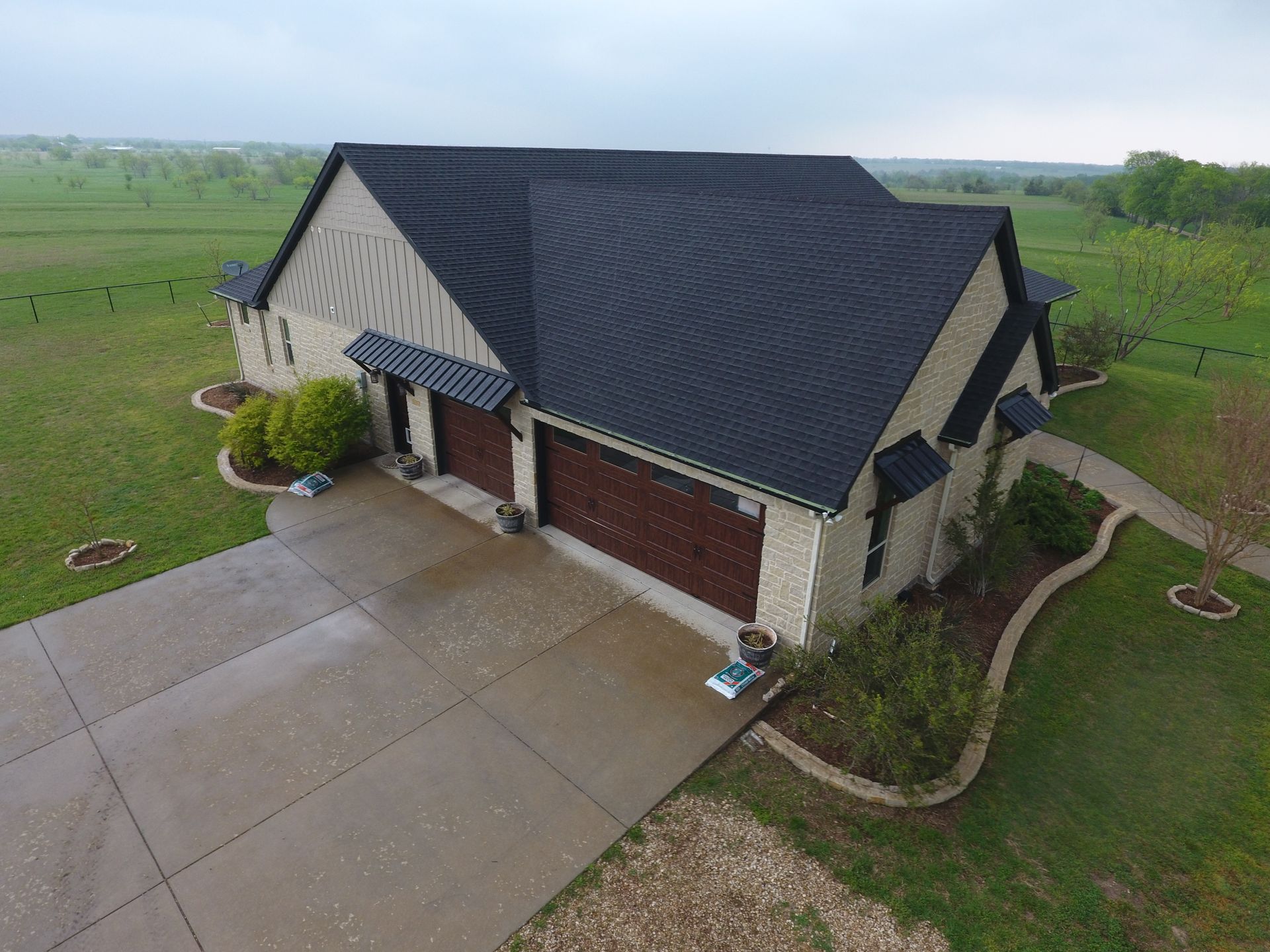
Aerial view of a suburban house with a dark roof, brick garage, and wide concrete driveway surrounded by green lawn
July 29, 2026
TPO and PVC look nearly identical on a flat roof but perform differently in North Texas heat and hail. Swift Roofing breaks down which fits your building.
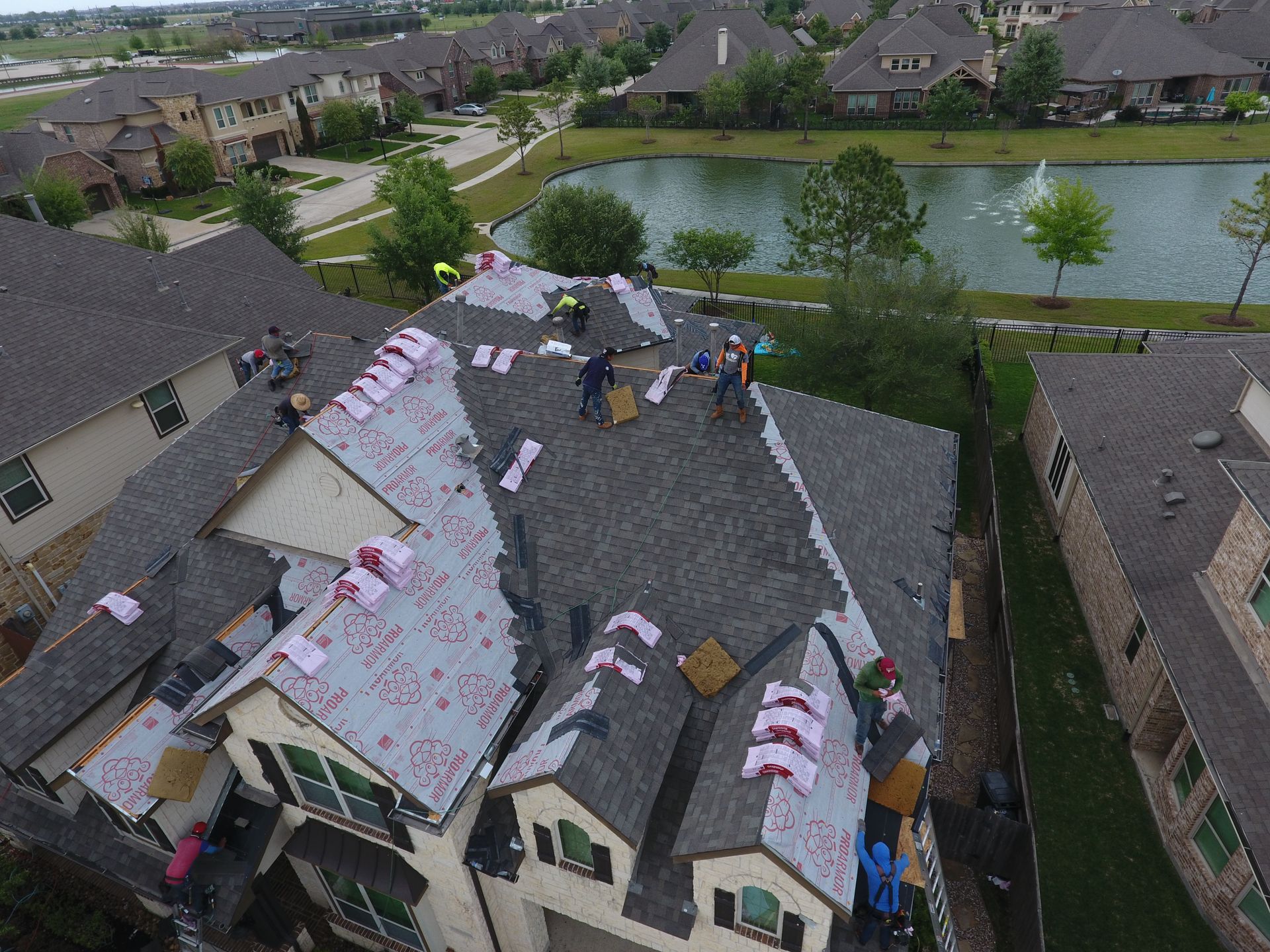
Aerial view of roof damage with workers repairing shingles in a suburban neighborhood near a pond
July 21, 2026
Most homeowners in Royse City, Rockwall, and the surrounding North Texas communities start thinking about roofing materials after a storm. A hail event rolls through, an adjuster shows up, and suddenly there is a decision to make that nobody fully prepared for. Repair with the same shingles that were already there? Or is this the moment to switch to metal?  It is a reasonable question. And it deserves a straight answer, not a sales pitch toward whichever option costs more. Swift Roofing works with homeowners across Rockwall County, Hunt County, and the wider North Texas area every week. We see both materials up close after storms, during inspections, and after they have been on a roof for twenty years in Texas heat. This is the honest comparison he gives homeowners before they decide.
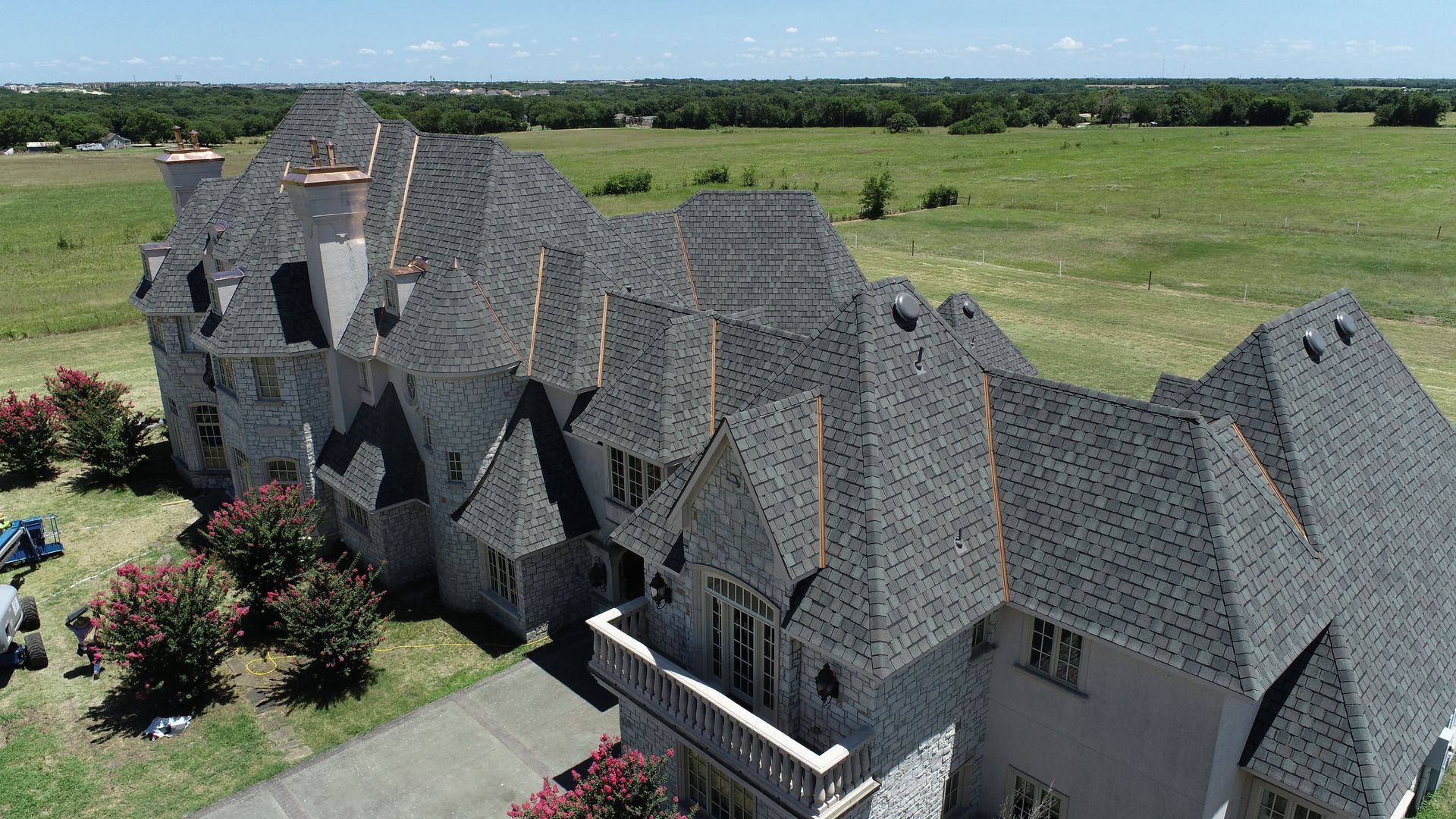
Aerial view of a large gray-roofed mansion surrounded by green lawns and landscaped gardens.
July 14, 2026
A visual inspection sees what is on the surface. An infrared inspection sees what is hiding underneath. Swift Roofing explains the difference, when each method applies, and what North Texas homeowners need to know before scheduling an inspection.
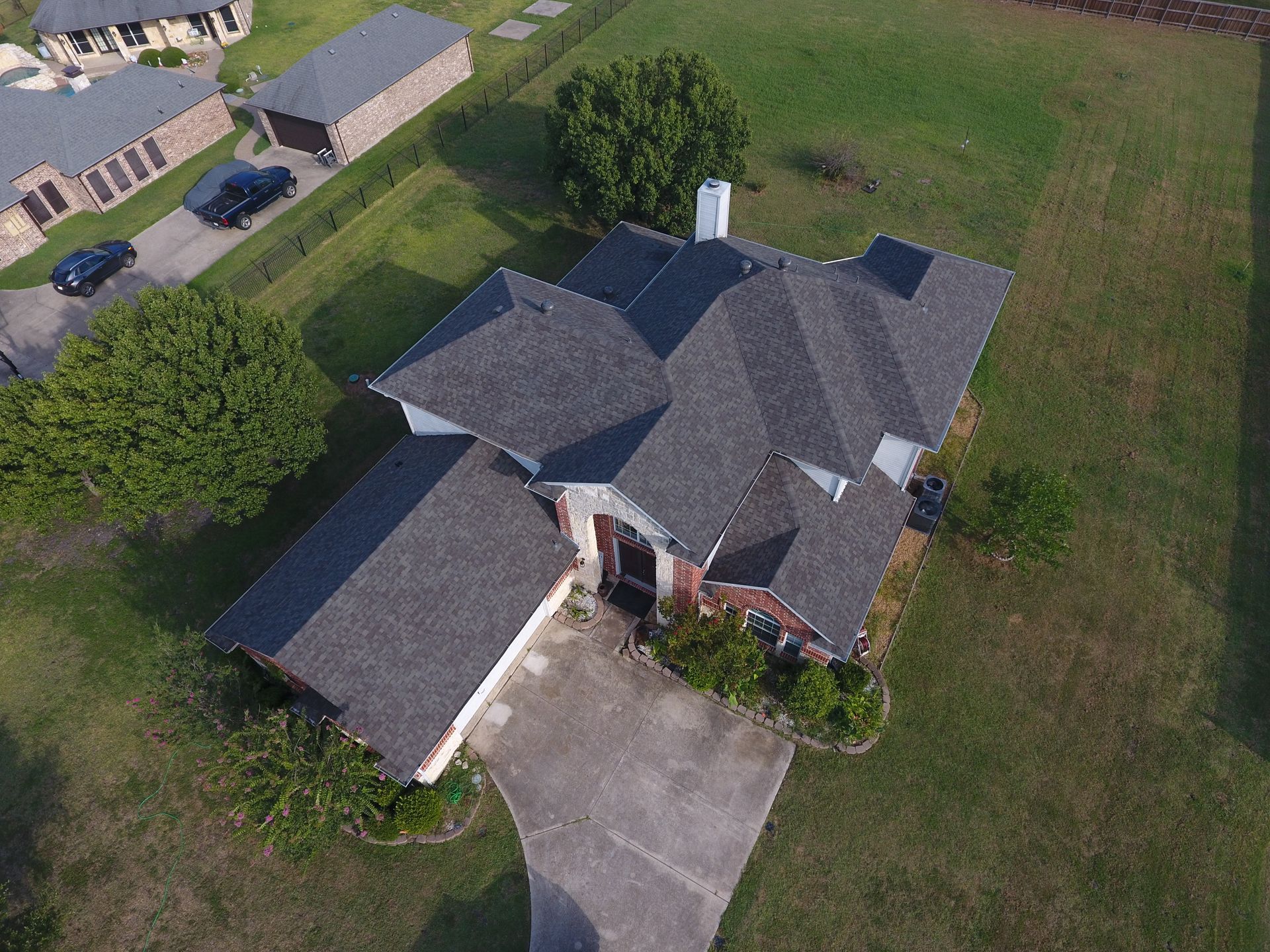
Aerial view of a gray-roofed suburban house with a driveway and surrounding lawn.
July 9, 2026
Choosing the wrong commercial roofing material in North Texas costs property owners thousands in premature repairs. Swift Roofing breaks down the 6 most durable options, what each one costs, and which one is right for your building.
Aerial view of a brick house with a gray shingle roof and surrounding greenery.
June 30, 2026
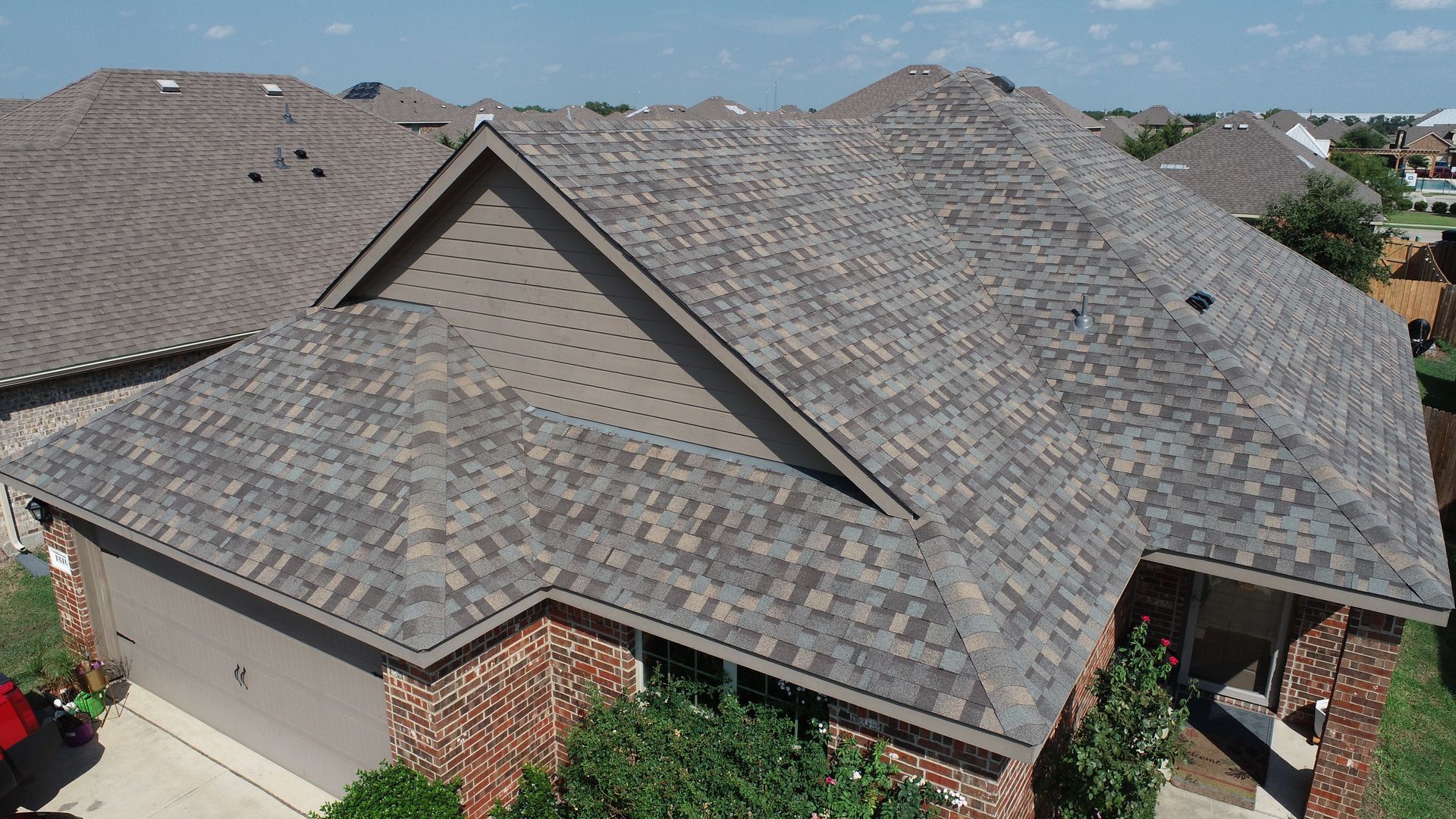
Not every aging roof in Royse City TX needs full replacement. Swift Roofing & Designs breaks down when restoration extends your roof's life and when replacement is the only answer.
Aerial view of a large gray-shingled house with multiple gables and a beige exterior.
June 23, 2026
From hail damage to failed flashing, Royse City TX homeowners face the same five roof repairs year after year. Swift Roofing & Designs breaks down each one, what causes it, and how to catch it before it becomes a replacement.
Show More