Black and white house icon with roof, chimney, and round window.

Hail Damage Roof Claim vs Out of Pocket: What Makes More Sense in North Texas

August 10, 2026

Introduction

After a significant hail event in Rockwall or Royse City, most homeowners face the same decision — file a claim with insurance or pay for the repair out of pocket. It sounds like a straightforward financial comparison, but the answer depends on variables that most homeowners don't fully understand when they're standing in the driveway looking at dented gutters. The size of the damage, the age of your roof, your deductible structure, your claims history, and what's actually covered under your specific policy all affect which choice makes more financial sense. Getting it wrong in either direction is expensive. Filing a claim for minor damage that doesn't exceed your deductible costs you the claim mark on your record with nothing to show for it. Paying out of pocket for significant damage that insurance would have covered fully means leaving thousands on the table. Swift Roofing helps Royse City, Rockwall, and North Texas homeowners navigate both sides of this decision — with free inspections, honest assessments, and insurance claim support for every qualifying project. This guide explains how to make the right call for your specific situation.

How Hail Damage Roof Insurance Claims Work in Texas

Before comparing the two options, understanding how the Texas homeowner's insurance claim process works for hail damage sets the foundation:


The standard claim timeline:

  1. Hail event occurs — you document damage immediately with photos and video before any cleanup
  2. You contact your insurance carrier to report the claim — typically within 30 to 60 days of the event, though policy timelines vary
  3. An adjuster is assigned and schedules an inspection of your property
  4. The adjuster produces an Xactimate estimate — the industry-standard pricing software insurers use to calculate repair scope and cost
  5. You receive an Actual Cash Value (ACV) or Replacement Cost Value (RCV) payment depending on your policy
  6. You select a contractor, complete the work, and submit documentation for any supplement or final payment


ACV vs. RCV — the most important policy distinction:

  • Replacement Cost Value (RCV) — pays the full cost to replace the damaged roof with materials of like kind and quality, minus your deductible. This is the policy type that makes filing worthwhile for significant damage.
  • Actual Cash Value (ACV) — pays the replacement cost minus depreciation based on the roof's age and condition. On a 15-year-old roof, ACV payment may cover only 40 to 60% of replacement cost. This distinction dramatically changes the out-of-pocket math.


Wind and hail deductibles in Texas:

Texas homeowners frequently have a separate wind and hail deductible — expressed as a percentage of the insured dwelling value rather than a flat dollar amount. On a $350,000 home with a 2% wind/hail deductible, the homeowner's out-of-pocket exposure on any hail claim is $7,000 before insurance pays anything. This is the number that makes the out-of-pocket comparison more nuanced than it appears.

When Filing a Hail Damage Insurance Claim Makes Sense

Filing is the right decision when these conditions are present:


The damage exceeds your deductible — significantly

If your deductible is $7,000 and a Swift Roofing inspection reveals $8,500 in hail damage, filing produces $1,500 net after deductible — and creates a claims record. That's probably not worth filing. If the same inspection reveals $22,000 in damage on a roof that needs full replacement, filing produces $15,000 net after deductible on an RCV policy. That's the definition of what insurance is for.


The roof requires full replacement rather than targeted repair

Full replacement claims — where the entire roof surface has been compromised by a qualifying hail event — are what Texas hail damage insurance is designed to cover. When a Swift Roofing inspection confirms whole-roof damage consistent with a specific storm event, filing is almost always the right financial decision on an RCV policy.


The damage is documented and attributable to a specific storm

Insurance claims succeed when the damage can be specifically attributed to a documented storm event. Damage that's clearly impact-related — circular bruising on shingles, dented flashing, dented gutters — is attributable. Damage from gradual wear that predates the storm is not covered and will be excluded from the adjuster's estimate. Knowing the difference before you file prevents denied claims and wasted time.


Your policy is RCV and your roof isn't fully depreciated

An RCV policy on a relatively new roof in good pre-storm condition is the scenario where filing delivers maximum value. The insurance company pays full replacement cost minus your deductible — and on a $20,000+ replacement, even a $7,000 deductible leaves significant insurance contribution.


You have Class 4 shingles — and want to document the event

Even if the damage doesn't immediately exceed your deductible, documenting a significant hail event on your claims record can support future claims if progressive damage from the same storm becomes apparent later. A Swift Roofing inspection with written findings creates documentation even if you don't file immediately.

When Paying Out of Pocket Makes More Sense

There are situations where filing a claim isn't the right financial decision:


The repair cost is close to or below your deductible

If your hail deductible is $5,000 and the repair is $3,500 — filing a claim produces zero insurance payment, adds a claim to your record, and potentially affects your future premium. Paying out of pocket is the straightforward choice.


Your roof is old and on an ACV policy

On an ACV policy with a significantly depreciated roof, the insurance payout after depreciation may be so low that the claim isn't worth the record. A 20-year-old roof at 70% depreciation on a $15,000 replacement produces roughly $4,500 in ACV payment on a policy with a $5,000 deductible — meaning insurance pays nothing after deductible. Out-of-pocket repair or full replacement with upgrade to Class 4 shingles may be a better financial path.


The damage is minor and localized

A few missing shingles or minor flashing damage from a storm that didn't produce widespread neighborhood damage is typically a targeted repair rather than a claim situation. A Swift Roofing inspection provides the honest assessment of whether the scope warrants claim filing or out-of-pocket repair.


You've filed a recent claim

Multiple claims in a short period significantly affect premium rates and insurability in Texas's already challenging homeowner's insurance market. If you filed a claim in the past 12 to 24 months, the financial impact of another claim on your premium and insurability may outweigh the claim benefit for moderate damage.


You're planning to sell within 12 to 18 months

A recent roof claim on a home's insurance history is visible to buyers and their insurers during a sale — and can complicate the transaction. If sale timing is near, paying out of pocket for repair while upgrading to Class 4 shingles may deliver better total financial outcome than a claim that flags the property.

The Adjuster Inspection — What to Expect and How to Protect Yourself

Understanding the adjuster process prevents the most common homeowner mistakes:


Get your own inspection before the adjuster arrives

A Swift Roofing inspection before the adjuster visit serves two purposes: it tells you what's actually on your roof so you're not surprised by the adjuster's findings, and it documents conditions that existed before the adjuster visit — which matters if the adjuster's scope comes back significantly lower than expected.


You can have your contractor present during the adjuster inspection

Swift Roofing attends adjuster inspections for every client who requests it. When a contractor who understands Xactimate scope and hail damage methodology is present during the adjuster visit, legitimate damage items are less likely to be overlooked or undervalued. This isn't adversarial — it's professional representation of your claim.


The supplement process

Adjuster estimates frequently miss scope items — improper permit costs, code upgrade requirements, starter strip, ice and water barrier upgrades — that are legitimately covered under your policy. The supplement process allows your contractor to submit documentation for missed items after the initial estimate. Swift Roofing manages the supplement process for every claim we work.


What the adjuster is evaluating:

  • Impact marks consistent with hail rather than mechanical damage or wear
  • Granule loss attributable to impact rather than age
  • Damaged flashing, pipe boots, and metal components consistent with the hail event
  • Whether the damage scope warrants repair or full replacement


What can result in claim denial or reduction:

  • Roof condition that showed pre-existing neglect before the storm event
  • Damage the adjuster attributes to normal wear rather than the specific storm
  • Missing documentation of when the storm occurred
  • Roofs that have exceeded expected lifespan where ACV depreciation eliminates payout

The Class 4 Upgrade Decision During a Claim

If your claim is approved and your carrier is funding a replacement — this is the highest-ROI moment to upgrade to Class 4 impact resistant shingles:


How it works:

Insurance funds the replacement cost of standard shingles (minus deductible). The homeowner pays the cost difference to upgrade to Class 4 material out of pocket. On most North Texas homes, that difference is $2,000 to $3,500.


What you get for the upgrade:

  • 20 to 30% reduction in annual premium on the dwelling coverage portion from most Texas carriers
  • Extended roof lifespan of 25 to 30 years vs. 15 to 20 for standard architectural shingles
  • Significantly reduced probability of another full replacement claim in the next decade


The payback math:

At $375 per year in insurance savings on a $2,500 upgrade cost — the upgrade pays for itself in 6 to 7 years through premium savings alone. After that, every year is pure financial benefit. For the full Class 4 analysis, read our Class 4 impact resistant shingles guide →.

Why the Contractor You Choose Matters for the Claim Outcome

Not all contractors handle insurance claims the same way — and the difference affects your claim result significantly:


Xactimate fluency

Xactimate is the industry-standard pricing software adjusters use to calculate claim scope. A contractor who understands Xactimate line items, knows which scope items are commonly missed, and can submit documented supplements for legitimate missed items produces significantly better claim outcomes than a contractor who simply accepts the first adjuster estimate.


Local North Texas adjuster relationships

A contractor with an established track record in the Rockwall and Royse City market — who has worked through multiple hail seasons with the major Texas carriers — navigates the adjuster process more effectively than an out-of-area storm chaser arriving after a major event.


What to avoid — deductible waiver offers

Any contractor who offers to waive or absorb your deductible as part of the deal is proposing insurance fraud under Texas law. This is not a minor technicality — it's a criminal offense for both the contractor and potentially the homeowner. Swift Roofing never participates in deductible waiver arrangements.

Swift Roofing: Free Hail Damage Inspection and Claim Support for Royse City and Rockwall

The decision to file or pay out of pocket starts with knowing exactly what's on your roof and what it will cost to address. Swift Roofing provides free hail damage inspections throughout Royse City, Rockwall, McKinney, Sachse, and surrounding North Texas — with honest findings, written documentation, and full insurance claim support for every qualifying project.

What Swift Roofing's claim support includes:

Service Component What It Covers
Free full roof inspection Complete assessment with photos — what's there before you make any decision
Honest repair vs. claim assessment We tell you whether the damage warrants filing based on your deductible and policy type
Pre-adjuster documentation Written findings and photos before the adjuster visit
Adjuster accompaniment Swift Roofing attends your adjuster inspection on request
Supplement management Documentation and submission for missed scope items
Xactimate review We review your adjuster estimate for missed or undervalued line items
Class 4 upgrade consultation Insurance discount documentation and upgrade cost comparison during replacement
Full claim-to-completion service From first inspection through final insurance documentation

Request a Roofing Quote

Blog Form


More Posts Like This:

View from a shingled roof over a suburban neighborhood and leafless trees under a cloudy sky
August 4, 2026
A few roof repair choices quietly cost North Texas homeowners far more later. Swift Roofing breaks down 4 common mistakes and how to avoid the costly ones.
Aerial view of a suburban house with a dark roof, brick garage, and wide concrete driveway surrounded by green lawn
July 29, 2026
TPO and PVC look nearly identical on a flat roof but perform differently in North Texas heat and hail. Swift Roofing breaks down which fits your building.
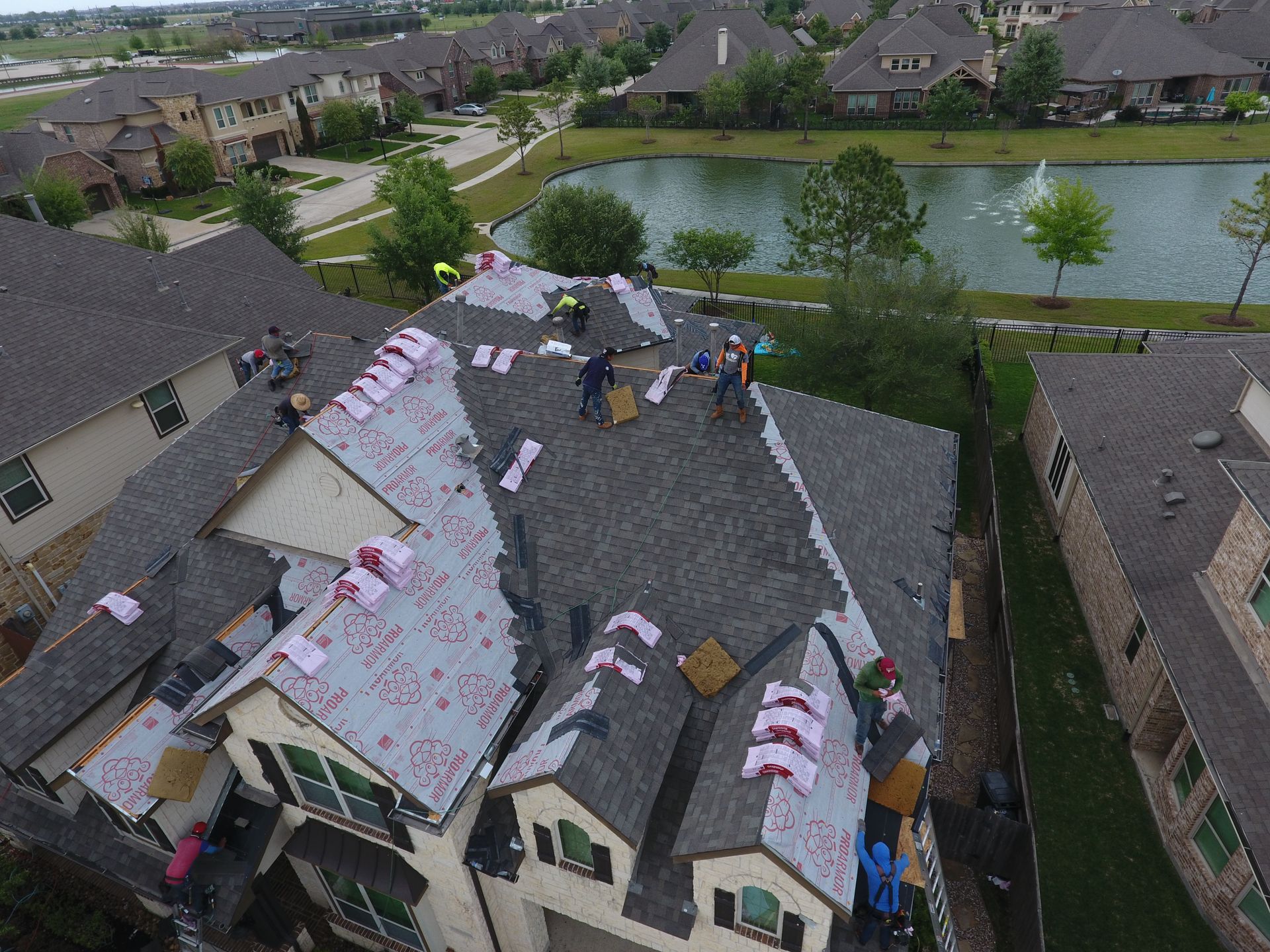
Aerial view of roof damage with workers repairing shingles in a suburban neighborhood near a pond
July 21, 2026
Most homeowners in Royse City, Rockwall, and the surrounding North Texas communities start thinking about roofing materials after a storm. A hail event rolls through, an adjuster shows up, and suddenly there is a decision to make that nobody fully prepared for. Repair with the same shingles that were already there? Or is this the moment to switch to metal?  It is a reasonable question. And it deserves a straight answer, not a sales pitch toward whichever option costs more. Swift Roofing works with homeowners across Rockwall County, Hunt County, and the wider North Texas area every week. We see both materials up close after storms, during inspections, and after they have been on a roof for twenty years in Texas heat. This is the honest comparison he gives homeowners before they decide.
Show More
Black outline of a house with a slanted roof and chimney.

Choose Swift Roofing & Designs for Top Quality Roofing

Need a reliable roofer? We've helped countless clients protect their homes while saving time and money, and we’re ready to help you next.

View from a shingled roof over a suburban neighborhood and leafless trees under a cloudy sky
August 4, 2026
A few roof repair choices quietly cost North Texas homeowners far more later. Swift Roofing breaks down 4 common mistakes and how to avoid the costly ones.
Aerial view of a suburban house with a dark roof, brick garage, and wide concrete driveway surrounded by green lawn
July 29, 2026
TPO and PVC look nearly identical on a flat roof but perform differently in North Texas heat and hail. Swift Roofing breaks down which fits your building.
Aerial view of roof damage with workers repairing shingles in a suburban neighborhood near a pond
July 21, 2026
Most homeowners in Royse City, Rockwall, and the surrounding North Texas communities start thinking about roofing materials after a storm. A hail event rolls through, an adjuster shows up, and suddenly there is a decision to make that nobody fully prepared for. Repair with the same shingles that were already there? Or is this the moment to switch to metal?  It is a reasonable question. And it deserves a straight answer, not a sales pitch toward whichever option costs more. Swift Roofing works with homeowners across Rockwall County, Hunt County, and the wider North Texas area every week. We see both materials up close after storms, during inspections, and after they have been on a roof for twenty years in Texas heat. This is the honest comparison he gives homeowners before they decide.
Aerial view of a large gray-roofed mansion surrounded by green lawns and landscaped gardens.
July 14, 2026
A visual inspection sees what is on the surface. An infrared inspection sees what is hiding underneath. Swift Roofing explains the difference, when each method applies, and what North Texas homeowners need to know before scheduling an inspection.
Aerial view of a gray-roofed suburban house with a driveway and surrounding lawn.
July 9, 2026
Choosing the wrong commercial roofing material in North Texas costs property owners thousands in premature repairs. Swift Roofing breaks down the 6 most durable options, what each one costs, and which one is right for your building.
Aerial view of a brick house with a gray shingle roof and surrounding greenery.
June 30, 2026
Not every aging roof in Royse City TX needs full replacement. Swift Roofing & Designs breaks down when restoration extends your roof's life and when replacement is the only answer.
Aerial view of a large gray-shingled house with multiple gables and a beige exterior.
June 23, 2026
From hail damage to failed flashing, Royse City TX homeowners face the same five roof repairs year after year. Swift Roofing & Designs breaks down each one, what causes it, and how to catch it before it becomes a replacement.
Aerial view of a house with a dark roof surrounded by trees and a green yard
June 16, 2026
Spring debris left in your gutters becomes a liability when Royse City summer storms arrive. Swift Roofing & Designs explains what is at stake and what to do about it before the rain season peaks.
Aerial view of a dark-roofed house with a driveway, patio furniture, and a parked car beside a road
June 9, 2026
Learn the warning signs of heat damage on Royse City roofs, from curling shingles to granule loss. Protect your home with expert roofing insights.
Workers installing blue roofing panels on a house roof during construction or repair.
June 4, 2026
June is the most important roof inspection window in North Texas. Swift Roofing's summer checklist helps Royse City homeowners catch hail damage before peak heat compounds it.
Show More