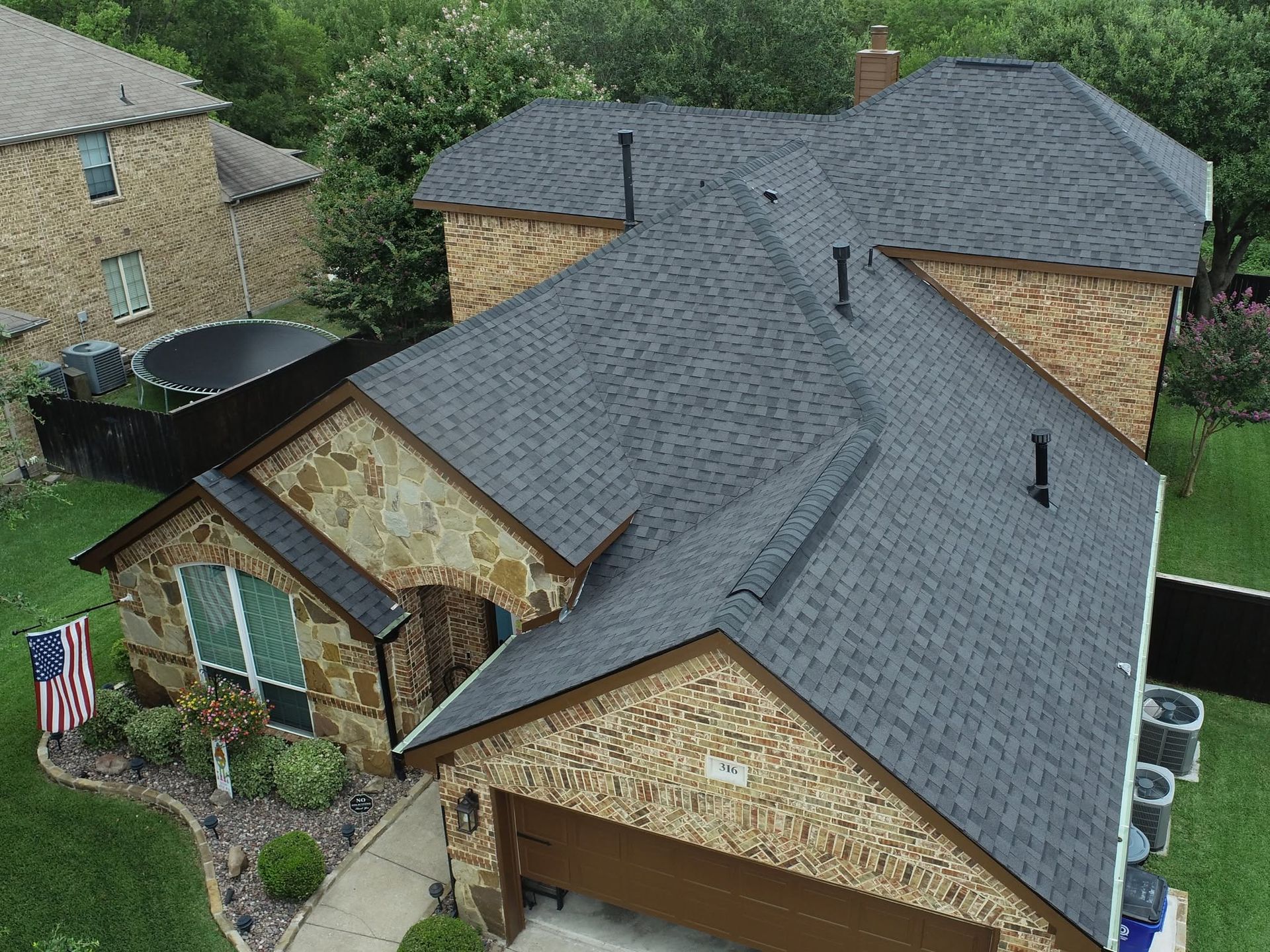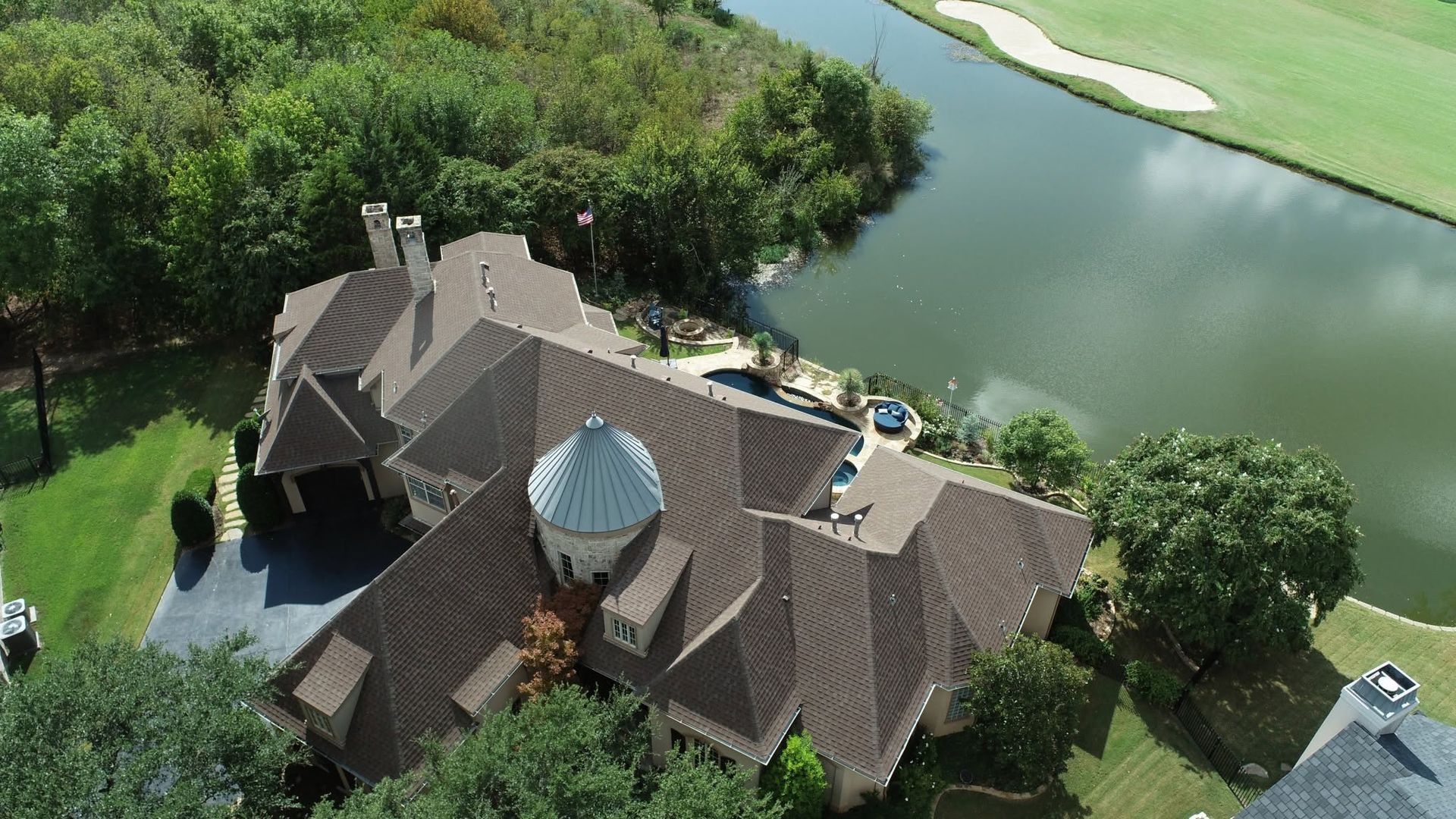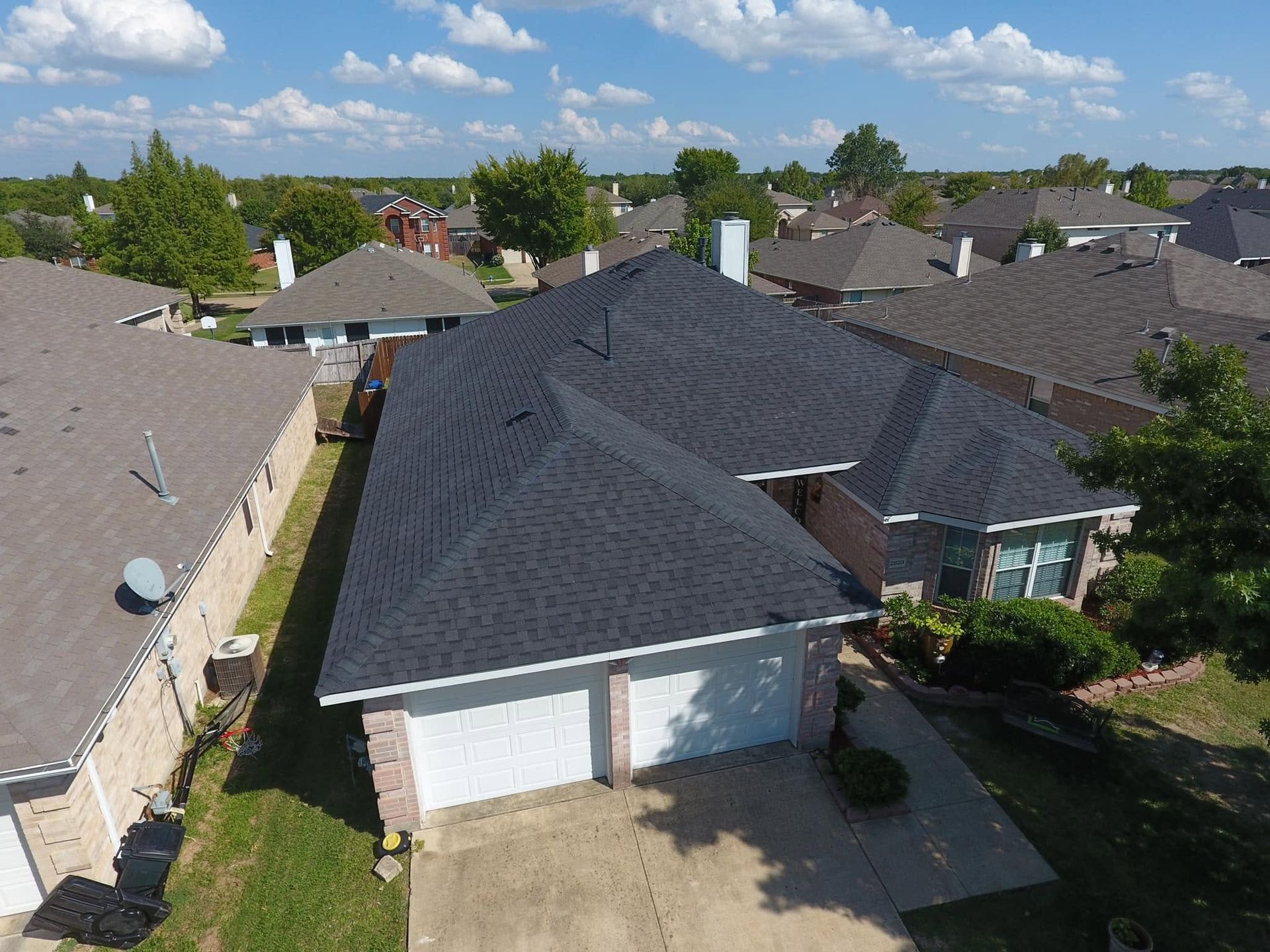
Why Does My Roof Look Wavy or Uneven?
Walk around the exterior and look for:
- Missing or visibly lifted shingles
- Uneven rooflines
- Granules collecting heavily near downspouts
- Damaged flashing you can see safely from the ground
- Debris still sitting in valleys
- Gutters pulling away or holding water
Then check the attic or upper interior if safely accessible:
- Water stains on decking or rafters
- Darkened wood
- Damp insulation
- Daylight where it should not be visible
- Musty odor after rain
- Previous repair patches and where they were made
Our free roof inspection service includes shingles, flashing, decking, attic ventilation, drainage, and interior warning signs, with photo documentation so you can compare what you noticed with what the inspector finds.
| Inspection Result | Targeted Repair May Make Sense When | Larger Scope May Be Needed When |
|---|---|---|
| Hail damage | Limited, repairable damage is isolated | Impact damage is widespread across multiple slopes |
| Lifted shingles | Small number of compatible shingles can be repaired | Wind failure is widespread or shingles are brittle |
| Flashing failure | Detail can be rebuilt without disturbing large roof areas | Water has damaged surrounding decking or multiple transitions |
| Moisture intrusion | Entry point is isolated and decking remains sound | Decking, insulation, or multiple roof areas are affected |
The better approach is to combine age with condition, repair frequency, storm history, and moisture findings. Our article on four roof inspection findings that lead to bigger repairs explains why lifted shingles, failed flashing, hail damage, and hidden moisture should be judged by how they are progressing, not only by how old the roof is.
Ask these questions before accepting either recommendation:
- What exact condition makes restoration possible or impossible?
- Is the decking sound?
- How many slopes are affected?
- Is there hidden moisture?
- Are the existing shingles flexible enough to work around safely?
- What repairs must happen before restoration?
- How much useful life are we realistically trying to gain?
- If we restore now, what would still trigger replacement later?
Those questions turn a sales estimate into a roof-condition discussion.
What Does Restoration vs. Replacement Cost in North Texas?
For estimated market context, asphalt shingle replacement in North Texas is commonly planned around $300 to $600 per roofing square installed, with one roofing square equal to 100 square feet of roof surface. For broader planning context, a typical Texas roof replacement can fall in the $8,000 to $20,000 range, depending on roof size, material, pitch, design complexity, access, and the amount of work required once the existing system is opened up.
Those numbers are useful for early budgeting, but they should be treated as planning ranges rather than a price for a specific home. Roof surface area is different from living square footage because pitch, overhangs, garages, porches, valleys, and roof geometry all change the actual amount of roofing material and labor involved.
Homeowners can collect useful information without climbing onto the roof. Use binoculars or a phone camera from the ground, and inspect the attic or interior only where access is safe. Wet roofs, steep slopes, and hidden weak decking make rooftop inspection a job for trained professionals.
What to Check From the Ground
- Shingle tabs that appear missing, raised, shifted, or visibly damaged
- Flashing that looks bent or separated from adjacent materials
- Debris concentrated in roof valleys or behind penetrations
- Sagging gutter sections, disconnected downspouts, or water marks on fascia
- Tree branches touching the roof or broken limbs resting on it
- Uneven roof planes or a localized dip that was not present before
What to Check Inside the Home or Attic
- New stains on ceilings, walls, rafters, or roof decking
- Damp insulation or a musty odor after rain
- Daylight showing through an unexpected opening
- Rust around fasteners, vents, or metal components
- Peeling paint near the ceiling line or around penetrations
When to Request Professional Help
Write down when each sign appears, and take photos from the same position for future comparisons. If you see an active leak, significant displacement, or storm debris, move belongings away and request professional help rather than attempting a rooftop patch.
After a storm, the same checklist can help you describe what happened, but visible damage may represent only part of the condition. Swift Roofing & Designs offers storm-damage inspections when wind or hail is the likely cause. For an active opening or urgent water entry, emergency roof repair may be the safer route.
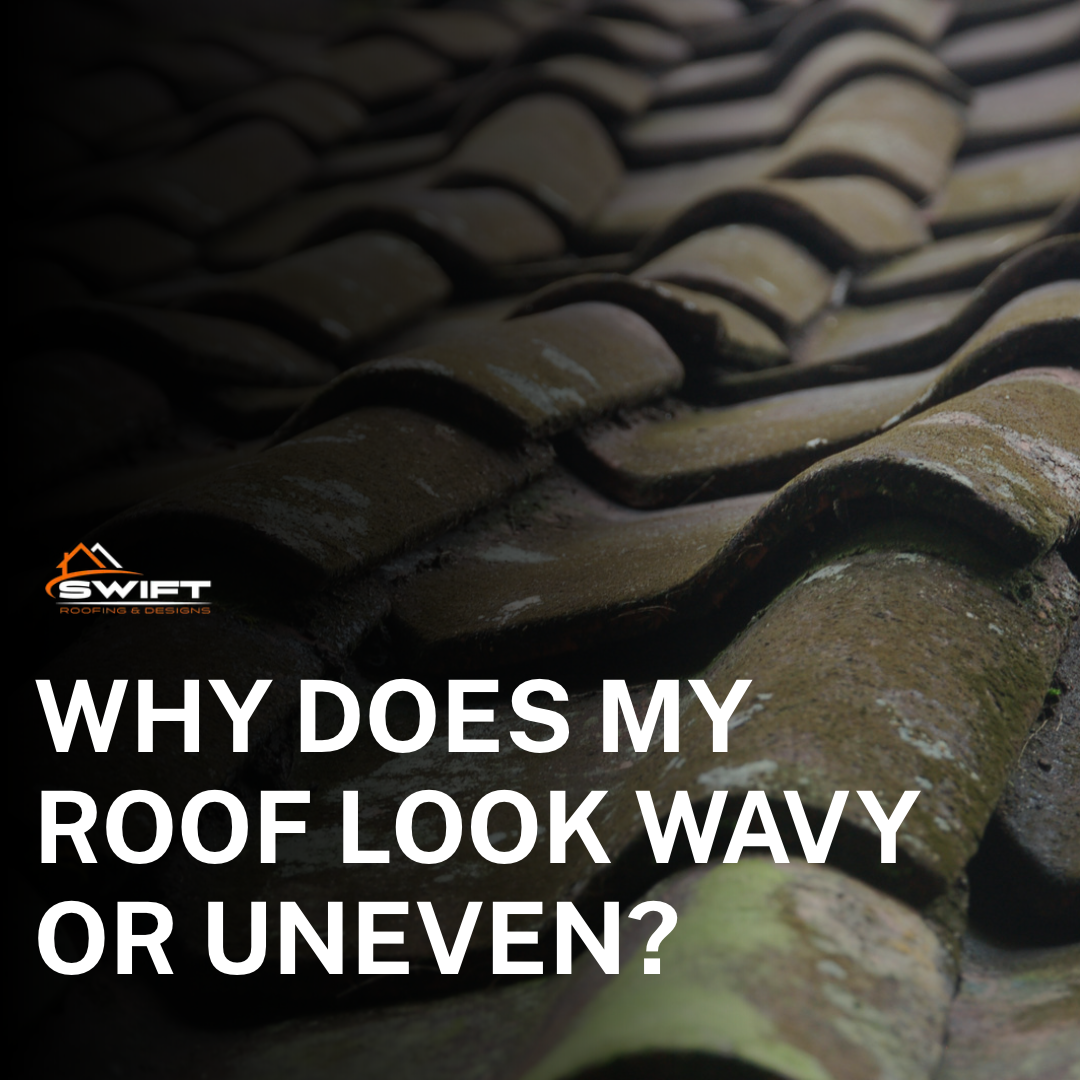
If you are asking, “Why does my roof look wavy?” the cause may involve wrinkled underlayment, movement in the wood decking, installation details, moisture, or deteriorating shingles. The visible pattern alone cannot identify which layer needs attention. A raised shingle edge is also different from a roof plane that dips between supports. The useful first step is to describe what changed and arrange an assessment rather than assume the entire roof has failed.
At Swift Roofing & Designs, we help Royse City homeowners understand roof conditions before choosing work.
A wavy appearance is a reason to investigate, not an automatic replacement recommendation. Some findings call for monitoring or a focused correction, while damaged decking or structural concerns require a different scope. This guide explains the distinctions, what you can observe safely, and what a professional inspection should establish.
Identify Whether the Shingles or the Roofline Look Uneven
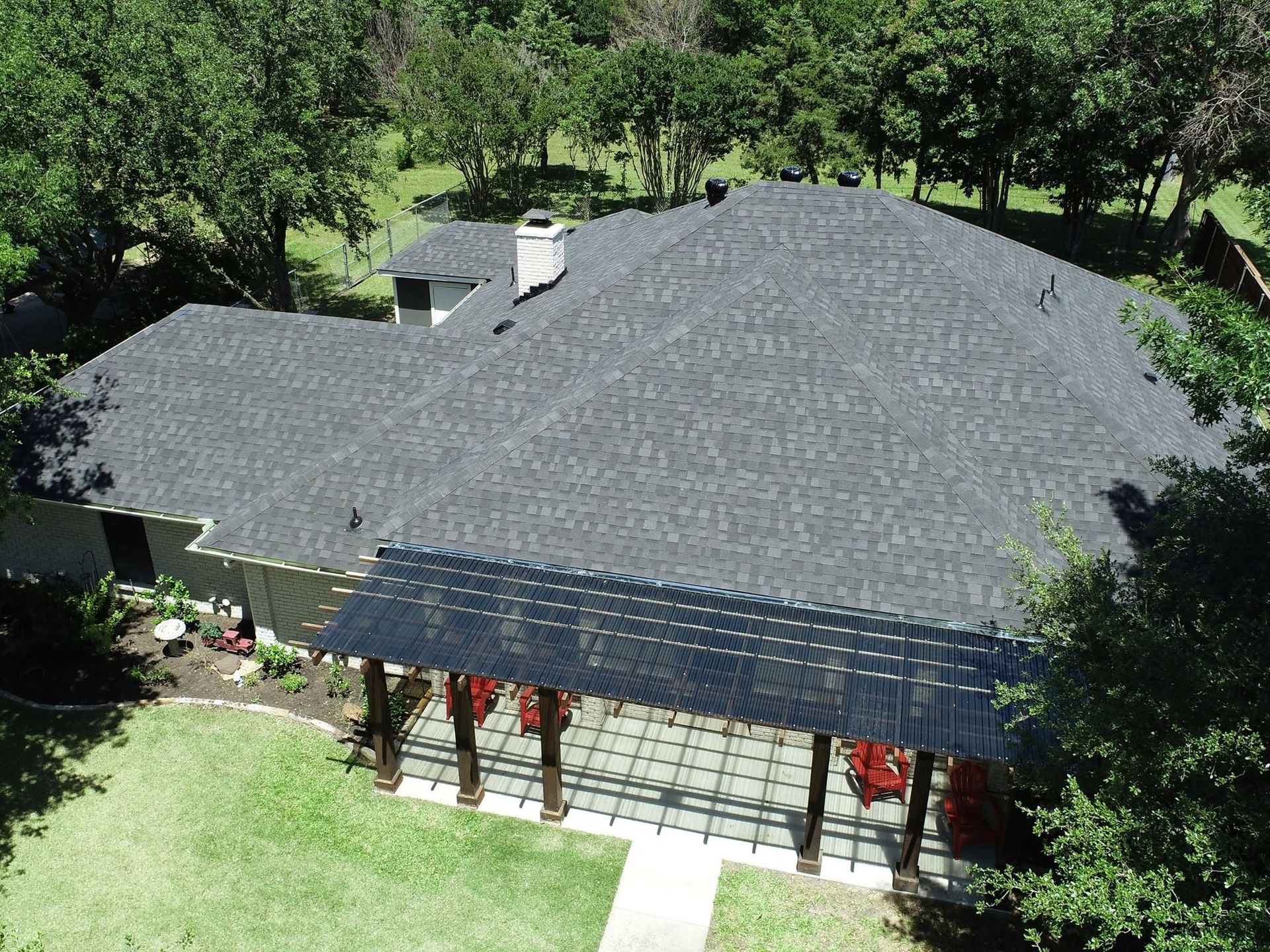
Look at the overall roof shape from a safe ground position before concentrating on individual shingles. A narrow ripple crossing a slope may involve a layer immediately beneath the shingles, while a broad depression can involve the deck or supporting structure. Curling edges, raised tabs, and ridges through shingle courses are different observations.
Describe the shape and location without trying to diagnose the hidden cause.
| What you see | What the description means | What it does not prove |
|---|---|---|
| Wavy roof shingles | Ripples or unevenness across part of the covering | That every underlying layer is damaged |
| An isolated lifted tab | One shingle edge is raised | That the whole roof needs replacement |
| Buckling | A raised distortion through part of the covering | Whether the source is the covering, underlayment, or deck |
| Curling | Edges or portions of individual shingles bend upward | The remaining condition of every roof slope |
| A sagging roofline | The roof plane or ridge appears to dip | The exact cause or required structural repair |
Lighting and viewing angle can make texture easier to notice, especially with dimensional shingles. Compare photos taken from the same ground position rather than climbing up to press on an uneven area. Note whether the shape is new, stable, or becoming more pronounced. An apparent change deserves documentation even when there is no visible interior leak.
Our guide to six roof areas homeowners can check after summer offers a broader ground-level checklist. Use that context to describe connected concerns such as a displaced edge or damaged flashing. A visual check helps prepare for service but cannot establish the condition of concealed wood.
Understand Why a Newly Installed Roof May Look Wavy
A new roof can show unevenness for several reasons, and appearance immediately after installation needs context. Product profile, lighting, installation conditions, and underlying irregularities can all affect what you notice. Do not accept a blanket assurance that every wave will disappear with warmer weather. Ask the installer to inspect the specific pattern and explain whether it reflects the product's normal appearance or a condition requiring correction.
Keep the installation date, product information, photographs, and written communications together. If observation is recommended, ask what finding supports that decision and when the area should be checked again. Our article about roof warranty coverage and exclusions explains why records and appropriate repair procedures matter.
Persistent or worsening deformation should not be dismissed simply because the roof is new.
Consider Whether the Decking Is Moving or Uneven
Roof decking is the wood surface that supports the roofing layers. Plywood and oriented strand board can change dimensions as moisture conditions change, and installation details influence how that movement is accommodated. APA's guidance on minimizing panel buckling identifies moisture-related expansion and appropriate panel spacing as important considerations. Repeated raised lines may therefore justify checking the deck rather than treating each line as an isolated shingle defect.
Uneven decking can also involve existing surface irregularities or deterioration, so the condition should not be inferred from roof age alone. An inspection needs to distinguish a raised panel edge from weakened sheathing or a problem with the supporting framing. Replacing visible shingles without understanding the substrate may leave the same pattern underneath. If the roof plane is actually sagging, the assessment must extend beyond cosmetic appearance, with structural evaluation when the findings warrant it.
Look Below the Shingles for Underlayment and Installation Issues
Underlayment sits beneath the shingles, so a wrinkle can show through the finished covering. The Asphalt Roofing Manufacturers Association's buckled-shingle bulletin identifies wrinkled underlayment and deck movement as common causes, while noting that localized distortions can involve fasteners or material beneath a shingle. Those possibilities require different corrections. A random raised spot and a repeating line across the roof should not automatically receive the same repair.
Our roof repair services begin by investigating the affected area and connected components. If access beneath the covering is needed, we can explain the proposed opening and repair before proceeding. Do not hammer visible bumps, slit shingles, or apply roof cement to force the surface flat.
Correcting the source is more important than temporarily hiding the wave, and the work should follow the applicable product requirements.
Treat Moisture and Ventilation as Questions to Investigate
Moisture may reach the roof system through a leak, construction exposure, or conditions within the attic assembly. Ventilation can be part of managing an appropriate attic environment, but it does not repair an active roof opening. The ARMA guidance connects moisture management and ventilation with potential deck movement. A wavy roof does not, by itself, establish that adding vents is the solution.
If you have noticed stains, condensation, or damp insulation, tell us when they appear and whether they change after rain. Those observations help frame the investigation without proving the moisture source. We assess the relevant roofing and attic conditions before recommending changes, because the roof assembly needs to be understood as a system.
Do not block vents or add equipment based only on an exterior photograph.
Know Which Changes Deserve Faster Evaluation
An unchanged ripple without other symptoms is different from a new depression accompanied by leaking. GAF's roof-damage guidance identifies sagging, damaged shingles, sheathing concerns, and interior moisture as conditions worth checking. Request prompt professional attention when the appearance is changing or water is entering the home. A roof does not have to drip indoors before a visible defect deserves evaluation.
Call sooner when you notice these warning signs
- A new or worsening sag: The roof plane or ridge looks lower or more distorted than before.
- Active water entry: Water is dripping or a ceiling stain is expanding after rain.
- Displaced or missing material: An opening may be exposing underlying layers.
- Several changes together: Unevenness, interior moisture, and recent impact damage occur in the same area.
- Possible movement inside: New deformation or unusual sounds accompany a visible structural change.
If you suspect structural movement, keep people away from the affected area and seek urgent professional guidance. Do not enter an attic beneath an area that appears unstable or push against a bulging ceiling. Water near electrical fixtures adds a separate hazard, so keep clear rather than beginning a cleanup around it. If conditions suggest an immediate threat to occupants, leave the affected area and contact emergency services.
For homeowners in Rockwall, Fate, or Heath, the practical priority is the observed condition rather than the neighborhood or roof age. Tell us if the change appeared after a storm, recent roof work, or another event. That history can guide where the inspection begins.
Waiting for the next heavy rain is not a reliable way to test a questionable roof.
Gather Useful Information Without Walking on the Roof
Stay on the ground and use binoculars or a phone camera if they help you document the area safely. You do not need to climb onto uneven roofing to prove that something looks different. Record the approximate location, when you first noticed it, and whether it appears on one slope or several. Earlier photos, inspection reports, and repair records can provide a useful comparison.
What to share when requesting an inspection
- Timing: Whether the roof is newly installed or the condition developed later.
- Pattern: Isolated raised tabs, long ripples, curling edges, or a broader dip.
- Changes: Whether the appearance is stable or becoming more noticeable.
- Interior clues: Stains, odors, or dampness observed from safely accessible areas.
- History: Known leaks, previous repairs, storms, additions, or recent installation work.
During our free roof inspection, we review the visible covering and the relevant connected details. Depending on safe access and the findings, the investigation may include fastening, underlayment, deck condition, roof transitions, and accessible attic evidence. Hidden conditions may require additional investigation beyond what can be seen without opening the assembly. We explain that limitation rather than treating a surface photograph as a complete diagnosis.
Ask for photos and a plain-language explanation connecting each proposed repair to a finding. If decking is suspected, ask what evidence supports that concern and what remains unconfirmed. If a framing issue is possible, discuss whether another qualified professional needs to evaluate the structure.
A useful inspection should narrow the uncertainty, even when further access is required before the full scope can be established.
Choose Monitoring, Repair, or Replacement Based on Findings
The solution depends on the condition beneath the appearance. A limited installation defect may be repairable, while widespread material deterioration or compromised decking can justify broader work. Roof age, repair history, and the ability to work with the surrounding shingles also matter. We explain the findings before recommending a scope so you can understand why it fits the problem.
| Inspection finding | Possible direction | What the recommendation should explain |
|---|---|---|
| Normal product texture or a stable appearance without a confirmed defect | Document and monitor as appropriate | Why observation is reasonable and what changes matter |
| A localized fastening or shingle problem | Targeted correction | Which materials need attention and how the underlying cause is addressed |
| A confirmed underlayment wrinkle | Appropriate work on affected layers | Access, product requirements, and restoration of the covering |
| Damaged or distorted decking | Deck repair or replacement where necessary | Extent, moisture source, and associated roofing work |
| Widespread deterioration across the system | Broader repair or replacement assessment | Why localized work would or would not be practical |
| Suspected framing movement | Qualified structural evaluation | What needs further assessment before roofing work proceeds |
When broader roof work may make sense
Our roof replacement services address cases where the condition warrants replacing a larger portion of the system. That decision should be supported by documented findings rather than a distant view of uneven roof shingles. Ask which layers need replacement, what will be inspected after tear-off, and how concealed damage would be handled. You should also understand whether a proposed replacement addresses the cause of the original waviness.
- Monitoring: Needs a documented reason, review plan, and signs that should trigger another visit.
- Targeted repair: Needs a defined defect and a method that suits the existing materials.
- Decking work: Needs a clear explanation of the affected wood and any unresolved moisture source.
- Replacement: Needs evidence that the broader scope is appropriate for the roof's overall condition.
What should you budget for a wavy-roof problem?
We offer a
free roof inspection to help establish what deserves attention. The resulting estimate depends on the cause, access, affected area, material condition, and any concealed damage. For independent planning context, HomeGuide's roof-repair guide lists approximately
$150 to $1,000 for minor repairs and
$1,000 to $3,000 for moderate repairs. Those categories describe general scopes, not a specific price for correcting roof waviness.
| Cost consideration | Planning context | What to clarify |
|---|---|---|
| Our initial roof inspection | Free | Visible findings, photos, and recommended next steps |
| Minor repair market context | About $150 to $1,000 nationally | Whether the diagnosed defect fits a limited repair |
| Moderate repair market context | About $1,000 to $3,000 nationally | Affected layers, repair area, and included work |
| Decking or structural concerns | Depends on the findings and scope | Additional access, specialists, and concealed conditions |
| Full roof replacement | Project-specific estimate | Roofing area, materials, tear-off, decking allowances, and system details |
Compare proposals for the same scope instead of assuming a lower total means the underlying problem is covered. A shingle-only correction and work involving the deck are different projects. Ask how any necessary opening will be protected and what would require your approval if additional damage is found.
The inspection finding should lead the budget discussion, rather than choosing a repair category before the cause is known.
Frequently Asked Questions
Does a wavy roof always mean the decking is rotten?
No, wrinkles, deck movement, fastening issues, and other conditions can produce unevenness. Decay is one possibility that needs evidence. Appearance alone cannot establish the condition of concealed wood.
Will new shingles always flatten with warm weather?
Do not assume every distortion will resolve that way. Ask the installer to evaluate the specific product, installation conditions, and underlying layers. Persistent or worsening waves need an explanation and an appropriate follow-up plan.
What causes roof shingles to buckle?
Common causes include wrinkles beneath the shingles and movement of the supporting deck. Some isolated distortions involve fastening or material trapped below the covering. The pattern helps guide inspection but does not replace it.
Is a sagging roofline more concerning than a raised shingle?
A new or worsening sag deserves prompt evaluation because the issue may involve the deck or supporting structure. A single raised tab can have a more localized cause. Neither should be diagnosed by walking on the area yourself.
Can adding attic vents fix uneven shingles?
Only if the actual findings support a ventilation-related correction, and other defects may still require work. Additional vents do not repair a leak, failed fastening, or damaged wood. The recommendation should account for the specific roof and attic assembly.
Should I replace the roof if there is no leak yet?
The absence of a leak does not establish that the roof is sound, but waviness alone does not establish a replacement need either. Start with the condition assessment. Choose the scope supported by the findings and overall roof condition.
Request a Free Roof Inspection for an Uneven Roof
If your roof looks wavy or has changed shape, we can help you understand what needs checking. Our free roof inspections support homeowners in Royse City, Rockwall, Fate, Heath, Greenville, Terrell, and Forney. We document the relevant findings and explain whether observation, a focused repair, or broader work deserves consideration. You should understand the cause and recommendation before committing to a roofing project.
Request a Free Roof Inspection and describe where the unevenness appears. Include when you first noticed it and whether leaks or other changes accompanied it. Keep your observations on the ground rather than climbing onto the roof to investigate. We will review the condition and discuss the appropriate next step for your home.
Helpful Services and Related Reading
Request a Roofing Quote
Blog Form
We will get back to you as soon as possible.
Please try again later.
More Posts Like This:
Choose Swift Roofing & Designs for Top Quality Roofing
Need a reliable roofer? We've helped countless clients protect their homes while saving time and money, and we’re ready to help you next.