Black and white house icon with roof, chimney, and round window.

Why Roof Vent Pipes Start Leaking After a North Texas Summer

September 28, 2026

Walk around the exterior and look for:

  • Missing or visibly lifted shingles
  • Uneven rooflines
  • Granules collecting heavily near downspouts
  • Damaged flashing you can see safely from the ground
  • Debris still sitting in valleys
  • Gutters pulling away or holding water


Then check the attic or upper interior if safely accessible:

  • Water stains on decking or rafters
  • Darkened wood
  • Damp insulation
  • Daylight where it should not be visible
  • Musty odor after rain
  • Previous repair patches and where they were made


Our free roof inspection service includes shingles, flashing, decking, attic ventilation, drainage, and interior warning signs, with photo documentation so you can compare what you noticed with what the inspector finds.

Inspection Result Targeted Repair May Make Sense When Larger Scope May Be Needed When
Hail damage Limited, repairable damage is isolated Impact damage is widespread across multiple slopes
Lifted shingles Small number of compatible shingles can be repaired Wind failure is widespread or shingles are brittle
Flashing failure Detail can be rebuilt without disturbing large roof areas Water has damaged surrounding decking or multiple transitions
Moisture intrusion Entry point is isolated and decking remains sound Decking, insulation, or multiple roof areas are affected

The better approach is to combine age with condition, repair frequency, storm history, and moisture findings. Our article on four roof inspection findings that lead to bigger repairs explains why lifted shingles, failed flashing, hail damage, and hidden moisture should be judged by how they are progressing, not only by how old the roof is.


Ask these questions before accepting either recommendation:

  1. What exact condition makes restoration possible or impossible?
  2. Is the decking sound?
  3. How many slopes are affected?
  4. Is there hidden moisture?
  5. Are the existing shingles flexible enough to work around safely?
  6. What repairs must happen before restoration?
  7. How much useful life are we realistically trying to gain?
  8. If we restore now, what would still trigger replacement later?


Those questions turn a sales estimate into a roof-condition discussion.

What Does Restoration vs. Replacement Cost in North Texas?

For estimated market context, asphalt shingle replacement in North Texas is commonly planned around $300 to $600 per roofing square installed, with one roofing square equal to 100 square feet of roof surface. For broader planning context, a typical Texas roof replacement can fall in the $8,000 to $20,000 range, depending on roof size, material, pitch, design complexity, access, and the amount of work required once the existing system is opened up.


Those numbers are useful for early budgeting, but they should be treated as planning ranges rather than a price for a specific home. Roof surface area is different from living square footage because pitch, overhangs, garages, porches, valleys, and roof geometry all change the actual amount of roofing material and labor involved.

Homeowners can collect useful information without climbing onto the roof. Use binoculars or a phone camera from the ground, and inspect the attic or interior only where access is safe. Wet roofs, steep slopes, and hidden weak decking make rooftop inspection a job for trained professionals.


What to Check From the Ground

  • Shingle tabs that appear missing, raised, shifted, or visibly damaged
  • Flashing that looks bent or separated from adjacent materials
  • Debris concentrated in roof valleys or behind penetrations
  • Sagging gutter sections, disconnected downspouts, or water marks on fascia
  • Tree branches touching the roof or broken limbs resting on it
  • Uneven roof planes or a localized dip that was not present before


What to Check Inside the Home or Attic

  • New stains on ceilings, walls, rafters, or roof decking
  • Damp insulation or a musty odor after rain
  • Daylight showing through an unexpected opening
  • Rust around fasteners, vents, or metal components
  • Peeling paint near the ceiling line or around penetrations


When to Request Professional Help

Write down when each sign appears, and take photos from the same position for future comparisons. If you see an active leak, significant displacement, or storm debris, move belongings away and request professional help rather than attempting a rooftop patch.


After a storm, the same checklist can help you describe what happened, but visible damage may represent only part of the condition. Swift Roofing & Designs offers storm-damage inspections when wind or hail is the likely cause. For an active opening or urgent water entry, emergency roof repair may be the safer route.


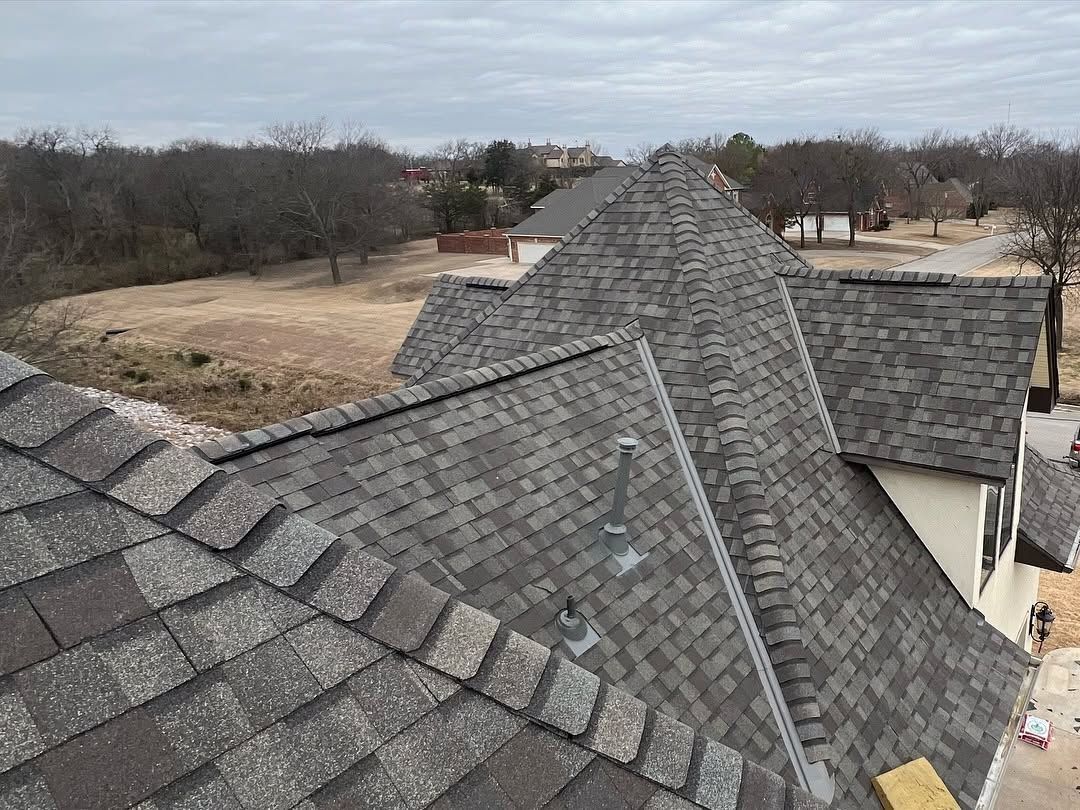
The first sign of a roof vent leak may be a ceiling ring, damp insulation, or a drip during wind-driven rain. The seal around a plumbing vent may already have weakened through heat, sunlight, and roof movement. Every pipe passing through the roof interrupts its continuous water-shedding surface. For Royse City homeowners, the turn toward fall rain is a useful time to have that detail checked.


A leak beside a vent pipe does not automatically mean the roof needs replacement or prove that the boot is the only problem. The shingles, flashing, fasteners, underlayment, and decking may influence the repair. The goal is to identify the entry point, assess materials below it, and fix the assembly instead of covering the symptom with caulk. This guide explains that decision and when a focused roof pipe boot repair may be enough.

Why Summer Conditions Can Expose a Weak Pipe Boot

The plumbing vent lets sewer gases escape, while its pipe boot seals the opening where that pipe passes through the roof. Most assemblies pair a flat flashing base with a flexible collar fitted around the pipe. North Texas roofs endure strong sunlight and repeated heating through summer, and the pipe, collar, flashing, sealant, and shingles can move at different rates. An older collar may lose flexibility or split, allowing September rain into a detail that previously stayed dry.


Heat is rarely the only cause, but it can accelerate an existing weakness. The National Institute of Standards and Technology studies how UV exposure, temperature cycles, moisture, and light affect polymeric materials used in many exterior components. The U.S. Department of Energy's Building America Solution Center also shows that pipe flashing should be layered with underlayment and shingles so water drains over the assembly. On a house in Rockwall or Fate, the real question is whether weathering has left the collar, flashing, or nearby shingles unable to manage the next hard rain.


Common heat-related changes include:

  • Cracks or splits in the flexible collar around the pipe
  • A widened gap where the collar no longer hugs the vent stack
  • Brittle sealant that has separated from the flashing or pipe
  • Distorted flashing that no longer lies flat against the roof
  • Loose nearby shingles or fasteners after repeated movement

Other Problems That Cause a Roof Leak Around a Vent Pipe

Not every roof leak around a vent pipe begins with an aged collar. A boot may be incorrectly sized, positioned, fastened, or layered with the underlayment. Hail can damage the flashing or shingles, while wind can lift an edge. A moving vent stack can also strain the collar and create a gap.


Water may enter upslope and travel along decking, a rafter, or the pipe before becoming visible indoors. That makes applying sealant near the ceiling stain unreliable. In some Greenville homes, a valley, wall transition, or damaged shingle can imitate boot failure. A sound diagnosis follows the water path and checks adjacent roof details.

Warning Signs Inside and Outside the Home

Inside the home, watch for a ceiling stain close to a bathroom, kitchen, or utility-room vent path. Damp attic insulation, darkened roof decking, musty odors, peeling paint, or a wet pipe surface during rain can also point toward active intrusion. The stain may grow slowly because insulation absorbs water before the ceiling shows damage. Marking the edge of a stain with a pencil and noting the date can help reveal whether it expands after later rain, but it should not delay an inspection.


From the ground, a homeowner may notice a tilted vent pipe, a visibly cracked collar, lifted shingles, or flashing that looks buckled. Binoculars or a zoomed phone photo can make that check safer, but the absence of visible damage does not rule out a leak. Do not climb onto a wet, steep, or storm-damaged roof to investigate. If water is dripping near a light fixture, switch off the affected circuit only if it can be done safely, keep people away from the area, and seek prompt professional help.


Arrange faster evaluation when you notice:

  • Active dripping during rain
  • A stain that grows from one storm to the next
  • Sagging or soft ceiling material
  • Wet insulation or darkened decking in the attic
  • Water near wiring, fixtures, or an electrical panel
  • Several leak locations after hail or high wind

How to Tell a Pipe Boot Leak From Another Roof Leak

Leak location is evidence, not a diagnosis. Water can enter above the vent, move laterally on the underlayment, follow a nail or rafter, and finally drip beside the pipe. A professional inspection should compare the indoor moisture pattern with roof-surface conditions and, when accessible, the underside of the decking. Controlled water testing may help in some cases, but only after obvious defects are documented and with care to avoid adding unnecessary water.


Timing also provides clues. A leak that appears during almost every steady rain may fit an open collar or flashing gap, while a leak limited to strong winds may involve a lifted flashing edge or another upslope defect. Condensation on a cold pipe can mimic a roof leak even when rainwater is not entering, and plumbing leakage must also be ruled out. Swift Roofing & Designs explains additional diagnostic clues in its guide to roof leaks that appear during heavy rain.

What you observe Possible source What should be verified
Water tracks down the outside of the vent stack during rain Split or loose boot collar Collar fit, splits, pipe movement, and flashing condition
Stain appears downslope from the pipe Boot, fastener, shingle, or upslope entry Decking and underlayment moisture path
Leak happens mainly in wind-driven rain Lifted flashing edge or nearby shingle damage Shingle seals, flashing laps, and exposed fasteners
Moisture appears without rain Condensation or plumbing issue Pipe temperature, attic humidity, and plumbing joints
Several stains follow a storm Broader wind or hail damage Full roof surface, penetrations, valleys, and transitions

What a Proper Roof Pipe Boot Repair Includes

A lasting repair starts with confirming the source and the extent of hidden damage. The roofer should inspect the collar, flashing base, surrounding shingles, fasteners, underlayment, and accessible decking rather than simply applying more roof cement. If the problem is localized and the surrounding materials are sound, the old boot or failed component can often be removed and replaced. The new flashing must be sized for the pipe and integrated with the shingles so water naturally drains over each layer.


The scope becomes larger when shingles are damaged, decking is soft, the pipe has shifted, or more than one penetration is failing. Those conditions may require localized shingle replacement, decking work, flashing correction, or coordination with a plumber before the roof is closed. Swift's roof repair service specifically covers failed pipe boots, flashing problems, active leaks, and related shingle damage, with inspection photos used to explain the recommended work. Homeowners should expect the repair proposal to name the failed component, describe adjacent damage, and state what warranty applies.

A Decision Framework: Monitor, Schedule Repair, or Call Now

Start with the symptom, not the age of the roof. Note whether moisture is active, when it appears, how quickly it changes, and whether a recent storm occurred. Then separate a dry observation, such as an aging but intact collar, from evidence of water entry or structural damage. A free professional roof inspection can connect those observations to the actual roof condition and produce photos that make the recommendation easier to evaluate.


The next decision is scope. Monitor only when the assembly is dry, intact, and the inspector finds no opening; schedule a focused repair when one boot or nearby flashing has failed but surrounding materials remain serviceable; and expand the repair when moisture has damaged shingles, underlayment, or decking. An urgent response is appropriate when water is actively entering, the ceiling is sagging, electrical components are threatened, or storm damage has opened the roof. This framework keeps homeowners from treating every stain as a replacement project while also avoiding a delay that lets a small opening damage more material.

Finding Sensible next step Why
Weathered appearance, no split, no moisture, sound surrounding roof Document and monitor on the inspection schedule Appearance alone does not prove failure
Small split or loose collar, dry decking, localized condition Schedule targeted pipe boot or flashing repair Restores the water-shedding detail before interior damage develops
Active leak, wet insulation, or expanding stain Arrange prompt leak diagnosis and repair Continued rain can enlarge the affected area
Soft decking, multiple failed penetrations, or widespread storm damage Request a broader repair scope and compare options The boot may be only one part of the problem
Sagging ceiling or water near electrical components Keep clear and request urgent help Interior safety risk takes priority

What Roof Vent Leak Repair May Cost

Price depends on access, roof pitch, material, boot type, the number of penetrations, and whether shingles or decking must be replaced. A simple boot replacement on an accessible asphalt-shingle roof is a different project from tracing intermittent water, rebuilding deteriorated decking, or matching a specialty roofing material. Minimum service charges and local labor conditions also affect a small repair's final price. For that reason, an on-roof inspection and written scope are more useful than a price based only on a ceiling photo.


Swift publishes general roof-repair context on its site, but it does not present a fixed company price for every vent-pipe repair. A contractor should first determine whether the work involves only the boot, related roof flashing repair, shingle replacement, interior moisture, or a larger storm-damage issue. Ask whether the estimate includes removal of failed materials, compatible replacement flashing, adjacent shingles, cleanup, photos, and warranty terms. Homeowners in Royse City, Rockwall, Fate, and Greenville can then compare proposals on the same scope instead of choosing a number that may leave essential work out.


Estimated 2026 Market Context

As a national reference, HomeGuide's 2026 roof vent repair data places the overall average at $400 to $800. Its separate 2026 roof leak pricing guide provides the more specific categories below. These figures are not additive, a Swift Roofing & Designs quote, or a promise that a local project will fall within a listed range. The inspected damage, material, access, and repair method determine the actual price.

Repair scenario 2026 national market range What the range generally reflects
Cracked plumbing pipe boot replacement $250 to $600 Replacing a failed boot; steep slopes or premium materials may cost more
Roof vent leak repair $100 to $500 Resealing or replacing flashing when the surrounding roof remains serviceable
Vent pipe flashing repair $200 to $500 Correcting the pipe-to-roof joint; adjacent shingle work can increase the scope
Complete roof vent replacement $200 to $700 Replacing the assembly; vent type and roof access affect labor

How to Reduce the Chance of Another Vent-Pipe Leak

Prevention begins with looking at penetrations during normal roof inspections, not waiting for a ceiling stain. Ask the inspector to photograph each plumbing vent, note collar cracks or pipe movement, check surrounding shingles, and look in the attic for moisture when access allows. After hail or high wind, compare new photos with earlier documentation instead of relying on memory. Clearing debris that holds moisture around a penetration also helps the roof drain as designed, provided the work is performed safely.


Avoid treating repeated caulk applications as routine maintenance. Sealant may be one part of a manufacturer-approved detail, but a surface bead cannot correct flashing installed against the water flow, rotten decking, or a collar that has pulled away from the pipe. GAF's technical overview of pipe boot flashing for leak repair likewise identifies missing or damaged flashing as a common source of leakage at plumbing vent pipes. Good prevention means preserving the full drainage assembly and correcting the reason it failed.

Frequently Asked Questions

  • Can a roof vent leak happen only during heavy rain?

    Yes. Wind direction and rainfall intensity can determine whether water reaches a small opening. An intermittent leak still deserves inspection because the next storm may approach differently.

  • Can I seal a leaking pipe boot with caulk?

    Caulk may slow water temporarily, but it is not automatically a complete repair. A split collar or incorrectly layered flashing needs proper correction.

  • Does a leaking pipe boot mean I need a new roof?

    Usually not. A focused repair may be appropriate when surrounding materials are serviceable, while widespread aging or storm damage can require broader work.

  • How soon should a roof leak around a vent pipe be repaired?

    Address active water promptly, especially near electrical components or a growing stain. Schedule even a dry split before another hard rain causes interior damage.

  • Could the moisture be condensation instead of rain?

    Yes. Temperature differences and attic humidity can wet a vent stack, so an inspector should compare timing, moisture patterns, insulation, and ventilation.

  • What should I document before calling a roofer?

    Record when the stain appeared, the weather, any changes, and which rooms sit below it. Take safe interior and ground-level photos, but do not climb onto the roof.

Fix the Penetration Before the Next Hard Rain

A small opening around a vent pipe can remain easy to miss until changing fall weather sends rain across it at the right angle. The best response is neither panic nor delay: document the symptom, protect the interior if water is active, and have the entire penetration inspected. In many cases, a properly scoped repair can replace the failed boot or flashing and preserve the surrounding roof. When hidden moisture or storm damage is present, finding it early gives the homeowner more control over the repair plan.


Swift Roofing & Designs can inspect pipe boots, flashing, shingles, and accessible roof components for homeowners in Royse City and nearby North Texas communities. The team can explain whether the condition calls for monitoring, a targeted roof leak repair, or work beyond the penetration, supported by photos and a written recommendation. That evidence-based approach is especially useful before October rain repeatedly tests a detail weakened by summer exposure. Schedule an inspection if you see a stain, a cracked collar, or any sign that water is moving along the vent pipe.


Roof Repair

Free Roof Inspection

Emergency Roof Repair

Why Roof Leaks Only During Heavy Rain

Common Roof Repairs in Royse City


Request a Roofing Quote

Blog Form


More Posts Like This:

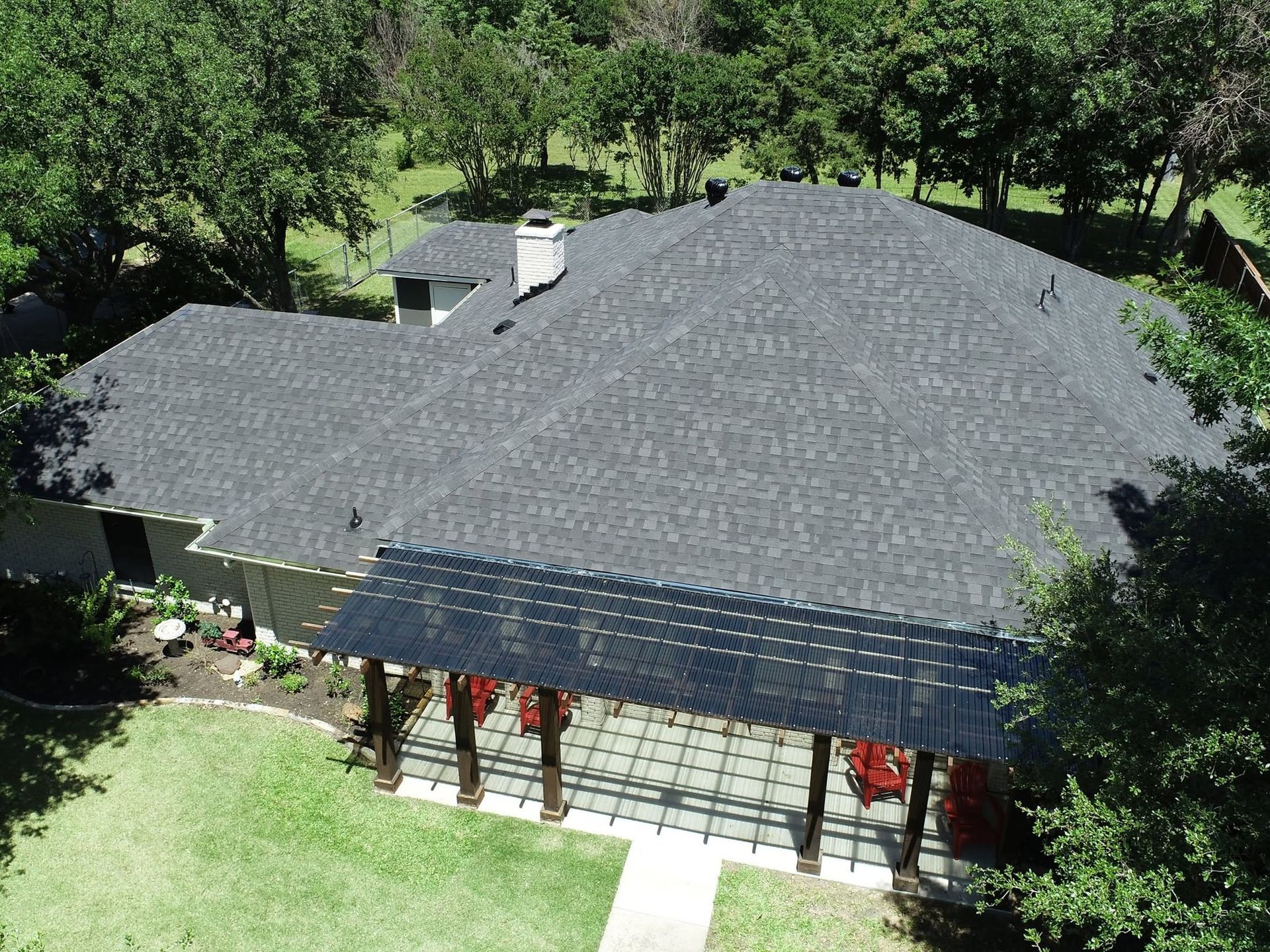
Aerial view of a house with a dark gray roof surrounded by green trees and lawn.
September 21, 2026
Compare roof maintenance vs roof repair for Royse City homes, spot warning signs, understand costs, and prepare your roof before North Texas fall rain.
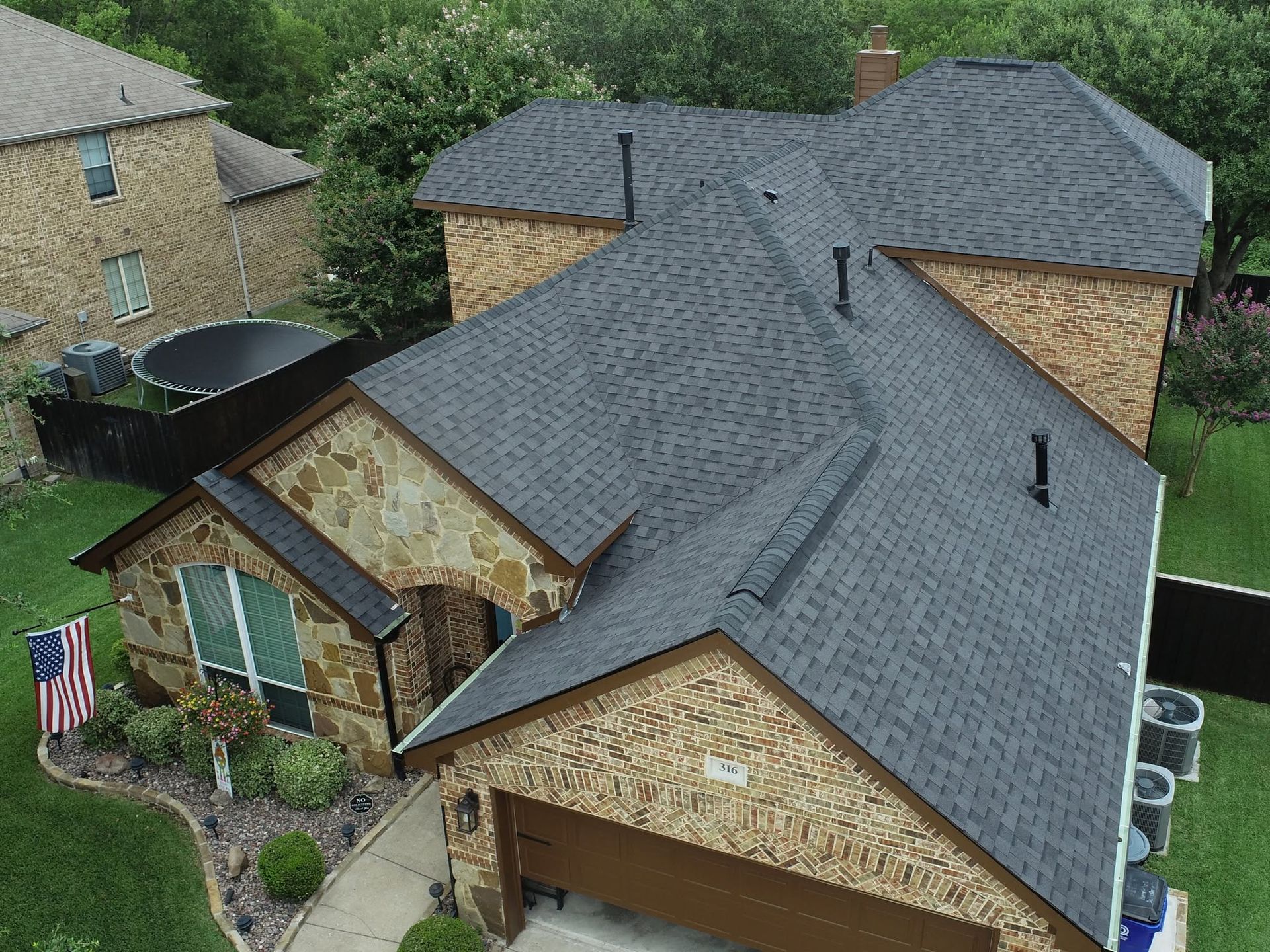
Aerial view of a suburban brick house with a dark gray roof and American flag by the front yard
September 14, 2026
Learn 5 reasons black streaks or roof discoloration appear after a North Texas summer, when stains are cosmetic, and when damaged shingles need repair.
Aerial view of a large house with a dome roof beside a lake, surrounded by trees and greenery.
September 7, 2026
Learn why a roof leaks only during heavy rain in North Texas, what wind-driven rain reveals, what to check, and when expert roof leak repair is needed.
Show More
Black outline of a house with a slanted roof and chimney.

Choose Swift Roofing & Designs for Top Quality Roofing

Need a reliable roofer? We've helped countless clients protect their homes while saving time and money, and we’re ready to help you next.

Aerial view of a house with a dark gray roof surrounded by green trees and lawn.
September 21, 2026
Compare roof maintenance vs roof repair for Royse City homes, spot warning signs, understand costs, and prepare your roof before North Texas fall rain.
Aerial view of a suburban brick house with a dark gray roof and American flag by the front yard
September 14, 2026
Learn 5 reasons black streaks or roof discoloration appear after a North Texas summer, when stains are cosmetic, and when damaged shingles need repair.
Aerial view of a large house with a dome roof beside a lake, surrounded by trees and greenery.
September 7, 2026
Learn why a roof leaks only during heavy rain in North Texas, what wind-driven rain reveals, what to check, and when expert roof leak repair is needed.
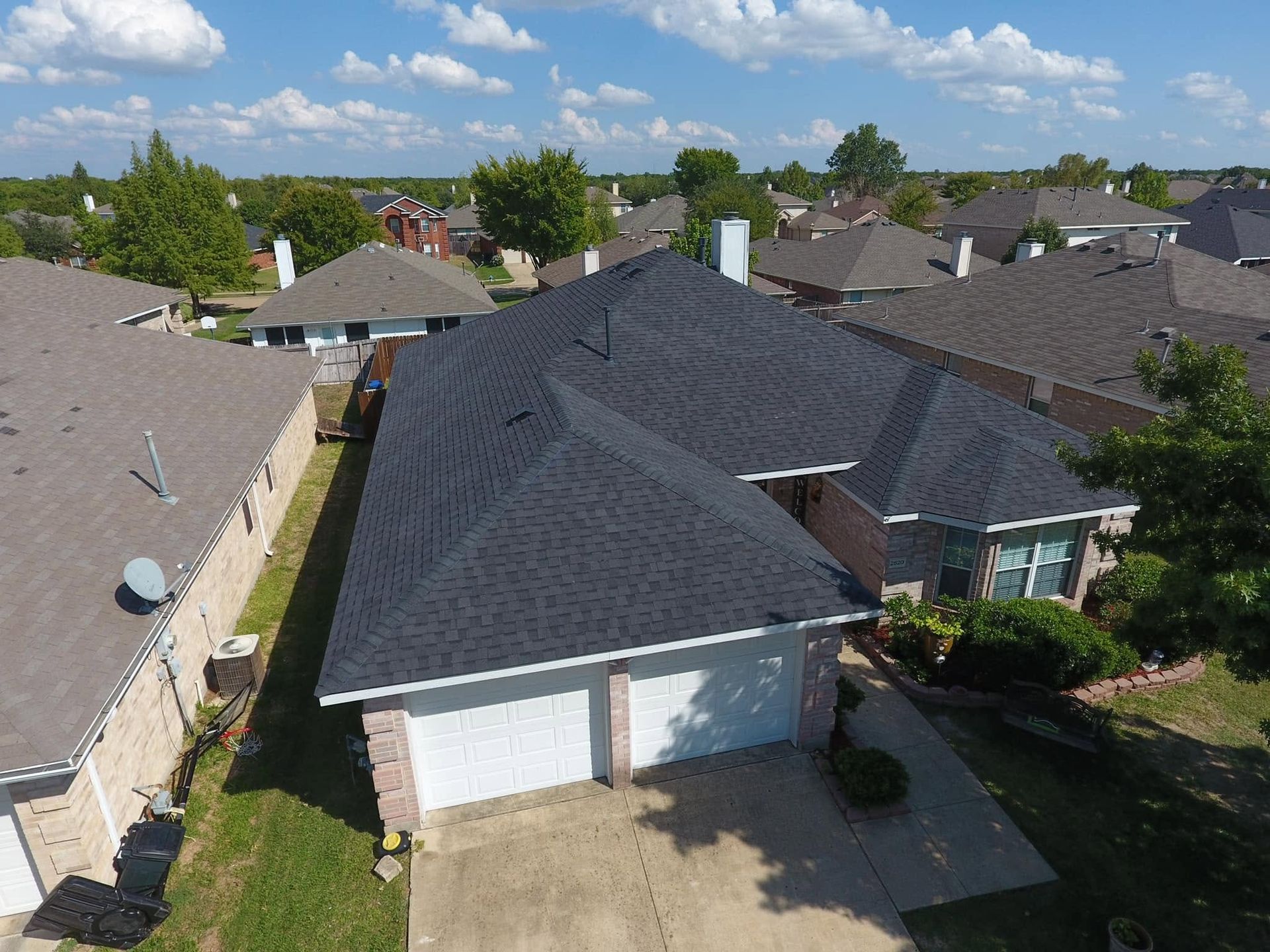
Aerial view of a suburban house with a dark roof and white garage under a blue sky
August 31, 2026
Compare roof restoration vs replacement before winter in North Texas with real inspection checks, cost factors, and September 2026 planning tips.
Worker in neon safety vest stands on a roof beside a curved waterfront walkway.
August 24, 2026
See 4 roof inspection findings Royse City homeowners should address before hail, wind, heat, and rain turn small defects into larger repairs.
Roofing crew installing plywood sheathing on a large flat roof under construction
August 17, 2026
Learn why August thunderstorms can turn minor roof damage into emergencies and when to call for emergency roof repair in Royse City, TX.
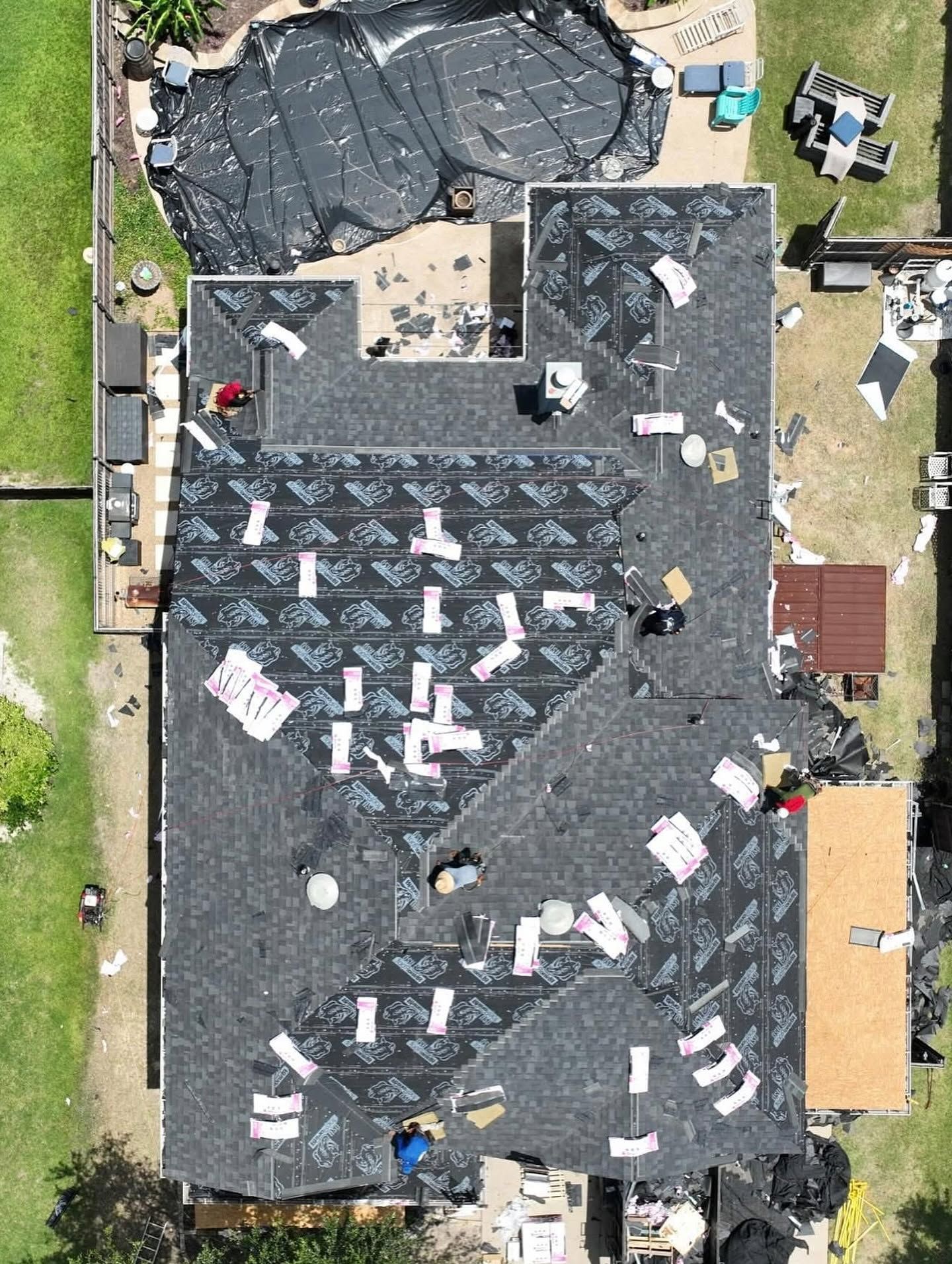
Aerial view of a roof under repair with black tarps, workers, and scattered equipment around the house.
August 10, 2026
Learn when to file a hail damage roof claim or pay out of pocket based on your deductible, policy type, and damage scope in North Texas.
View from a shingled roof over a suburban neighborhood and leafless trees under a cloudy sky
August 4, 2026
A few roof repair choices quietly cost North Texas homeowners far more later. Swift Roofing breaks down 4 common mistakes and how to avoid the costly ones.
Aerial view of a suburban house with a dark roof, brick garage, and wide concrete driveway surrounded by green lawn
July 29, 2026
TPO and PVC look nearly identical on a flat roof but perform differently in North Texas heat and hail. Swift Roofing breaks down which fits your building.
Aerial view of roof damage with workers repairing shingles in a suburban neighborhood near a pond
July 21, 2026
Most homeowners in Royse City, Rockwall, and the surrounding North Texas communities start thinking about roofing materials after a storm. A hail event rolls through, an adjuster shows up, and suddenly there is a decision to make that nobody fully prepared for. Repair with the same shingles that were already there? Or is this the moment to switch to metal?  It is a reasonable question. And it deserves a straight answer, not a sales pitch toward whichever option costs more. Swift Roofing works with homeowners across Rockwall County, Hunt County, and the wider North Texas area every week. We see both materials up close after storms, during inspections, and after they have been on a roof for twenty years in Texas heat. This is the honest comparison he gives homeowners before they decide.
Show More